By industrialising fragments of reasoning, artificial intelligence is transforming more than work. It is shifting power towards those who control computing capacity, data, energy, models and the channels through which decisions are made.
Intelligence was long one of the few resources the economy could not produce at scale. Individuals could be educated, their skills organised, certain procedures codified and operations mechanised, but judgement remained inseparable from human beings. People had to be recruited, trained and coordinated. Experience took time to acquire. Artificial intelligence is altering that constraint. Fragments of reasoning, writing, programming, classification and analysis can now be reproduced on an industrial scale and distributed almost instantaneously through a global digital infrastructure.
This does not mean that machines have become general substitutes for human intelligence. AI systems remain uneven, fallible and dependent on the objectives assigned to them. Yet they are already capable enough to reshape corporate structures, change the value of certain skills and accelerate decision-making. When a scarce resource becomes reproducible, however, power does not disappear. It moves. Some of it leaves the person who possesses the expertise and travels upstream towards whoever owns the infrastructure capable of producing, distributing and setting the terms of access to it.
When Intelligence Becomes Infrastructure
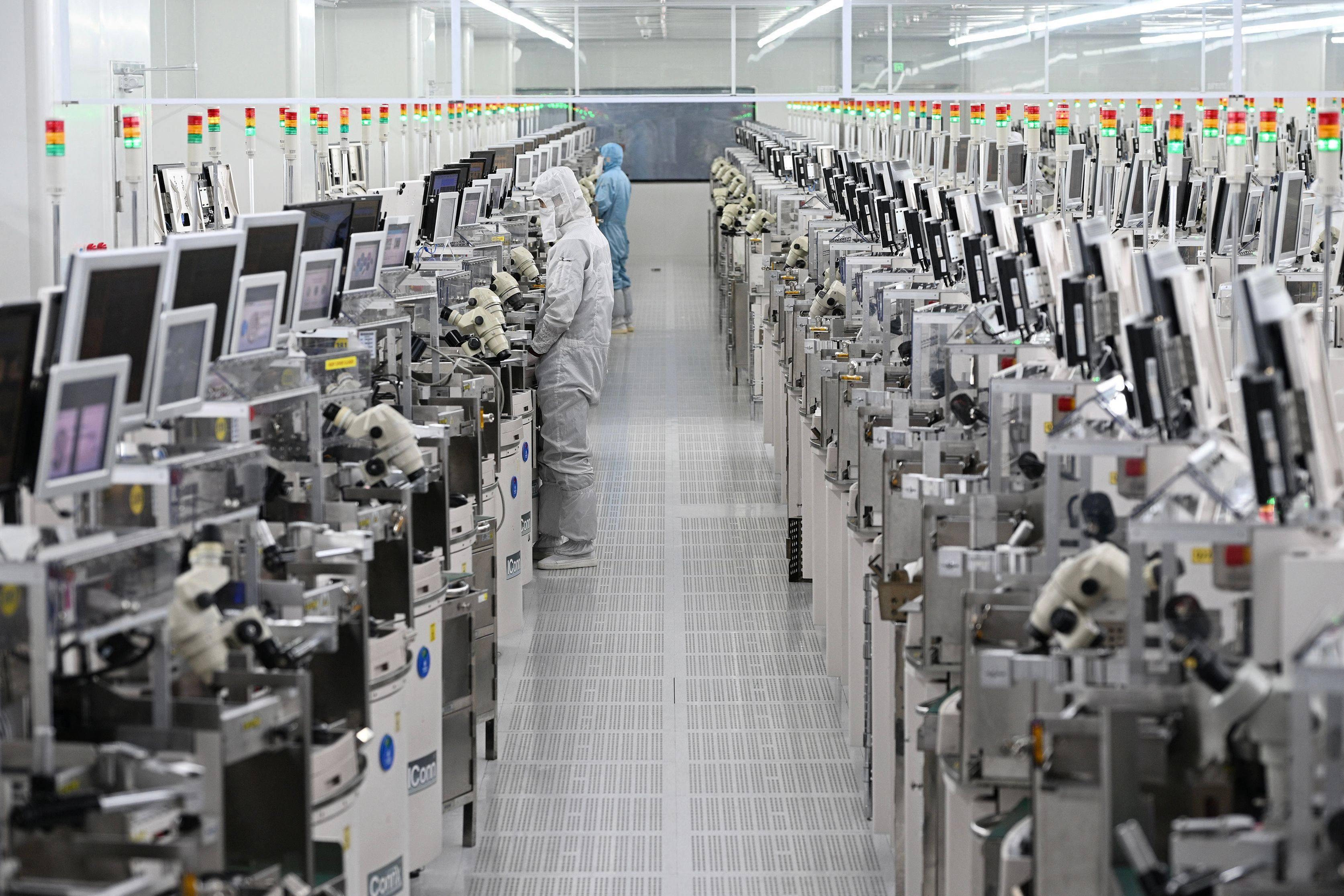
The conversational interface gives artificial intelligence an almost immaterial appearance. A question is entered and an answer appears. Behind this simplicity lies a heavy industrial system: advanced semiconductors, foundries, high-speed networks, data centres, cooling systems, electricity generation, vast amounts of capital and highly specialised scientific teams. AI increasingly resembles an industrial infrastructure whose most visible entrance happens to be language.
The Stanford AI Index Report 2026 found that industry produced more than 90% of notable frontier models in 2025. During the same year, global corporate investment in AI more than doubled. Private investment in the United States reached $285.9 billion, compared with $12.4 billion in China, although Stanford notes that the comparison probably understates China’s overall effort because of the role played by government-guided funds. The technological race is therefore being financed by a limited number of states, industrial groups and platforms whose balance sheets can absorb enormous expenditure without any certainty of an immediate return.
Energy has become the other side of this economy. According to updated projections from the International Energy Agency, global electricity consumption by data centres could rise from approximately 485 terawatt-hours in 2025 to 950 terawatt-hours in 2030. Consumption by AI-focused data centres could triple over the same period. Their share of global electricity demand would remain limited to around 3%, but their geographical concentration is already placing much heavier pressure on particular local grids. Intelligence delivered on demand is ultimately paid for in silicon, megawatts, land and secure access to electricity.
This physical reality changes the nature of technological power. Scientific talent and algorithmic quality remain essential, but they are no longer sufficient. A laboratory deprived of advanced processors, cloud capacity or affordable electricity may possess excellent ideas without being able to turn them into a competitive system. Conversely, a company operating across several layers of the chain — chips, cloud services, models, software and distribution — can convert each industrial advantage into an informational advantage, and each informational advantage into commercial dependence.
Visible Competition, Hidden Concentration
The AI economy presents a contradictory picture. Never have so many companies offered assistants, agents, generators, search engines and specialised tools. The performance of leading models is converging, open models are creating new opportunities for adaptation, and the cost of accessing certain capabilities continues to fall. From the application layer, competition appears intense.
The underlying structure is much narrower. Most new services depend on a small number of cloud providers, processor manufacturers, semiconductor foundries and foundation-model developers. A start-up may therefore compete with a major platform in a specific market while simultaneously paying that same platform for computing capacity, model access or distribution. Competition flourishes on the upper floors while ownership of the building remains concentrated.
This development does not necessarily result from a coordinated plan. It follows from high fixed costs, economies of scale, long-term agreements and the vertical integration of established actors. The OECD’s 2026 report on artificial intelligence markets notes that the rapid expansion of generative AI has been accompanied by a concentration of capabilities among a handful of countries and companies, favouring early movers and firms operating across several parts of the value chain.
The US Federal Trade Commission had already warned in its study of partnerships between cloud providers and AI developers that such arrangements could create lock-in, restrict competitors’ access to critical inputs and give major platforms visibility into commercially sensitive information. The relevant question is therefore not merely how many models are available. It is whether their developers can change providers, retain control of their data, negotiate costs and reach users without depending on a potential rival.
AI may consequently make it easier to create a company while making strategic independence harder to preserve. It lowers the cost of intellectual production but can increase the price of autonomy. Almost anyone can rent cognitive capacity. Very few actors can determine the conditions under which that capacity is supplied.
The Distribution of Cognitive Rents
The economic promise of AI rests on a dramatic reduction in the cost of certain tasks. Producing a first draft, translating a document, reviewing a contract, writing code, classifying records or searching a knowledge base requires less time. The same organisation can process larger amounts of information without increasing its workforce in equal proportion. For smaller companies and independent professionals, this access can narrow part of the gap that once separated them from large organisations with specialised departments.
A productivity gain, however, reveals nothing about how its benefits will be distributed. It may raise wages, shorten working hours, lower prices, increase profit margins or flow upstream towards technology providers through subscriptions and usage fees. Technology creates a surplus. Property rights, contracts and institutions determine who captures it.
The International Monetary Fund estimates that almost 40% of jobs worldwide are exposed to AI-driven change, with the proportion rising to around 60% in advanced economies. As its analysis of artificial intelligence and the economics of adjustment emphasises, exposure does not necessarily mean elimination. Some occupations will be strengthened, others reorganised, while certain roles may see a substantial share of their tasks automated.
The central conflict will often unfold within professions. The analyst does not disappear, but part of the research, synthesis and preparation behind the work may be delegated to a system. The developer remains necessary while supervising a much larger volume of generated code. The lawyer retains responsibility for interpretation while automating the initial review of thousands of pages. Value consequently shifts from execution towards problem definition, verification, contextual knowledge and the acceptance of responsibility.
This transformation may strengthen experienced workers while weakening the entry-level positions through which beginners traditionally acquired that experience. A company may secure an immediate productivity gain by automating junior tasks, yet gradually undermine its ability to train the professionals capable of supervising those systems. The future of work cannot therefore be reduced to the number of jobs created or destroyed. It also concerns the transmission of knowledge, professional mobility and the balance of power between those who own the tools and those expected to work under their direction.
The Market for Decision-Making
The production of text and images is the most visible side of artificial intelligence. Its most strategically important market may nevertheless be decision-making. As AI systems filter job applications, recommend suppliers, assess risks, guide purchases, rank information or prepare financial decisions, they begin to shape the real allocation of opportunities and resources.
Power then resides in seemingly technical choices: the data used, the ranking criteria, acceptance thresholds, optimisation objectives, excluded content and default options. An algorithmic recommendation does not always issue a direct order. Instead, it narrows the field of visibility until certain decisions become more likely than others. Whoever controls the interface may therefore influence a market without owning the businesses operating within it.
The emergence of agents capable of performing multiple actions intensifies this development. Such systems can search for information, compare offers, prepare orders and interact with other software. Their autonomy nevertheless remains relative. The Stanford AI Index found that leading systems achieved roughly 66% success on a benchmark of real computer tasks in 2025. The improvement was considerable, yet failure remained common. Organisations are thus confronting a paradox: these systems are capable enough to transform work, but not reliable enough to assume responsibility for their decisions.
Legal responsibility remains human while operational initiative moves towards the machine. This separation may become one of the defining governance conflicts of the next decade. A decision may have been proposed by a model, configured by a provider, approved by an employee and implemented by a company. When its consequences are challenged, each participant may attempt to shift responsibility towards another link in the chain.
The Geopolitics of Compute
Governments have understood that artificial intelligence can no longer be treated as an ordinary digital sector. Semiconductor subsidies, export restrictions, investments in data centres and public computing programmes all reflect the same concern: avoiding complete dependence on infrastructure controlled elsewhere. The technological rivalry between the United States and China attracts the most attention, but it sits within a broader chain in which chip design, fabrication, manufacturing equipment, energy and raw materials are distributed across several territories.
Sovereignty does not mean autarky. Few countries can reproduce the entire chain, and building a large national model provides little autonomy if processors, cloud infrastructure, development tools and critical expertise remain imported. Genuine sovereignty lies instead in the ability to understand systems, negotiate the terms under which they are used, audit their outputs, protect sensitive data, change suppliers and maintain essential services during a disruption.
Public authorities possess a frequently underestimated instrument: procurement. As major buyers, data holders and producers of standards, governments can impose requirements concerning portability, transparency, security and evaluation. Conversely, an administration that rapidly adopts closed systems without developing internal expertise may modernise its procedures while transferring part of its long-term decision-making capacity to private suppliers.
The Global South and the Struggle for Agency
The new digital divide no longer separates only those with internet access from those without it. It distinguishes economies capable of adapting artificial intelligence to their own needs from those that will consume systems designed around other languages, markets and priorities. The World Bank identifies four foundations for effective AI participation: connectivity, compute, context — meaning relevant data — and competency.
Emerging economies are not necessarily condemned to reproduce the investments of the major powers. Open models, smaller systems and edge AI make it possible to develop applications for agriculture, healthcare, education, industry and public services without systematically requiring enormous data centres. Value may come less from creating a universal model than from possessing a precise understanding of a particular environment.
For Morocco, as for many middle-income economies, the challenge would be poorly framed if it were reduced to building a national frontier model at any cost. The more credible opportunity lies in technological ownership: creating high-quality datasets in Arabic, Darija, Amazigh and French; developing applications for water management, agriculture, port logistics, industry, finance and public administration; providing universities and businesses with reasonable access to computing capacity; training professionals capable of adapting and auditing models; and preserving data portability and the ability to change suppliers.
Without these domestic capabilities, AI risks becoming another imported cognitive utility. It may raise productivity, but its prices, updates, access rules and strategic direction will be determined abroad. Dependence will not necessarily appear as a spectacular service interruption. More often, it will emerge through the inability to negotiate, verify or choose a different path.
Shaping Power Before It Hardens
The current concentration of AI is not irreversible. Falling costs for certain models, the growth of open architectures and the development of specialised systems are preserving spaces for competition. Yet access to source code means little when computing capacity, expertise and distribution remain scarce. A model that is theoretically accessible may still be unusable in practice for a university, small business or public administration lacking the necessary infrastructure.
An effective AI policy cannot therefore be limited to regulating the most visible applications. It must also preserve competition in cloud computing and semiconductors, promote interoperability, support shared computing capacity, develop data commons, adapt professional training and clarify responsibility for automated decisions. Above all, it must determine how productivity gains will be distributed among capital, labour, consumers and infrastructure providers.
Artificial intelligence is not replacing older forms of power. It is bringing them together. Financial capital becomes computing capacity; electricity becomes a cognitive input; data becomes an industrial asset; the interface becomes an instrument of prescription; and the model becomes an intermediary between the individual and a growing share of economic life. This combination explains why AI has already moved beyond the status of a promising technology. It is gradually forming the architecture of a new productive order.
The decisive divide may not separate those who use AI from those who reject it. It will run between those who own the infrastructure and those who rent it, those who define objectives and those who execute recommendations, and societies capable of negotiating the terms of transformation and those that receive them as an accomplished fact. In this new economy of power, the advantage will not belong simply to those with the most intelligent systems. It will belong to those able to decide what that intelligence should be used for, under which rules and for whose benefit.
Main Sources
- Stanford Institute for Human-Centered AI — The 2026 AI Index Report
- International Energy Agency — Key Questions on Energy and AI, 2026
- OECD — Artificial Intelligence Markets, 2026
- International Monetary Fund — Artificial Intelligence and the Economics of Adjustment, 2026
- World Bank — Digital Progress and Trends Report 2025: Strengthening AI Foundations
- Federal Trade Commission — AI Partnerships and Investments Study, 2025
Atlas Limits Research Desk
Atlas Limits’ editorial and analytical desk.