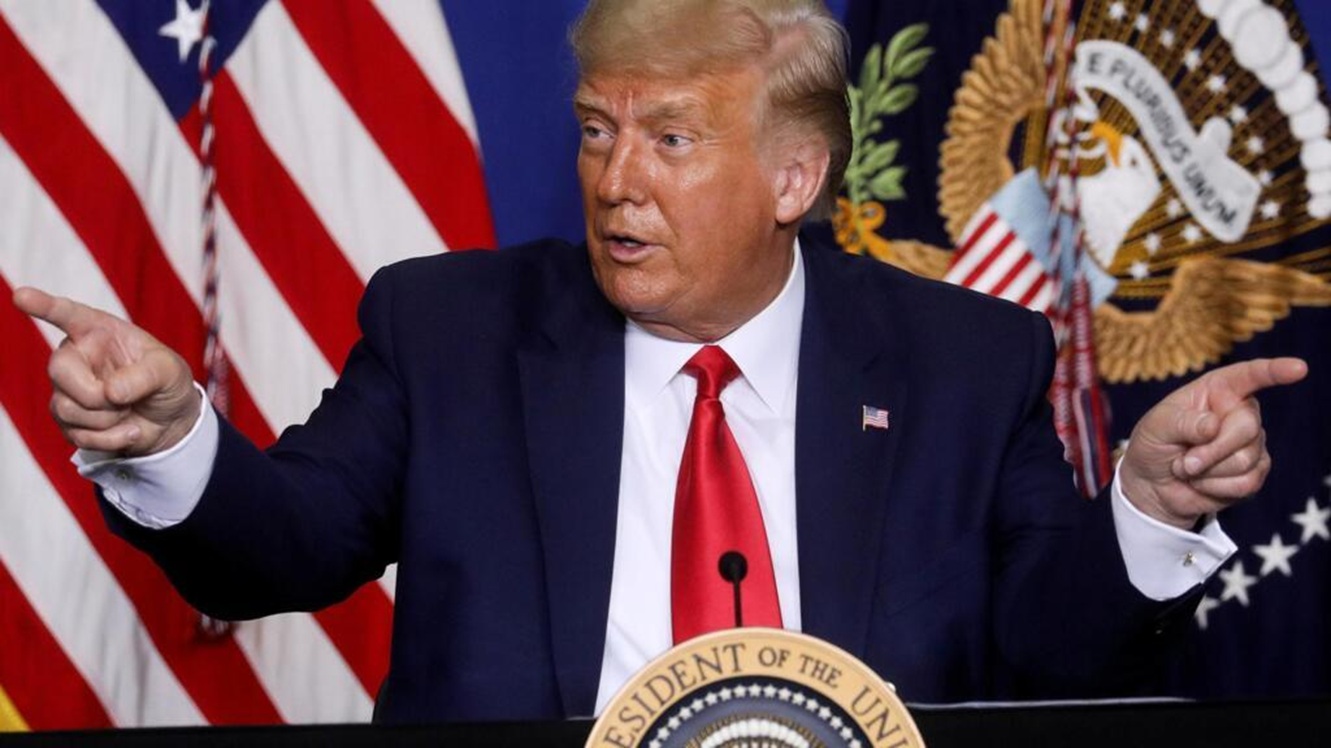
Donald J. Trump is no longer an anomaly in American politics. Ten years after his emergence at the forefront of national political life, he has become one of its principal architects.
First elected in 2016, defeated in 2020, returned to power in 2024 and inaugurated on January 20, 2025 as the 47th president of the United States, Donald Trump accomplished what only one American president had achieved before him, Grover Cleveland in the nineteenth century: serving two non-consecutive terms. Yet the historical significance of his return extends far beyond this institutional distinction. Between his two elections, the Republican Party changed, the American consensus on free trade weakened, confrontation with China became structural, immigration returned to the center of national politics, and the United States’ relationship with its allies became more transactional.
The Trump phenomenon can therefore no longer be analyzed solely through the personality of the man, his statements or the controversies surrounding him. It must now be examined as a political transformation.
The central question is no longer how Donald Trump could become president of the United States.
It is what he has changed about America.
From Businessman to Political Figure
Born in New York in 1946, Donald John Trump joined his family’s real estate business before gradually taking control of it. His expansion into New York real estate, casinos, hospitality and various licensing operations rapidly transformed his name into a brand.
This dimension is essential to understanding his political trajectory. Trump did not simply emerge from the business world: over several decades, he constructed a public identity built around success, negotiation, confrontation and the extreme personalization of his brand.
Television dramatically amplified that visibility. Beginning in 2004, The Apprentice established before millions of Americans the image of an executive capable of selecting, judging and firing. When Trump entered the presidential race in earnest in 2015, he therefore possessed something most of his opponents had to purchase at considerable expense: immediate national recognition.
But his candidacy quickly became more than celebrity.
His message captured several fractures already present within American society: the deindustrialization of certain regions, perceived stagnation among the middle classes, distrust of Washington, concerns over immigration, rejection of political and media elites, fatigue with overseas military interventions, and a sense that globalization had benefited major metropolitan areas more than parts of industrial America.
The slogan Make America Great Again condensed these frustrations into an extraordinarily simple political proposition: America had lost part of its power because its leaders had stopped putting its interests first.
2016: The Break
Donald Trump’s victory in November 2016 disrupted the American political system.
Hillary Clinton received more votes nationwide, but Trump won the Electoral College, notably through decisive victories in several industrial Midwestern states. Territories long associated with the Democratic “Blue Wall” shifted Republican.
The result revealed a deeper electoral transformation. Educational attainment increasingly became one of the major variables shaping American voting behavior. Republicans strengthened their position among white voters without college degrees and across many rural or formerly industrial areas, while Democrats advanced among university-educated voters in major metropolitan regions.
Trump did not create all of these divisions. He aggregated them.
His first term subsequently transformed several campaign themes into public policy: tax cuts, deregulation, restrictive immigration policies, conservative judicial appointments, withdrawal from or renegotiation of certain international commitments, and commercial confrontation with China.
But one of the most important breaks was doctrinal.
For decades, a significant part of the Republican establishment had defended free trade, lower taxes, deregulation, American internationalism and traditional alliances. Trump retained parts of this framework, particularly on taxation and regulation, while abandoning others.
Free trade ceased to be an untouchable principle.
Tariffs became a legitimate policy instrument again.
Industrial policy regained legitimacy.
Alliances were increasingly evaluated in terms of cost.
And economic power became explicitly connected to geopolitical power.
The Transformation of the Republican Party
One of Donald Trump’s most significant political achievements may not be winning two presidential elections.
It may be transforming the Republican Party.
Ronald Reagan’s GOP rested largely on a coalition of economic conservatism, social conservatism, military strength and confidence in markets. The party shaped by the Trump era is different: more nationalist, more protectionist, more skeptical of certain international institutions, and considerably more focused on immigration, sovereignty and competition with China.
This transformation has gradually extended beyond Trump himself.
Issues once considered peripheral have become central to American political debate. Industrial dependence on China, supply-chain security, domestic semiconductor production, critical minerals and manufacturing capacity are now treated as national-security questions.
The shift has even influenced Democrats.
The Biden administration did not simply eliminate all of the tariffs Trump imposed on China. It retained many of them while simultaneously strengthening American industrial policy, particularly in semiconductors and energy technologies.
This is one of the clearest indications of Trumpism’s structural influence: some of its ideas survived political alternation.
Immigration as a Political Frontier
No issue is more closely associated with Donald Trump than immigration.
From 2015 onward, the border with Mexico became one of the central pillars of his political campaign. Construction of a wall, tighter entry controls, deportations, restrictions on certain migration pathways and prioritization of border security gradually formed a coherent doctrine.
The issue responded to an objective development. The United States experienced a major increase in encounters and apprehensions along the southwest border in the early 2020s. According to U.S. Customs and Border Protection, levels recorded during several fiscal years reached historic highs.
Yet the political significance of the issue extends beyond migration statistics.
For Trump, the border embodies a conception of the state: a country that cannot control access to its territory cannot fully control its sovereignty.
That idea helped shift the broader American political debate. As the 2024 election approached, even the Democratic administration tightened certain border measures.
Immigration therefore illustrates a recurring mechanism of the Trump era: a position initially regarded as radical gradually shifts the center of gravity of the national debate.
Trump Economics: Produce, Protect, Negotiate
Donald Trump’s economic doctrine combines elements that would once have appeared contradictory within the Republican Party.
It favors tax cuts and deregulation, but also tariffs and strong political intervention in commercial relationships.
Its guiding principle is less ideological than transactional.
The question is not simply: “Does the market work?”
It becomes: “Is the United States winning?”
This approach rests on a particular interpretation of trade deficits, which are viewed as potential symptoms of an unbalanced economic relationship. It helps explain the renegotiation of NAFTA, replaced by the United States–Mexico–Canada Agreement, as well as the extensive use of tariffs against China.
Trade policy thus becomes an extension of diplomacy.
Access to the American market becomes leverage.
Tariffs become an instrument of pressure.
The size of the U.S. economy becomes a strategic resource.
This doctrine has become even more pronounced since Trump returned to the White House in 2025, with the tariff instrument being deployed on a much broader scale. It marks a break with the assumption that greater trade openness is inherently in the American economic interest.
The strategy nevertheless carries costs. Tariffs can protect certain industries and alter investment decisions, but they can also increase import costs, disrupt value chains and provoke commercial retaliation. Their effectiveness therefore depends less on their mere existence than on whether they generate durable changes in production locations and negotiating relationships.
China: From Economic Partner to Systemic Rival
Confrontation with China is probably the most durable geopolitical legacy of Trump’s first term.
For several decades, Washington had largely wagered on China’s economic integration. Its accession to the World Trade Organization in 2001 was expected to facilitate its integration into the global economy and, according to some Western policymakers, gradually encourage convergence with certain norms of the liberal system.
That assumption eroded.
Under Trump, China was explicitly presented as a strategic competitor exploiting trade imbalances, technology transfers and access to the American market.
The trade war launched in 2018 was the most visible manifestation of this shift, but the transformation ran deeper: technology, telecommunications, semiconductors, investment, supply chains and intellectual property became national-security issues.
Again, the 2021 change of administration did not restore the previous status quo.
The Biden administration deepened several dimensions of technological competition with Beijing, particularly through restrictions on exports of advanced technologies.
The American consensus had changed.
Trump was one of its principal accelerators.
Alliances Put to the Transactional Test
Trumpian foreign policy rests on an apparent contradiction.
Donald Trump advocates a conception of an exceptionally powerful United States while remaining skeptical of some traditional mechanisms of American internationalism.
He does not necessarily reject alliances. He rejects the assumption that they are inherently beneficial regardless of their cost.
This logic is particularly visible in his relationship with NATO.
Trump has repeatedly criticized European allies for failing to devote sufficient resources to defense and argues that the United States carries a disproportionate share of the Western security burden.
American pressure has not been without consequences. According to NATO estimates, defense spending by European allies and Canada has increased significantly since the mid-2010s, driven by the commitments made following Russia’s annexation of Crimea, American pressure and, since 2022, the war in Ukraine.
But Trump introduces an additional factor: uncertainty.
Within the traditional alliance system, credibility rests precisely on confidence that commitments will be honored.
Trump, by contrast, treats uncertainty itself as a potential negotiating instrument.
That distinction explains part of the concern in Europe generated by his return to power.
Ukraine, Russia and the Limits of American Commitment
The war in Ukraine concentrates several fundamental tensions within Trumpism.
On the one hand, the United States remains the foremost Western military power and possesses considerable strategic interests in Europe.
On the other, Trump regularly questions the cost and duration of American commitments when they do not produce a clearly identifiable political outcome.
His approach therefore emphasizes negotiation, pressure on the different parties and the pursuit of an agreement rather than the concept of indefinite external support.
This orientation raises a fundamental question in Europe: how far is the United States prepared to guarantee the European security order if Washington believes Europeans should assume a substantially greater share of the burden?
The issue extends beyond Ukraine.
It concerns the future distribution of responsibilities within the Western world itself.
The Middle East: Power, Agreements and Leverage
In the Middle East, Trump’s first term combined close support for Israel, maximum pressure on Iran and efforts to establish diplomatic agreements between Israel and several Arab states.
The U.S. withdrawal from the Iranian nuclear agreement in 2018 marked a clear break with the Obama administration. Washington restored extensive sanctions against Tehran as part of the “maximum pressure” strategy.
At the same time, the Abraham Accords concluded in 2020 enabled the normalization of relations between Israel and several Arab states, notably the United Arab Emirates and Bahrain, followed by Morocco and Sudan through distinct arrangements.
This policy illustrates the Trump method: prioritizing bilateral relationships, economic incentives, leverage and transactional agreements over broad multilateral architectures.
Trump’s return to the White House, however, occurred in a Middle East profoundly different from that of 2017: the war in Gaza, heightened regional confrontation surrounding Iran, weakened regional balances and changing relationships among Israel, Arab states and external powers.
Trumpism’s ability to reproduce the diplomatic outcomes of the first term therefore depends on a far more unstable regional environment.
Executive Power at the Center
Donald Trump’s second term also raises a major domestic question: the extent of presidential power.
Trump’s conception holds that an elected president should possess substantial authority to implement the program for which voters chose him. That conception collides with the many counterweights embedded in the American system: Congress, federal courts, state governments, independent agencies and the federal bureaucracy.
Since his return to office, several administration decisions have consequently generated judicial and institutional confrontations.
The phenomenon is not unique to Trump. For decades, presidents of both parties have increasingly relied on executive orders and administrative authority to circumvent paralysis in a highly polarized Congress.
But Trump pushes the political logic considerably further.
His project entails a presidency capable of reasserting control over a federal apparatus that he often regards as insufficiently accountable to the elected executive.
His opponents see a risk of excessive concentration of power.
His supporters argue instead that a permanent bureaucracy should not be able to neutralize choices expressed by voters.
The conflict reaches the heart of the American constitutional system: where should the balance lie between democratic effectiveness and constraints on power?
Trump and the Media: The Disintermediation of Politics
Donald Trump has also transformed political communication.
Twitter during his first term, followed by Truth Social and the broader conservative digital ecosystem, enabled him to bypass traditional media and communicate directly with tens of millions of people.
This disintermediation changes the relationship between the president, the press and public opinion.
A message no longer needs to be filtered through a press conference, interview or official statement. It can be published instantly by the president himself.
The practice has since been widely imitated.
It accelerates the political cycle, personalizes power and reduces the ability of traditional media institutions to determine which issues dominate the national debate.
Trump did not create social media.
But he demonstrated how effectively it could become a direct instrument of political power.
A More Complex Electoral Coalition Than in 2016
The 2024 victory adds another dimension to the analysis of Trumpism.
Donald Trump did not simply reconstruct his 2016 coalition.
The results showed shifts among several demographic groups, including some Hispanic voters and segments of the working-class electorate. These gains complicate the image of a movement based exclusively on white rural America.
The American political divide is becoming increasingly multidimensional.
Race, education, geography, income, religion, age and attitudes toward institutions continue to interact, but educational attainment and the divide between major metropolitan areas and less urbanized territories have become increasingly important.
Trumpism is therefore attempting to construct a broader working-class coalition around issues including immigration, the cost of living, economic sovereignty, public order and rejection of institutional elites.
Its durability will depend on whether this coalition can survive once Donald Trump himself is no longer a candidate.
Energy as an Instrument of Power
Energy occupies a central position in the Trumpian conception of power.
Over the past decade, the United States has become the world’s largest oil producer and one of its leading natural-gas producers. For Trump, this abundance represents less a climate problem to be managed than a strategic advantage to be exploited.
The objective is threefold: maintain competitive energy prices, support American industry and strengthen U.S. geopolitical capabilities.
This approach includes strong support for hydrocarbons, efforts to reduce certain regulatory constraints and opposition to climate policies regarded as excessively costly for the American economy.
The divergence with the European Union is particularly clear in this area.
Where Brussels primarily treats the energy transition as a structural transformation necessary for decarbonization, Trumpism emphasizes energy security, energy costs and industrial competitiveness.
This difference could become one of the principal sources of transatlantic economic divergence.
Is Trumpism a Doctrine?
Donald Trump has never constructed a doctrine in the classical sense.
There is no Trumpian political treatise comparable to the major intellectual frameworks that accompanied certain American ideological traditions.
Yet after a decade, several principles appear consistent enough to constitute an identifiable framework.
National sovereignty takes precedence over multilateral constraints when the two conflict.
Trade must serve national power.
The border is a fundamental function of the state.
Alliances must generate measurable reciprocal benefits.
Military power should be overwhelming, but its use should correspond to a clearly defined American interest.
Energy, industry, technology and supply chains are components of national security.
And the president must possess sufficient authority to implement the mandate received through elections.
This framework is neither traditional American isolationism, nor the neoconservatism of the 2000s, nor the liberal internationalism that dominated much of the postwar era.
It constitutes a form of transactional nationalism adapted to an era of great-power competition.
What Trump Has Already Changed
The historical impact of a president is often difficult to measure while he remains in office.
In Trump’s case, however, several changes are already visible.
China is no longer primarily viewed in Washington as an economic partner whose integration will gradually produce political convergence. It is a strategic competitor.
Free trade is no longer assumed to be automatically beneficial.
Tariffs have regained a central position in economic policy.
Supply-chain security has become a national priority.
Industrial policy has regained legitimacy in both major parties.
The border has returned to the center of domestic politics.
Allies face greater pressure to assume responsibility for their own defense spending.
And the distinction between economic policy and national-security policy has narrowed considerably.
Not all of these changes can be attributed exclusively to Donald Trump. China’s rise, the pandemic, the war in Ukraine, supply-chain disruptions and technological transformation would probably have altered American policy regardless of him.
But Trump gave these transformations a coherent political expression and accelerated several of them.
What Will Survive Donald Trump?
This is probably the most important question.
Donald Trump will eventually leave political life. Trumpism may survive him.
For a political movement to become historically consequential, winning elections is not enough. It must change the questions its opponents are forced to answer.
By that measure, Trump’s influence is already considerable.
Democrats now speak more frequently about industrial policy, reshoring, economic security and competition with China. European allies are increasing military expenditure. Companies are reassessing their supply chains. Washington examines investment, technology and infrastructure increasingly through the lens of national security.
The vocabulary of American politics has changed.
The real test will come after Trump.
The Republican Party will have to determine whether it can preserve its new coalition without the personality that created it. The United States will have to decide how far protectionism can be extended without weakening its own economy. Allies will have to adapt to an America that may remain more demanding even under future presidents. And Washington will have to manage a structural competition with China without turning every form of economic interdependence into confrontation.
Trump can still substantially alter his own legacy during his second term.
But one conclusion is already possible.
Donald Trump has not merely occupied the White House.
He has shifted the center of gravity of American politics.
And when he has left power, the best measure of his influence may not be the number of decisions taken in his name, but the number of his ideas that the United States continues to apply without him.
Main Sources
- The White House — presidential documents, executive orders, statements and Trump administration policies.
- Federal Election Commission (FEC) — federal election results and electoral data.
- U.S. Census Bureau — demographic, trade and socioeconomic data.
- U.S. Bureau of Economic Analysis (BEA) — foreign trade, GDP, investment and national accounts.
- U.S. Bureau of Labor Statistics (BLS) — employment, wages, inflation and labor-market structure.
- U.S. Customs and Border Protection (CBP) — border and migration encounter statistics.
- Office of the United States Trade Representative (USTR) — U.S. trade policy, China relations, tariffs and the USMCA.
- U.S. Energy Information Administration (EIA) — U.S. oil and natural-gas production and broader energy data.
- Congressional Research Service (CRS) — institutional analysis of presidential powers, trade, immigration and foreign policy.
- NATO — defense-expenditure data and burden-sharing trends among member states.
- Pew Research Center — analysis of the American electorate, voting coalitions and demographic political divisions.
- U.S. Department of State — documentation concerning the Abraham Accords and U.S. foreign policy.
- National Archives and U.S. Electoral College — official presidential-election results and institutional documentation.
Atlas Limits Research Desk
Atlas Limits’ editorial and analytical desk.