There are car brands people buy for prestige, others for comfort, performance or social status. And then there are a handful of manufacturers people become attached to for reasons that are much harder to explain.
Honda belongs to that rare category.
For decades, the Japanese company cultivated a particular relationship with those who genuinely loved machines. Its cars were not necessarily the most expensive. They were not always the most powerful. They were certainly not the most ostentatious. Honda had something else: a way of approaching engineering that sometimes made it feel as though the engineers had been given the final word over the accountants.
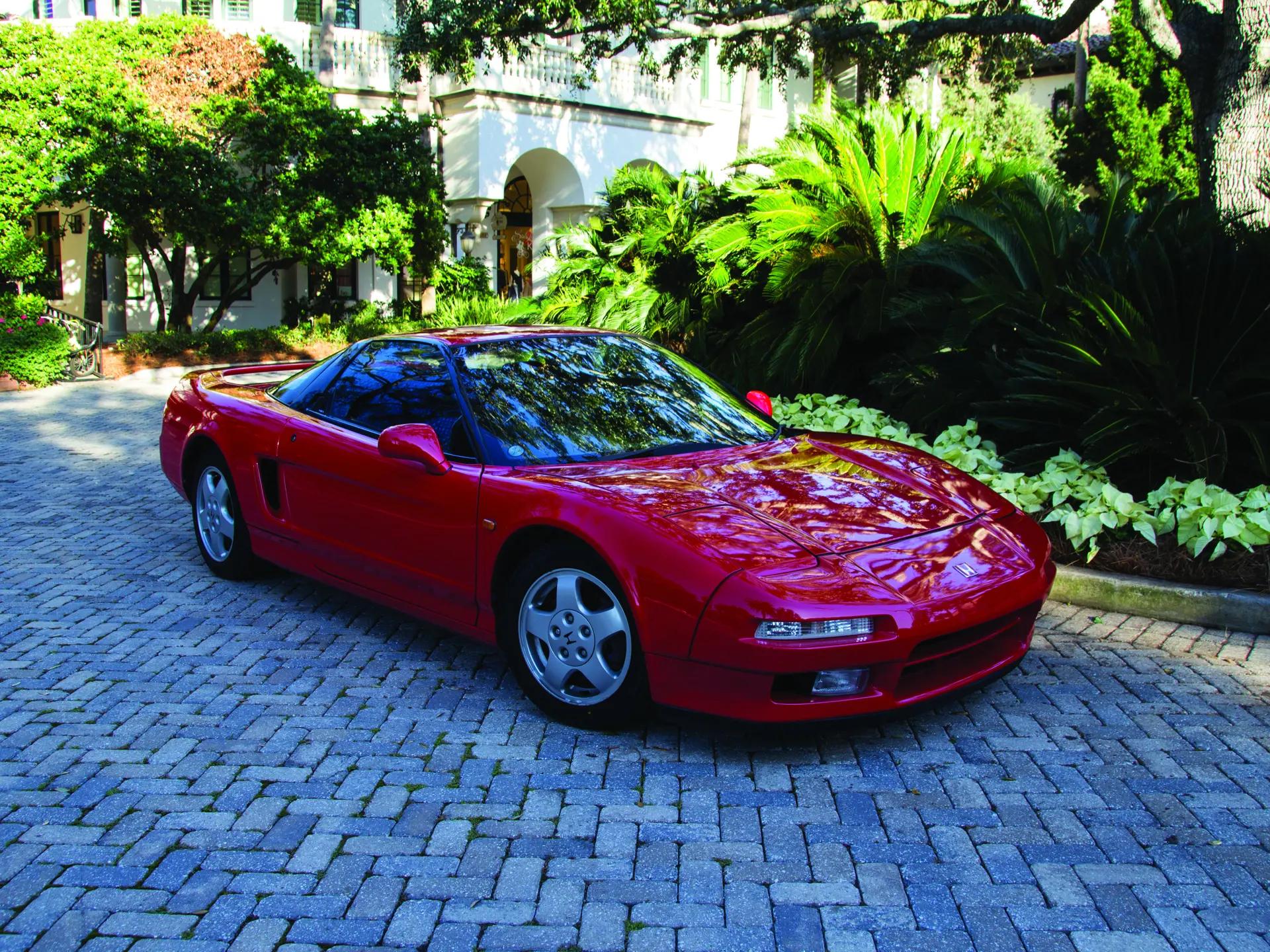
A Civic could be an ordinary family car hiding an engine capable of revving like a motorcycle. An Integra could turn the humble compact-car formula into an exercise in precision. An S2000 could build almost its entire personality around a naturally aspirated two-liter engine. And when Honda decided to create a supercar, it did not simply imitate Europe. The NSX demonstrated that an exotic car could be fast, sophisticated, reliable and usable every day.
Honda did not merely build automobiles.
Honda cultivated an idea of engineering.
A Mechanic’s Company
To understand Honda, one has to return to Soichiro Honda.
The company founded in 1948 did not begin primarily as a financial project or an institutional construction. It carried the imprint of a man fascinated by engines, competition and the mechanical process of solving problems.
That origin still matters because it explains much of what distinguished Honda from Japan’s other industrial giants.
Toyota would become perhaps the ultimate symbol of manufacturing efficiency. Nissan would experience several lives, shaped by technological ambition, international expansion and restructuring. Honda followed another path: that of a company in which the engine remained, for a very long time, the cultural center of gravity.
Motorcycles came first, followed by automobiles, but the boundary between the two worlds remained unusually porous. Honda learned how to build engines that were small, light, reliable and capable of operating at exceptionally high speeds.
That obsession eventually found its way into its cars.
It also found its way into racing.
Honda entered Formula One in the 1960s, only a few years after it had begun producing automobiles. In retrospect, the audacity remains remarkable: a relatively young Japanese manufacturer decided to confront its engineering expertise with the European elite of motorsport.
The decades that followed would establish Honda as one of Formula One’s great engine names. The McLaren-Hondas of Ayrton Senna and Alain Prost now belong to the history of the sport. Decades later, Honda would once again reach the summit alongside Red Bull during the hybrid era.
For Honda, racing was never merely an advertising exercise.
It was part of the company’s conception of itself.
The Engine as a Manifesto
That philosophy probably found its most famous popular expression in VTEC.
For millions of drivers, those four letters eventually came to represent far more than variable valve timing technology. They became part of automotive culture.
Honda had understood something unusual: a relatively affordable car could deliver an exceptional mechanical experience.
Where other manufacturers pursued power through displacement or forced induction, Honda developed naturally aspirated engines capable of breathing at extraordinary engine speeds. The pleasure came as much from the way the power was reached as from the amount of power itself.
You had to rev it.
Work the gearbox.
Listen to the engine change character.
An entire generation of enthusiasts discovered that an automobile did not need twelve cylinders or an Italian badge on its bonnet to possess a mechanical soul.
The Civic and Integra Type R pushed that philosophy remarkably far. They took relatively ordinary cars and transformed them through weight reduction, chassis development, engine technology and an almost obsessive attention to detail.
Honda knew how to make something extraordinary out of something that could, from the outside, remain almost ordinary.
That may have been its greatest talent.
NSX: When Honda Looked Ferrari in the Eye
Then came the NSX.
At the end of the 1980s, the idea that a Japanese mass-market manufacturer could challenge Europe’s established sports-car hierarchy still seemed audacious.
Honda nevertheless had no intention of building a caricature of a supercar.
The NSX would be different.
Its mid-engine architecture, extensive use of aluminum, chassis development and V6 VTEC engine made it technologically ambitious. Ayrton Senna himself contributed to the chassis development process.
But the real revolution of the NSX may have been elsewhere.
It demonstrated that a high-performance automobile could start every morning, function as everyday transportation, offer reasonable visibility and spare its owner many of the compromises traditionally associated with exotic machinery.
Honda was not merely saying: we can build a supercar.
Honda was implicitly saying:
We can reconsider what a supercar should be.
The rest of the industry took notice.
S2000: Excess Through Precision
Years later, to celebrate its fiftieth anniversary, Honda created a car that almost absurdly encapsulated its philosophy.
The S2000.
A roadster. Two seats. Rear-wheel drive. Manual gearbox. Naturally aspirated engine.
On paper, none of this was revolutionary.
Honda nevertheless turned the traditional formula into a technical demonstration. In its original Japanese specification, its two-liter four-cylinder engine produced around 250 horsepower and could reach 9,000 rpm.
It was not the easiest route to performance.
That was precisely why Honda chose it.
The S2000 embodied an era in which engineers could still pursue a solution not because it was the simplest or most profitable, but because it was intellectually and mechanically fascinating.
Even today, driving — or simply hearing — certain Hondas from that period reveals something specification sheets cannot capture.
Numbers grow old.
Sensations age much more slowly.
A Company Too Large to Fit Inside the Automobile
Yet reducing Honda to cars would miss the essential point.
Honda became the world’s largest manufacturer of powered two-wheelers. In May 2025, the company passed the extraordinary threshold of 500 million motorcycles produced since 1949. During the fiscal year ended March 2025 alone, Honda sold 20.57 million motorcycles, representing roughly 40% of the global market according to the company.
That changes the perspective entirely.
In parts of Europe or North America, Honda may primarily be perceived as an automobile manufacturer. Across much of Asia and the developing world, Honda means something far more immediate: an engine, a scooter, a motorcycle — sometimes a family’s first form of motorized mobility.
And the company did not stop there.
Honda built generators, marine engines and power equipment. It ventured into robotics with ASIMO. Then it accomplished something even more improbable for a company born from a small Japanese workshop:
It built a business jet.
The HondaJet alone summarizes this strange industrial enterprise.
From motorcycles to cars.
From cars to robots.
From robots to aircraft.
Few contemporary industrial groups can demonstrate such continuity in their fascination with movement.
And Yet, Something Faded
This is where the tribute must make room for an uncomfortable observation.
Honda remains everywhere, yet it feels less present than it once did in the global automotive imagination.
The paradox is striking.
Toyota established itself as an industrial benchmark and built a formidable advantage in hybrid technology. Tesla spent more than a decade redefining the narrative around electric and software-defined vehicles. BYD now embodies the spectacular rise of the Chinese automotive industry. Hyundai and Kia profoundly transformed their image and ambitions. Chinese manufacturers are advancing at a speed that is reshaping the industry’s historical balance of power.
Honda, meanwhile, sometimes appears to have gone quiet.
Not small.
Not marginal.
Not technologically irrelevant.
Quiet.
The group remains enormous: for the fiscal year ended March 2026, Honda recorded nearly ¥21.8 trillion in consolidated revenue. Yet behind that global scale lies a particular vulnerability. Its automobile business posted a substantial operating loss for the year, while motorcycles remained extraordinarily profitable.
Honda’s problem, therefore, is not disappearance.
It is the relative disappearance of its automotive power to fascinate.
When the World Changes Its Mechanics
There may be a deeper explanation.
For much of the twentieth century, the automobile was fundamentally a mechanical problem.
And Honda was extraordinarily good at mechanics.
The next automobile is also a problem of battery chemistry, power electronics, semiconductors, operating systems, artificial intelligence, sensors, data, electronic architectures and supply chains.
The internal-combustion engine — the machine Honda had elevated to extraordinary levels of sophistication — is gradually losing its position as the automobile’s unquestioned technological center.
For Honda, this transition is almost existential.
How does a company whose identity was partly built around the art of the engine remain exceptional when the engine itself ceases to be the primary source of differentiation?
Honda initially prepared an ambitious answer through a new generation of electric vehicles. But 2026 dramatically changed the equation. In March, amid changing EV demand and profitability pressures in its automobile business, Honda cancelled the development and North American launch of three planned electric models — the Honda 0 SUV, Honda 0 Saloon and Acura RSX — and began a major reassessment of its electrification strategy.
The retreat does not mean abandoning the future.
It demonstrates how difficult that future has become to predict.
Becoming Honda Again
Weeks later, Honda presented a revised roadmap.
The company now intends to devote greater resources to hybrids, introduce a new generation of hybrid models beginning in 2027 and launch fifteen such models globally by the end of fiscal 2030. At the same time, it continues to develop electric vehicles, solid-state batteries, carbon-neutral fuels and ASIMO OS, its software architecture intended to extend beyond electric vehicles alone.
It is less spectacular than proclaiming the imminent death of the internal-combustion engine.
It may also be much more Honda.
Observe. Experiment. Build. Correct. Begin again.
Because the fundamental question is not ultimately whether Honda will manufacture enough electric cars.
It is whether Honda can create, in an electric and software-defined world, something that still feels like a Honda.
A car recognizable by more than its badge.
A machine with an idea behind it.
A singularity.
A reason to exist.
What Honda Gave Us
Automakers manufacture millions of vehicles that eventually disappear into sales statistics, used-car markets and, finally, scrapyards.
A handful escape that fate.
A red NSX passing on the street can still make someone turn their head.
An S2000 at 9,000 rpm tells a story no central touchscreen can reproduce.
An old Civic Type R recalls an era when shedding a few hundred kilograms and finding a few thousand additional revolutions per minute could be enough to create a personality.
And somewhere in the world, at almost any given moment, a small Honda motorcycle is probably carrying someone to work, to school, to a shop or home.
Perhaps that is Honda’s true greatness.
To have been capable of inspiring dreams with an NSX while moving the world with a Super Cub.
To have worked with Ayrton Senna while providing mobility to millions of people who will never see a racing circuit.
To have built a Formula One engine and a generator.
To have manufactured a lawn mower and then an airplane.
This company never truly chose between the extraordinary and the ordinary.
It tried to put engineering into both.
The Power of Dreams
It would be easy to end this story by mourning a vanished era.
That would be unfair.
The Honda of the 1990s will probably never return, because the world that made it possible no longer exists. Regulations have changed, markets have changed, technologies have changed, and the automobile itself is changing in nature.
Great industrial companies do not survive by endlessly reproducing their masterpieces.
They survive when they rediscover the reason they created those masterpieces in the first place.
Honda does not need to rebuild the S2000.
It needs to rediscover what made the S2000 necessary.
It does not need to recreate the original NSX.
It needs to recover the intellectual audacity that once led a Japanese manufacturer to look at Europe’s finest supercars and ask not how to copy them, but how to do something better by doing it differently.
Perhaps that is what we are still waiting for from Honda.
Not necessarily to dominate the global market.
Not necessarily to win the war of screens, batteries or press releases.
But one day, amid an automotive industry becoming extraordinarily rational, digital and standardized, for Honda to unveil another machine that makes us stop for a few seconds and think:
Only Honda could have imagined this.
On that day, the giant will no longer be silent.
Main Sources
Honda Motor Co. — 2026 Honda Business Briefing, May 2026. Honda Motor Co. — Reassessment of Automobile Electrification Strategy, March 2026. Honda Motor Co. — 2025 Honda Business Briefing. Honda Motor Co. — Financial data by business segment, fiscal year ended March 2026. Honda Motor Co. — 500 Million-Unit Milestone in Cumulative Global Motorcycle Production, May 2025.
Atlas Limits Research Desk
Atlas Limits’ editorial and analytical desk.