Few states concentrate so much power, vulnerability, and controversy within such a small territory. Israel today has a population of just over 10 million. Its economy belongs to the group of advanced economies, its technology sector occupies a disproportionate place in global innovation, its military capabilities far exceed what its demographics alone would suggest, and its alliance with the United States provides it with exceptional strategic depth. At the same time, the country remains engaged in a territorial and national conflict that has lasted for generations, exposed to persistent regional threats and deeply divided by political, religious, and institutional fractures.
This contradiction lies at the heart of contemporary Israel.
The country has become powerful enough to alter the strategic balance of the Middle East, strike at long range, develop its own weapons systems, export critical technologies, and influence the politics of the world’s leading power. Yet this accumulation of power has not produced what power is normally expected to deliver: a durably stabilized environment.
Since October 7, 2023, this paradox has become impossible to ignore. Israel has demonstrated considerable military capability while suffering the gravest security failure in its recent history. It has severely weakened several of its regional adversaries while facing growing international contestation over its policies toward the Palestinians. Its economy has withstood an exceptional level of military mobilization, but at the cost of persistently higher defense spending, labor-market tensions, and reduced fiscal room for maneuver.
Understanding Israel in 2026 therefore requires moving beyond two symmetrical reductions: the view that sees the country only as a besieged technological democracy, and the view that sees it only through occupation and the war in Gaza. Israel is simultaneously a state, a society, a military power, an innovation economy, a national project, and one of the central protagonists in a conflict for which no durable settlement has yet been found.
A State Born from a Question That Was Never Closed
The creation of the State of Israel in 1948 was the culmination of a Jewish national movement that developed in Europe from the late nineteenth century, accelerated by European antisemitism, persecution, and ultimately the extermination of six million Jews during the Holocaust.
But the birth of Israel was also, for Palestinians, the Nakba — the catastrophe — marked by the flight or expulsion of hundreds of thousands of Palestinian Arabs and the creation of a refugee question that remains unresolved.
These two memories are not merely competing interpretations of the past. They continue to structure political perceptions in the present.
For a large part of Jewish Israeli society, the state represents first and foremost the instrument through which a people long subjected to minority status and persecution can guarantee its own security. For Palestinians, the central historical experience is one of dispossession, exile, occupation, and the persistent absence of a sovereign state.
The 1967 war added a second layer to the conflict. Israel took control of the West Bank, East Jerusalem, Gaza, the Sinai Peninsula, and the Golan Heights. Sinai was later returned to Egypt under the 1979 peace treaty. Israel unilaterally withdrew from Gaza in 2005. But the West Bank, East Jerusalem, and the Golan Heights remain at the center of major territorial and legal disputes.
The Oslo Accords of 1993 had created hope for a transition toward two states. They established the Palestinian Authority and organized an interim division of powers in the West Bank. But they resolved none of the principal final-status issues: borders, Jerusalem, refugees, settlements, security, and sovereignty.
More than thirty years later, what was temporary has become structural.
A Demographic Exception Among Advanced Economies
Israel is also a demographic anomaly.
The IMF estimates its population at around 10.3 million in 2026. Unlike most developed economies, the country maintains a high fertility rate, close to three children per woman in recent years. Its population is relatively young and continues to grow rapidly.
This dynamic potentially constitutes a major advantage. It sustains domestic-market expansion, renews the working-age population, and gives Israel a demographic trajectory very different from that of Europe, Japan, or South Korea.
But Israeli demography is also transforming the country’s political structure.
The Jewish population is far from homogeneous. It includes secular, traditional, religious, and ultra-Orthodox communities, as well as families originating from Europe, the Middle East, North Africa, the former Soviet Union, Ethiopia, and many other diasporas. Arab citizens of Israel — mostly Muslim, but also Christian and Druze — account for roughly one fifth of the population.
The particularly rapid growth of the ultra-Orthodox, or Haredi, population is one of the country’s most important structural developments. Its demographic weight is increasing faster than that of the rest of society. This is gradually altering electoral balances, while also raising economic and military questions.
A significant share of Haredi men participate less in the labor market than the national average, and many ultra-Orthodox schools devote limited time to subjects regarded as essential for integration into a technologically advanced economy. The IMF explicitly identifies higher labor-force participation and productivity among some population groups as one of the key determinants of Israel’s medium-term growth.
Demography is therefore about much more than population size. It directly affects public finances, education, the military, coalition politics, and the very definition of the Israeli social contract.
The Military at the Heart of the Social Contract
In few developed democracies does defense occupy a comparable place.
Mandatory military service, the importance of reservists, and the frequency of conflict have created an unusually close relationship between society, the economy, and the military establishment. The armed forces are not merely a defense institution: historically, they have also served as a space for socialization, professional networking, and, in some cases, access to economic and political elites.
This structure enables a relatively small country to mobilize large forces rapidly.
It also creates a dependency: a prolonged war removes tens or even hundreds of thousands of people from productive economic activity. Since 2023, extended reserve mobilizations have weighed on labor supply, while the reduction in Palestinian workers and difficulties recruiting enough foreign workers have deepened shortages in several sectors. The IMF now considers these constraints significant enough to weigh on potential growth.
The exemption from military service historically granted to many ultra-Orthodox students has consequently become explosive.
When mobilization placed a more limited burden on society, the arrangement was politically sustainable. After several years of war and mass reserve mobilization, the idea that a rapidly growing Haredi population could remain largely outside conscription has become much harder to maintain.
Behind the technical question of recruitment lies a fundamental one: who should bear the cost of Israel’s security?
A Disproportionately Powerful Military
Israel built its security architecture around a basic geographical constraint: limited strategic depth, a population concentrated within a relatively narrow space, and historically the possibility of facing several adversaries at once.
Its response was qualitative.
Air superiority, intelligence, rapid mobilization, cyber capabilities, missile defense, long-range strike capacity, and the development of a major domestic defense industry form the core of this architecture.
Iron Dome protects against part of the short-range rocket threat. David’s Sling targets intermediate threats. Arrow systems are designed in particular to intercept ballistic missiles. The Israeli Air Force operates F-35 aircraft and maintains substantial long-range strike capabilities.
Israel also possesses a defense industry capable of producing missiles, drones, radars, electronic systems, cyber technologies, and air-defense systems exported across multiple regions.
Another dimension remains officially ambiguous: nuclear weapons.
Israel neither confirms nor denies possessing nuclear weapons and is not a party to the Nuclear Non-Proliferation Treaty. Independent reference estimates, including those of SIPRI, nevertheless attribute a nuclear arsenal to Israel, generally assessed at several dozen warheads.
This ambiguity is itself a strategic instrument: possessing an ultimate deterrent without formally transforming every regional relationship into an explicitly nuclear confrontation.
The United States: Alliance and Dependency
No analysis of Israeli power can be separated from its relationship with the United States.
Washington provides substantial military assistance, facilitates access to some of the most advanced American defense technologies, participates in the development of missile-defense systems, and has for decades been Israel’s principal diplomatic supporter.
This relationship does not mean Israel is simply dependent on the United States. The two countries maintain close cooperation in intelligence, defense, cybersecurity, technology, and research. Israel also provides Washington with capabilities, intelligence, and operational experience of particular relevance in the Middle East.
But the asymmetry remains.
The prolonged military campaigns since 2023 have highlighted the importance of American deliveries of munitions, interceptors, and equipment. U.S. diplomatic protection at the UN Security Council also remains a central component of Israel’s room for maneuver.
This creates one of the country’s strategic contradictions: Israel has developed remarkable military autonomy, yet sustaining a prolonged regional confrontation would be far more difficult without the United States.
This dependency could become more politically sensitive over time if American public opinion continues to evolve. Pew Research Center surveys have shown in recent years a deterioration in Israel’s image among several segments of the U.S. population, particularly younger Americans and parts of the Democratic electorate.
An alliance can be extremely strong without being permanently immutable.
The “Start-Up Nation” Is Real
Israeli power does not rest primarily on weapons.
It also rests on an exceptional concentration of human capital, research, entrepreneurship, and venture capital.
Israel spends one of the highest shares of GDP in the world on research and development. High-tech accounts for a significant portion of output, exports, and tax revenues. Cybersecurity, software, semiconductors, artificial intelligence, medical technologies, agritech, and defense are among its principal areas of excellence.
This economy benefits from an unusual ecosystem: high-level universities, skilled immigration, American capital, multinational R&D centers, the defense industry, and networks formed during military service.
The result is remarkable for a country of this size.
But technological success conceals a two-speed economy. Part of the population works in highly productive and globally integrated sectors, while other segments display significantly lower levels of skills, labor-force participation, and productivity.
The challenge is therefore no longer simply to produce more start-ups.
It is to determine whether the technological model can spread productivity gains across society as a whole.
A Resilient Economy, but a War with a Bill
The resilience of Israel’s economy since 2023 surprised some observers.
The financial system held, the shekel absorbed several episodes of severe volatility, technology companies continued to attract capital, and activity was able to rebound after successive military shocks.
But resilience does not mean absence of cost.
The central government budget balance moved from a surplus of 0.6% of GDP in 2022 to a deficit of 6.8% in 2024, according to the IMF. Public debt increased from about 60% of GDP at the end of 2022 to 68.6% by the end of 2025. Military spending still represented roughly 8% of GDP in 2025, compared with around 4.5% before the conflict.
Renewed regional tensions in 2026 subsequently led the IMF to cut its growth forecast for the year from 4.8% to 3.5%.
The fiscal question is therefore becoming strategic.
Every additional percentage point of GDP spent permanently on defense cannot simultaneously be spent on transport, education, housing, or reducing inequality. Yet these civilian investments become increasingly necessary as the population grows.
Israel can finance an exceptional military effort for several years.
The question is at what cost it could finance a semi-permanent state of mobilization for several decades.
October 7: The Breakdown of the Security Model
October 7, 2023 was probably Israel’s most important strategic rupture since the Yom Kippur War of 1973.
The attack carried out by Hamas and other armed groups from Gaza killed around 1,200 people in Israel and led to the abduction of 251 hostages. United Nations investigations concluded that members of Hamas and other Palestinian armed groups committed war crimes, including deliberate attacks against civilians and hostage-taking. Credible evidence of sexual violence was also documented by the United Nations.
Beyond the scale of the massacre, the shock was strategic.
Israel possessed satellites, electronic intelligence, border surveillance, human intelligence, dominant air power, and one of the most sophisticated security apparatuses in the world. Yet an armed organization confined to a heavily monitored territory managed to breach the border, neutralize several military positions, and penetrate deep into Israeli communities.
Technology had not eliminated uncertainty.
Intelligence had not eliminated interpretive failure.
And deterrence had not eliminated the possibility of a major attack.
Since then, Israeli doctrine appears to have shifted from managing threats toward a much more offensive logic aimed at preventing their reconstitution.
That transformation is visible in Gaza, Lebanon, Syria, and the direct confrontation with Iran.
Gaza: Military Success and Political Deadlock
The war waged in Gaza after October 7 destroyed a large part of Hamas’s military and territorial capabilities and eliminated several of its senior leaders.
It also produced a humanitarian and material catastrophe on an exceptional scale.
Palestinian casualty figures released by the Gaza Ministry of Health and cited with attribution by United Nations agencies report tens of thousands of deaths. A very large share of the territory’s buildings and infrastructure has been damaged or destroyed. An interim assessment produced by the World Bank, the United Nations, and the European Union estimated reconstruction and recovery needs at more than $50 billion as early as February 2025.
The international debate concerns the conduct of Israeli military operations, obligations to protect civilians, restrictions on humanitarian aid, Hamas’s use of a densely populated civilian environment, and the proportionality of military action.
The legal characterization of events must be handled precisely.
The International Court of Justice has ordered several provisional measures in the case brought by South Africa against Israel under the Genocide Convention. Those decisions do not constitute a final judgment establishing that Israel has committed genocide. Separately, an independent commission of inquiry mandated by the UN Human Rights Council concluded in 2025 that acts constituting genocide had been committed. Israel categorically rejects that conclusion and maintains that it is waging war against Hamas in accordance with its right to self-defense.
The International Criminal Court, for its part, issued arrest warrants in November 2024 for Benjamin Netanyahu and former Defense Minister Yoav Gallant, finding reasonable grounds to believe they bore responsibility for alleged war crimes and crimes against humanity. These warrants are not convictions either: guilt can only be established through judicial proceedings.
The distinction is essential.
But behind the legal dispute lies a far simpler political question: who will govern Gaza, and under what security architecture?
Destroying the capabilities of an armed organization is a military operation. Building a political order capable of preventing its return is a political operation.
The second is usually more difficult than the first.
The West Bank: The Problem Becoming Entrenched
Gaza captures global attention, but the West Bank may prove even more decisive for Israel’s future.
Since 1967, the territory has been under Israeli military occupation, with partial Palestinian autonomy since the Oslo Accords. Hundreds of thousands of Israeli citizens now live in settlements established in the West Bank and East Jerusalem.
The United Nations Security Council considers Israeli settlements in territory occupied since 1967 to have no legal validity. In July 2024, the International Court of Justice concluded that Israel’s continued presence in the occupied Palestinian territory was unlawful and should end as rapidly as possible. Israel rejects this interpretation and disputes several of the legal and historical premises used to characterize the territory and the settlements.
This divergence is no longer theoretical.
Every new settlement, road, infrastructure project, or legalization of an outpost changes the geography within which a future Palestinian state would have to be created.
The denser this settlement structure becomes, the more technically and politically difficult territorial separation into two states becomes.
The debate then gradually shifts from a question of borders toward a question of rights: if two states become impossible, what political system can sustainably govern the populations living between the Jordan River and the Mediterranean Sea?
This is probably the deepest strategic problem Israel faces.
“Apartheid,” “Occupation,” “Annexation”: What the Institutions Actually Say
The political charge attached to certain terms makes definition indispensable.
The existence of an Israeli occupation in the West Bank and East Jerusalem is the position of the United Nations, the International Committee of the Red Cross, and the overwhelming majority of states. Israel disputes aspects of this characterization and often uses the term “disputed territories” for the West Bank.
The term “apartheid” is more controversial.
Several human rights organizations have applied it to the system of domination exercised over Palestinians. In its July 2024 advisory opinion, the International Court of Justice also examined Israeli policies under Article 3 of the International Convention on the Elimination of All Forms of Racial Discrimination, which addresses racial segregation and apartheid.
This does not mean that every political use of the term is automatically equivalent to a definitive judicial characterization of the State of Israel as a whole.
The distinction between Israel within its internationally recognized borders, East Jerusalem, the West Bank, and Gaza remains legally and politically essential.
That is precisely why slogans explain the situation poorly.
Israel Is Also a Democracy in Conflict with Itself
The Israeli-Palestinian conflict does not exhaust Israel’s political crisis.
Israel has no single written constitution. Its constitutional architecture rests mainly on a set of Basic Laws, Supreme Court jurisprudence, and institutional practice.
The Knesset is a unicameral parliament of 120 members. The proportional electoral system regularly produces complex coalitions in which small parties can acquire significant influence.
This architecture helps explain the crisis triggered by the judicial overhaul initiated in 2023.
For its supporters, the Supreme Court and legal advisers had accumulated excessive power relative to elected institutions. For its opponents, the overhaul threatened one of the few powerful checks and balances in a system with no second chamber, no rigid constitution, and no federal structure.
The protests of 2023 were among the largest in the country’s history.
The war temporarily displaced this confrontation without resolving it.
Added to this is the personal trajectory of Benjamin Netanyahu, the dominant figure in Israeli politics for decades and the country’s longest-serving prime minister. His corruption trial, debates over his political responsibility for the failures of October 7, and conflicts between the government and oversight institutions have contributed to personalizing a crisis that extends far beyond him.
Israel is no longer debating only who should govern it.
It is debating what kind of regime it wants to become.
Jewish State and Democracy: A Foundational Tension
Israel’s 1948 Declaration of Independence presents the country as a Jewish state while promising complete equality of social and political rights irrespective of religion, race, or sex.
The 2018 Basic Law on Israel as the Nation-State of the Jewish People, meanwhile, states that the right to national self-determination in the State of Israel is unique to the Jewish people.
These two principles are not necessarily incompatible within a democratic nation-state.
But their articulation becomes more complex when roughly one Israeli citizen in five is Arab and several million Palestinians live in territories subject, to varying degrees, to Israeli control without Israeli citizenship.
The question is therefore not merely philosophical.
It is territorial and demographic.
Israel can preserve a durable Jewish majority within a clearly bounded democratic state. It can exercise long-term control over the entire territory between the Mediterranean and the Jordan River. It can also grant equal political rights to everyone living under that control.
But combining all three indefinitely becomes extremely difficult.
This is the fundamental triangle of the Israeli-Palestinian problem.
Arab Citizens: Integration and Distance
Arab citizens of Israel occupy a distinctive position.
They have the right to vote, are represented in the Knesset, and are present in universities, medicine, the judiciary, business, and many parts of the economy. In 2021, for the first time, an independent Arab party directly participated in a governing coalition.
At the same time, significant gaps persist in income, infrastructure, education, urban planning, and access to certain public services. Criminal violence in several Arab localities has become a major national problem.
Identity itself is complex. Some define themselves primarily as Arab Israelis, others as Palestinian citizens of Israel, while others combine multiple identities.
October 7 and the war in Gaza made this position even more delicate: citizens of a state attacked by Hamas, yet for many belonging to the same people as Palestinians killed or displaced in Gaza and the West Bank.
Israel’s ability to build a genuinely shared citizenship with this population will be one of the most important tests of its democratic model.
A Region Militarily Transformed
Since 2023, Israel has not fought only in Gaza.
The conflict gradually became regional.
Exchanges of fire with Hezbollah escalated into high-intensity warfare in Lebanon. The movement’s military capabilities were severely damaged and a significant part of its leadership eliminated. The fall of Bashar al-Assad’s regime in Syria then profoundly changed the strategic environment by weakening the territorial continuity Iran had relied upon toward Lebanon.
Israel also expanded its operations in Syria and maintained a presence in certain areas beyond the Golan separation line, prompting international condemnation.
The Houthis in Yemen demonstrated that an armed movement located more than 1,500 kilometers away could disrupt maritime traffic toward Eilat and launch missiles at Israeli territory.
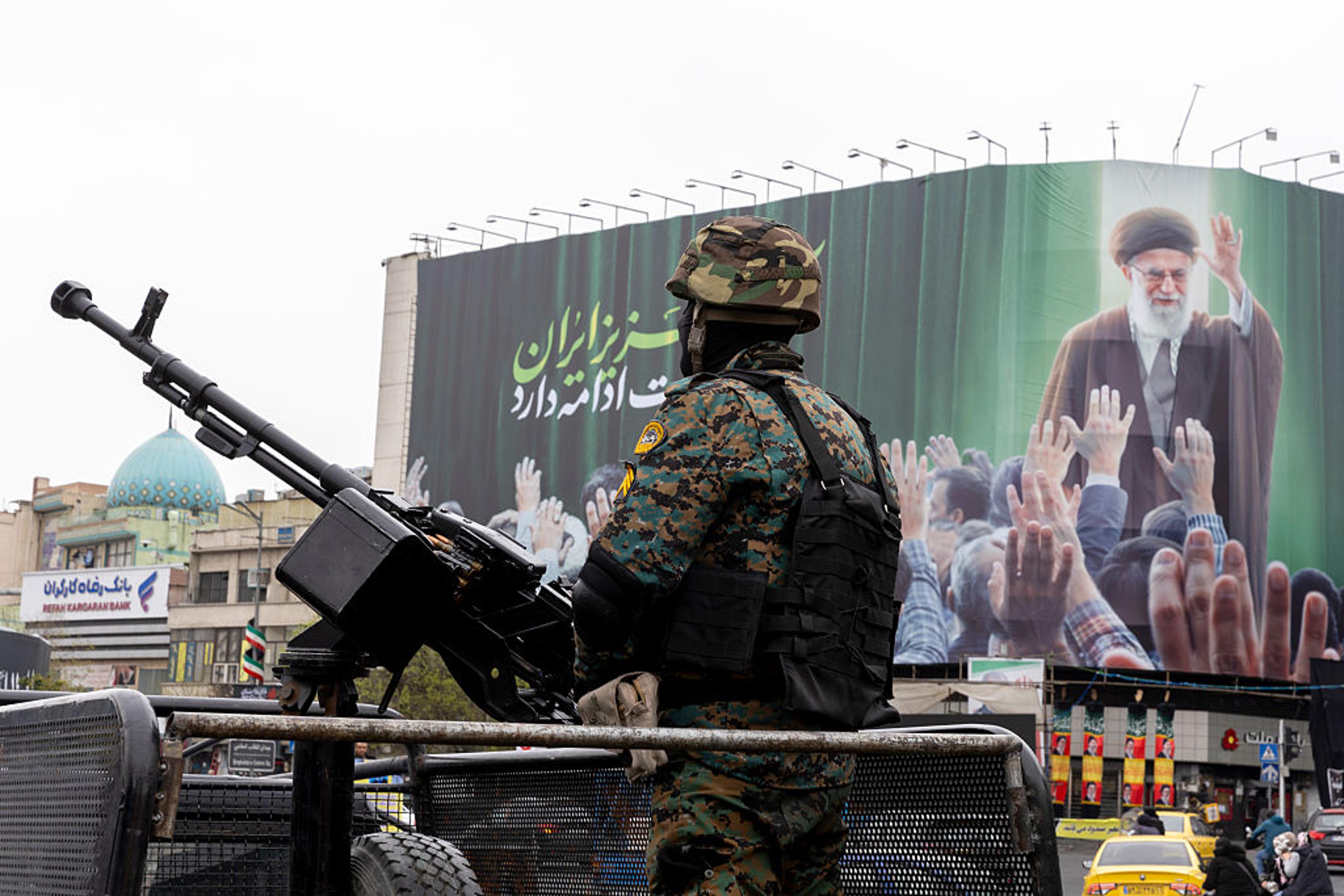
Finally, the covert confrontation between Israel and Iran became a direct military confrontation.
The exchanges of strikes in 2024 had already broken a taboo. The operations of 2025 against Iran and its military and nuclear facilities took that confrontation to another level.
Israel demonstrated its ability to strike deep inside Iranian territory.
But it also discovered what it means to confront directly a state possessing a substantial ballistic-missile arsenal.
Distance is no longer protection.
Iran: A Weakened Threat, Not a Solved Problem
Iran remains the principal strategic reference point in Israeli security doctrine.
Tehran long sought to surround Israel with a network of allies and armed organizations: Hezbollah in Lebanon, Hamas and Palestinian Islamic Jihad, Iraqi militias, support for the Syrian regime, and cooperation with the Houthis.
Much of this architecture has been weakened since 2023.
But weakening a regional network does not eliminate the state that built it.
The Iranian nuclear question remains particularly sensitive. Israel has long considered that a nuclear-armed Iran would fundamentally alter the regional strategic balance. This perception underlies its doctrine of preventing hostile regional states from acquiring military nuclear capabilities, historically illustrated by strikes against Iraq in 1981 and Syria in 2007.
Strikes on Iranian facilities can delay a program.
They cannot necessarily eliminate the scientific knowledge required to rebuild it.
The Iranian dilemma therefore remains intact: how far can military power permanently prevent a technological capability?
The Abraham Accords Changed the Region — but Did Not Remove Palestine
The normalization agreements with the United Arab Emirates, Bahrain, and Morocco beginning in 2020 appeared to formalize a historic transformation.
For decades, the dominant diplomatic logic held that resolving the Palestinian question should precede normalization between Israel and the Arab world.
The Abraham Accords reversed that sequence.
Trade, tourism, technology, defense cooperation, and diplomatic relations advanced without a prior settlement of the Palestinian conflict.
The prospect of normalization with Saudi Arabia would have represented the culmination of this strategy.
October 7 and the war in Gaza exposed its limit.
Existing relations were not necessarily severed. Economic and security interests remain. But the Palestinian question returned to the center of regional diplomacy, and Riyadh publicly linked potential normalization to the existence of a credible pathway toward a Palestinian state.
Israel had succeeded in demonstrating that it could establish relations with several Arab states without resolving the Palestinian conflict.
It has not yet demonstrated that it can complete its regional integration without resolving it.
Power and Legitimacy Are Not the Same Thing
This may be the most important strategic development since 2023.
Militarily, Israel has demonstrated an exceptional ability to act across the region.
Diplomatically, its environment has become far more difficult.
The war in Gaza, the destruction, civilian deaths, humanitarian restrictions, settlement expansion, and statements by some Israeli political leaders have severely damaged the country’s image in many parts of the world.
Several Western states traditionally close to Israel have hardened their criticism. International recognition of the State of Palestine has expanded. Proceedings before the ICJ and ICC have given the conflict a global legal dimension.
It would nevertheless be wrong to conclude that Israel is completely isolated.
The United States remains a major ally. Relations with several Arab states have survived the war. Israeli companies continue to raise capital and sell technology. Defense exports remain significant.
Israel is therefore not isolated in the classical sense.
It is facing something subtler: a widening gap between its material capacity to act and its international political capital.
The two forms of power are not interchangeable.
The Palestinian Problem Cannot Be Destroyed Militarily
Israel can destroy tunnels.
It can kill Hamas leaders.
It can intercept missiles.
It can occupy territory, establish security zones, and temporarily prevent the reconstitution of certain military capabilities.
But none of these operations answers a fundamental question: several million Palestinians live across Israel, the West Bank, and Gaza and claim a national political existence.
That reality does not disappear with the destruction of an armed organization.
Hamas can be weakened or replaced.
The Palestinian question remains.
Conversely, no durable political solution can ignore Israel’s demand for security after the October 7 attacks. An architecture in which a future Palestinian territory could be used to reproduce a larger-scale attack against Israeli population centers would be politically unacceptable to a large part of Israeli society.
Both realities therefore have to be considered simultaneously.
Palestinian sovereignty without Israeli security is difficult to sustain.
Israeli security without Palestinian political rights is no more durable an equilibrium.
The Central Question: What Does Israel Want to Become?
During its first decades, Israel’s priority was relatively clear: survival.
Then came the consolidation of the state, the absorption of successive waves of immigration, the construction of an advanced economy, the achievement of military superiority, and gradual movement out of regional isolation.
A large part of those objectives has been achieved.
Israel is no longer the small, poor, militarily precarious state of 1948.
It possesses an advanced economy, a globally significant technology sector, regional military capabilities, strategic deterrence, and strong alliances.
Its principal challenge is therefore changing.
The question is no longer merely whether Israel can survive.
It is what kind of state will survive.
A more religious or more secular state? A liberal democracy with powerful checks and balances, or a system granting greater primacy to parliamentary majorities? A country in which the ultra-Orthodox are gradually integrated into the labor market and defense system, or a society in which different communities continue to operate under different civic obligations? A state capable of fully integrating its Arab minority, or one durably structured around a contested hierarchy of identities? An Israel politically separated from the Palestinians, or a state exercising indefinite authority over a Palestinian population without national sovereignty?
And above all: an Israel integrated into the Middle East, or an Israel powerful enough to act alone within the region but insufficiently accepted to fully belong to it?
A Power That Gained Strength Without Gaining Stability
Israeli history is the story of an extraordinary accumulation of capabilities.
A multiplied population, a developed economy, irrigated desert, universities, scientific research, start-ups, a defense industry, intelligence services, missile defense, offshore gas, close relations with Washington, peace with Egypt and Jordan, normalization with several Arab states: few countries have transformed their position so profoundly in less than eight decades.
And yet the sense of insecurity remains central.
That is the paradox.
The more powerful Israel has become, the broader its definition of security has grown. It no longer concerns borders alone. It includes Iran’s nuclear program, Hezbollah’s missiles, Gaza, the West Bank, Syria, the Houthis, demography, internal cohesion, relations with Washington, and now international legitimacy.
No military can resolve all these questions simultaneously.
Military power can produce deterrence.
Technology can reduce certain vulnerabilities.
Growth can finance defense.
Alliances can increase strategic depth.
But beyond a certain level of development, a state’s security also depends on its institutions, social cohesion, economic sustainability, and the nature of its relations with those living around it.
That may be where the real Israeli question of 2026 lies.
Israel has amply demonstrated that it can impose considerable costs on its enemies.
It has yet to demonstrate that this power can produce something other than a succession of military victories followed by new threats.
The next stage of its history will therefore probably depend not only on what its military is capable of destroying.
It will depend on the political order Israel is capable of building — for itself, with the Palestinians, and within the region.
Main Sources
- International Monetary Fund (IMF) — Israel: 2026 Article IV Consultation; growth, debt, deficit, military expenditure, labor-market constraints, and macroeconomic risks.
- Israel Central Bureau of Statistics (CBS) — national demographic statistics, including population, fertility, immigration, and population composition.
- OECD — OECD Economic Surveys: Israel; productivity, R&D, employment, education, inequality, demography, and cost of living.
- Israel Innovation Authority — annual reports on the high-tech ecosystem, technology employment, exports, investment, and R&D.
- SIPRI — Military Expenditure Database and SIPRI Yearbook; military spending, arms transfers, and estimates of nuclear forces.
- Knesset — Basic Laws, electoral system, the Nation-State Basic Law, and institutional documentation.
- World Bank — economic reports on the West Bank and Gaza and the Gaza and West Bank Interim Rapid Damage and Needs Assessment.
- United Nations / OCHA / OHCHR — reports and data on Gaza, the West Bank, settlements, casualties, displacement, and investigations concerning the conflict.
- International Court of Justice (ICJ) — Legal Consequences arising from the Policies and Practices of Israel in the Occupied Palestinian Territory, including East Jerusalem, advisory opinion of July 19, 2024; orders in South Africa v. Israel.
- International Criminal Court (ICC) — Situation in the State of Palestine; decisions and arrest warrants issued on November 21, 2024.
- International Committee of the Red Cross (ICRC) — applicable international humanitarian law, status of occupied territories, civilian protection, and hostages.
- Pew Research Center — surveys on Israeli and American public opinion concerning Israel, Palestinians, democracy, and the conflict.
- Israel Democracy Institute — Israel Democracy Index and statistical reports on ultra-Orthodox society, institutions, public trust, and social divisions.
- International Atomic Energy Agency (IAEA) — reporting on Iran’s nuclear program and the consequences of strikes on nuclear facilities.
- Reuters — supplementary factual verification and chronologies concerning recent political, military, diplomatic, and economic developments.
Atlas Limits Research Desk
Atlas Limits’ editorial and analytical desk.