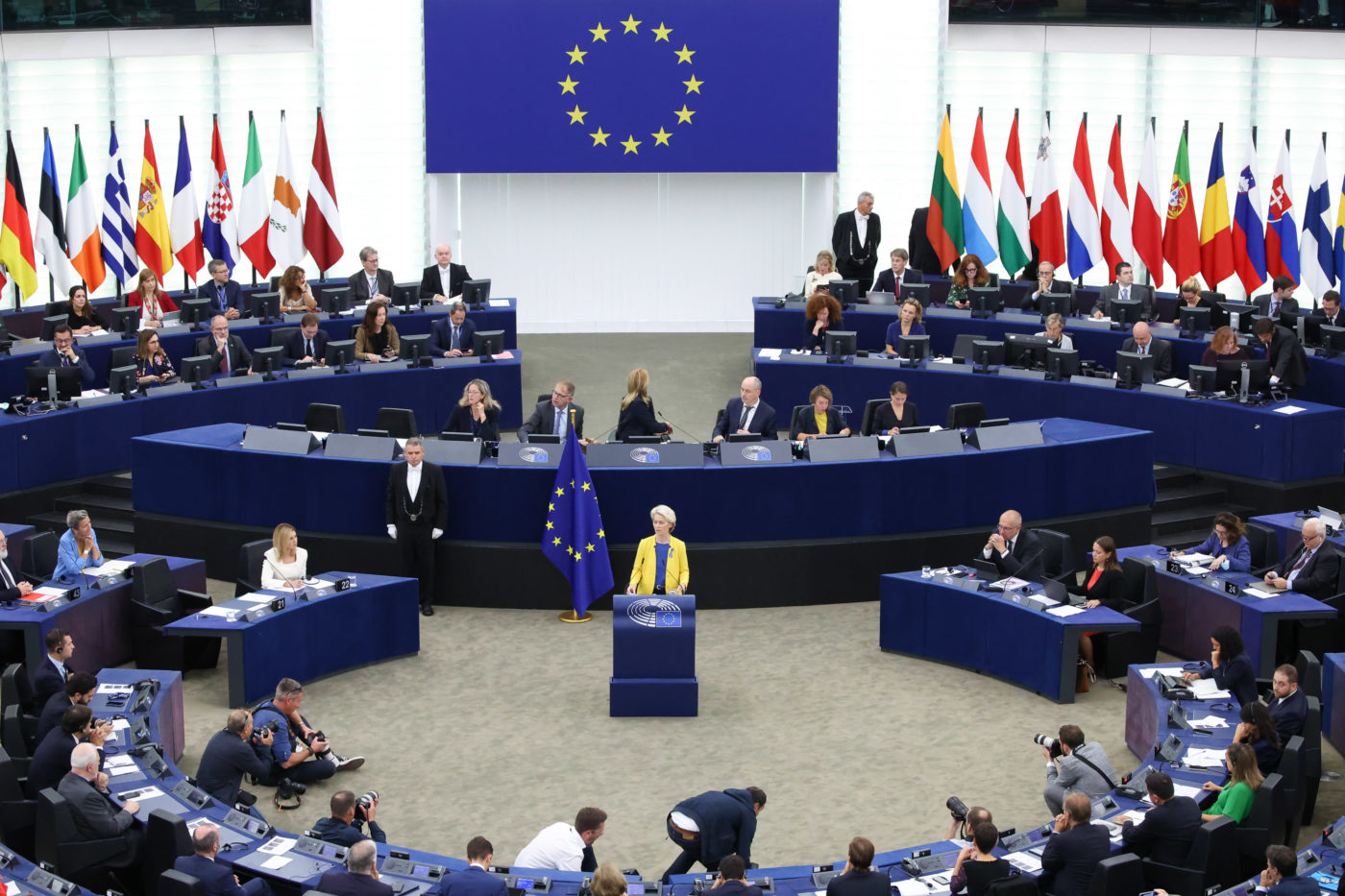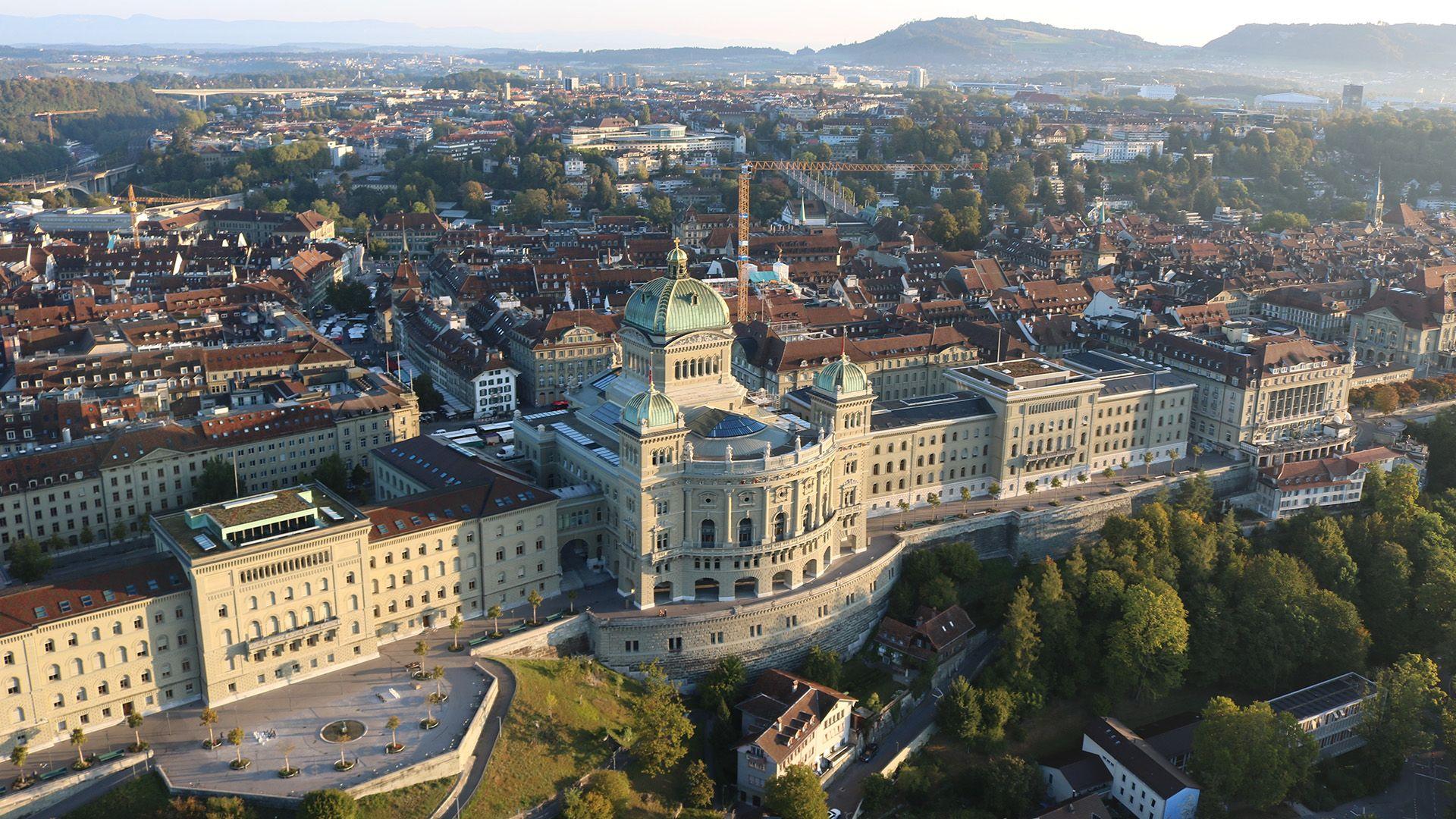
At the heart of Europe lies a country that seems to have spent two centuries perfecting a contradiction.
Switzerland is surrounded by the European Union without belonging to it. It is part of the Schengen Area without being part of the Union. It cooperates with NATO without being a member of the Alliance. It hosts some of the world’s most important institutions of global governance while maintaining a deep reluctance toward transfers of sovereignty. It trades intensively with its neighbors while retaining its own currency, central bank, tax system, institutions, and a substantial degree of regulatory autonomy.
This position might appear uncomfortable. Yet it lies at the heart of one of the most distinctive models of prosperity in the developed world.
Switzerland did not build its power by isolating itself. It did something far more sophisticated: it integrated where integration was useful while seeking to preserve autonomy where it considered that autonomy essential.
That is the difference between isolation and distance.
And it may be the real key to the Swiss model.
A Geography That Did Not Promise Power
At first glance, little destined Switzerland to occupy such an important economic position.
The country is small, mountainous, landlocked, and poor in strategic natural resources. It possesses neither significant hydrocarbon reserves, nor a vast domestic market, nor territorial depth, nor the demographic weight that might automatically place it among the world’s major economies.
Its geography could easily have become a lasting disadvantage.
Yet Switzerland also sits at the intersection of several of Europe’s major economic and cultural spaces: German-speaking, French-speaking, and Italian-speaking Europe. Over time, it transformed this intermediary position into an advantage.
A territory that could have remained a mountainous periphery became an interface.
This transformation was not driven by any single resource, but by accumulation: institutional stability, human capital, infrastructure, industrial specialization, finance, international trade, legal certainty, and an ability to attract both capital and talent.
Switzerland consequently became one of the clearest examples of an economy compensating for limited physical resources through the value of its institutions and expertise.
It exports relatively few raw materials.
It exports value.
The Institutional Machine
To understand this success, one must begin somewhere other than the banks.
Switzerland’s most important infrastructure is political.
The Confederation rests on a highly decentralized architecture in which the cantons retain extensive powers. This federal structure is reinforced by a system of direct democracy that allows citizens to intervene regularly in legislative and constitutional decisions.
The result is not necessarily a fast state.
It is a state that is difficult to move abruptly.
Major political transformations generally require compromises among the federal government, cantons, political parties, economic interests, social partners, and voters. This slowness can be frustrating. But it also produces something particularly valuable for an economy: predictability.
Companies know that sudden regulatory or fiscal revolutions are unlikely. Investors know that major changes must pass through several institutional filters. Citizens themselves possess mechanisms through which they can challenge certain decisions.
Swiss stability therefore does not mean an absence of conflict.
It means the institutionalization of conflict.
Disagreements are absorbed by a political machinery that continually forces the system to construct sufficiently broad majorities to keep functioning.
In a global economy where political uncertainty can itself become a cost, this predictability is an asset.
Federalism as Internal Competition
Swiss federalism also has a less visible economic dimension.
The cantons are not merely administrative subdivisions. They possess substantial autonomy and, to some extent, compete with one another.
Taxation, administrative conditions, infrastructure, education, and the quality of public services all contribute to the attractiveness of individual territories.
Zurich is not Geneva. Geneva is not Zug. Basel is not Lausanne.
Each has developed its own specializations, economic networks, and positioning.
Zurich concentrates a significant share of the financial sector. Geneva combines international finance, commodity trading, and multilateral diplomacy. Basel is one of the world’s major centers for life sciences and pharmaceuticals. Zug has established itself as an especially attractive location for corporate headquarters and certain technology businesses.
This diversity creates a form of permanent laboratory.
Switzerland is not managed as a uniform economy from a single center. It functions as a collection of highly interconnected but partly competing territories.
The balance between federal cooperation and cantonal competition is therefore one of the most distinctive features of its economic architecture.
Far More Than Banks
Reducing Switzerland to its financial sector would nevertheless be a mistake.
Finance has obviously played a major role in its development and remains important today. The stability of the franc, the depth of the financial system, expertise in wealth management, and legal certainty helped attract international capital for decades.
But Switzerland is considerably more industrial than its image sometimes suggests.
Pharmaceuticals, biotechnology, specialty chemicals, precision machinery, scientific instrumentation, medical technology, watchmaking, and engineering are all central sectors.
This specialization reflects a fundamental constraint: a country with high production costs cannot sustainably compete with lower-wage economies in standardized goods.
Switzerland must therefore produce what others find more difficult to produce.
Patent-protected medicines. Instruments requiring extreme precision. Specialized machinery. Luxury products whose value derives as much from expertise and brand equity as from the materials from which they are made.
In other words, the Swiss model relies heavily on moving up the value chain.
When labor is expensive, every hour of labor must generate considerable value.
This logic partly explains the importance attached to vocational education, polytechnic universities, research, and the relationship between industry and education.
Swiss wealth is therefore not merely financial.
It is productive.
The Franc: Privilege and Problem
This success carries its own monetary paradox.
The Swiss franc has long been regarded as a safe-haven currency. When international markets become nervous, capital can flow toward Switzerland, causing its currency to appreciate.
That movement reflects confidence in the country.
But it can simultaneously weaken its economy.
An excessively strong currency makes Swiss exports more expensive and reduces the competitiveness of companies producing domestically. The Swiss National Bank therefore periodically finds itself in a peculiar position: having to mitigate the consequences of excessive confidence in its own currency.
In June 2026, the SNB maintained its policy rate at 0 percent and indicated that it remained more willing to intervene in the foreign-exchange market should a rapid and excessive appreciation of the franc threaten price stability.
The franc thus captures the Swiss paradox perfectly: some of the country’s greatest strengths can become constraints precisely because they work so well.
Neutrality as Political Technology
The same reasoning can be applied to neutrality.
It is often portrayed as a moral posture or almost folkloric historical tradition. Above all, however, it is an instrument of foreign policy.
The law of neutrality prevents Switzerland from participating in a war between states. But Swiss policy has never meant withdrawal from the outside world.
The Confederation belongs to the United Nations, participates in the Schengen Area, has cooperated with NATO through the Partnership for Peace since 1996, and maintains extensive relations with the European Union.
Geneva, meanwhile, hosts an extraordinary concentration of international organizations, NGOs, diplomats, and humanitarian institutions.
Swiss neutrality is therefore less an absence than a positioning.
It enables the country to seek a role in international affairs without becoming a conventional military power.
That position has, however, become more difficult to maintain.
The war in Ukraine, sanctions against Russia, and the return of military power politics to Europe have reopened a fundamental debate: how far can a state cooperate with one side while remaining neutral?
The question is no longer theoretical. On September 27, 2026, Swiss voters are due to decide on an initiative seeking to enshrine a more restrictive interpretation of neutrality in the Constitution, particularly regarding sanctions against belligerent states and cooperation with military alliances.
The debate reaches directly into the heart of the Swiss model: how can distance be preserved without allowing distance to become isolation?
Europe Without the Union
Nowhere is this question more visible than in Switzerland’s relationship with the European Union.
Switzerland belongs economically and geographically to the European space. The European Union is its principal trading partner, and a substantial part of Swiss industry depends on smooth access to the continental market.
Yet after voters rejected membership of the European Economic Area in 1992, Switzerland chose another path.
Instead of broad institutional integration, it gradually constructed an architecture of bilateral agreements.
The strategy is profoundly Swiss: negotiate sector by sector, accept certain forms of interdependence while avoiding, as far as possible, a general transfer of sovereignty.
But this architecture has become increasingly complex.
Relations with Brussels have endured years of tensions over access to the single market, the adoption of EU law, the free movement of people, state aid, and mechanisms for resolving disputes.
A new Switzerland-EU package, commonly associated with the Bilaterals III process, is intended to stabilize that relationship. The agreements were signed on March 2, 2026, and the Federal Council submitted the package to Parliament on March 13. Switzerland’s domestic political process continues and could ultimately lead to a popular vote.
The issue extends far beyond a collection of legal texts.
It raises an existential question for the Swiss model: how far can a country benefit from European economic integration while remaining institutionally distinct from the Union?
For several decades, Switzerland demonstrated that such an intermediary position was possible.
The challenge now is to preserve it in a Europe where markets, regulation, energy, research, security, and technology are becoming increasingly interconnected.
A Globalization Organized From Switzerland
Switzerland’s relationship with the world has another distinctive feature.
The country does not merely export.
It helps organize global trade.
Geneva and the Lake Geneva region occupy an important position in international commodity trading. Companies based in Switzerland participate in global flows of energy, metals, grains, and other essential goods.
This produces yet another paradox.
Part of Switzerland’s economic influence derives not from what physically crosses its territory, but from transactions decided, financed, or coordinated from within it.
Switzerland has thus become a platform.
Finance, insurance, commodity trading, arbitration, intellectual logistics, international headquarters, and specialized services allow a small economy to participate in flows vastly larger than its domestic market.
This offers another way of understanding Swiss prosperity: Switzerland did not attempt to become territorially large.
It sought to become indispensable at particular nodes of the global system.
The Price of the Model
No economic architecture, however, lasts forever.
The Swiss model now faces several pressures simultaneously.
The first concerns growth. In June 2026, the State Secretariat for Economic Affairs forecast GDP growth of only 0.9 percent for the year, followed by a possible acceleration to 1.6 percent in 2027. A more uncertain global environment, geopolitical tensions, and weakness among some trading partners weigh heavily on an exceptionally open economy.
The second concerns the cost of living. Swiss prosperity comes with high prices, particularly for housing, services, and several unavoidable household expenses.
The third is demographic. Like many European countries, Switzerland must manage an aging population and the pressure this places on pensions, healthcare, and the labor market.
At the same time, it depends significantly on immigration to supply skills to parts of its economy and sustain economic activity. Immigration contributes to prosperity but also generates political tensions around housing, infrastructure, identity, and relations with the European Union.
The fourth pressure concerns finance.
The collapse of Credit Suisse and its absorption by UBS in 2023 demonstrated that a financial center renowned for stability was not immune to crisis. It also created a new systemic question: what does it mean for a country the size of Switzerland to host a bank whose balance sheet and operations are global in scale?
Finally, the international tax environment is gradually eroding some historical advantages. Tax coordination initiatives, transparency requirements, and measures against tax evasion have profoundly transformed Swiss banking since the 2000s.
Switzerland is adapting.
But it must increasingly produce its distinctiveness in a world where some of the characteristics that once made it exceptionally attractive are becoming harder to defend.
Distance Is Becoming More Difficult
This is probably where the central question lies.
The Swiss model developed within an international order particularly favorable to its positioning.
Globalization allowed deep economic integration without necessarily demanding equivalent political integration. European security was largely guaranteed by others. Capital moved freely. Supply chains internationalized. World trade expanded. Multilateral institutions occupied a central position.
Switzerland could therefore remain at the heart of global flows while standing apart from the blocs.
The world emerging today is different.
The boundary between economics and geopolitics is disappearing.
Semiconductors have become instruments of power. Energy has once again become a security question. Financial sanctions have become weapons. Foreign investment is increasingly examined through a strategic lens. Supply chains are being reorganized according to political considerations. Military expenditure is rising across Europe.
In such a world, remaining apart becomes more complicated.
Because choices increasingly have to be made.
Which sanctions to apply. Which military partners to cooperate with. Which standards to adopt. Which markets to protect. Which technologies to classify as strategic.
Neutrality worked particularly well in a world where the boundaries between commerce, finance, and security were relatively distinct.
They are becoming less so.
Prospering Apart
It would nevertheless be wrong to conclude that the Swiss model is necessarily approaching its end.
Its history suggests almost the opposite.
Switzerland has never endured because it refused to change. It has endured because it repeatedly changed the terms of its exception in order to preserve the principle behind it.
Banking secrecy has receded, yet the financial center remains. Traditional industry declined in some sectors, yet Switzerland moved further toward high-value-added activities. Its economy became deeply internationalized without the country joining the European Union. Neutrality itself has been interpreted differently across different periods.
The real Swiss constant may therefore be neither neutrality, the franc, nor federalism in isolation.
It is the ability to negotiate interdependence.
To remain open enough to benefit from the world.
Integrated enough to participate in its prosperity.
Yet distinct enough to retain room for maneuver.
It is an uncomfortable position, sometimes contradictory and increasingly difficult to defend.
But it explains much of how a small, mountainous, landlocked country with few major natural resources managed to build one of the world’s most prosperous societies.
Switzerland has never truly prospered alone.
It has prospered among others while avoiding becoming entirely one of them.
And in that distinction may lie the essence of the Swiss model.
Main Sources
- Swiss Federal Council / Federal Department of Foreign Affairs — Switzerland–European Union relations, Bilaterals III package, and Swiss neutrality policy.
- Swiss National Bank — Monetary policy assessment, June 2026.
- State Secretariat for Economic Affairs (SECO) - Economic forecasts, June 2026.
- Federal Department of Foreign Affairs — Switzerland’s cooperation with NATO through the Partnership for Peace and official documentation on Swiss neutrality.
Atlas Limits Research Desk
Atlas Limits’ editorial and analytical desk.