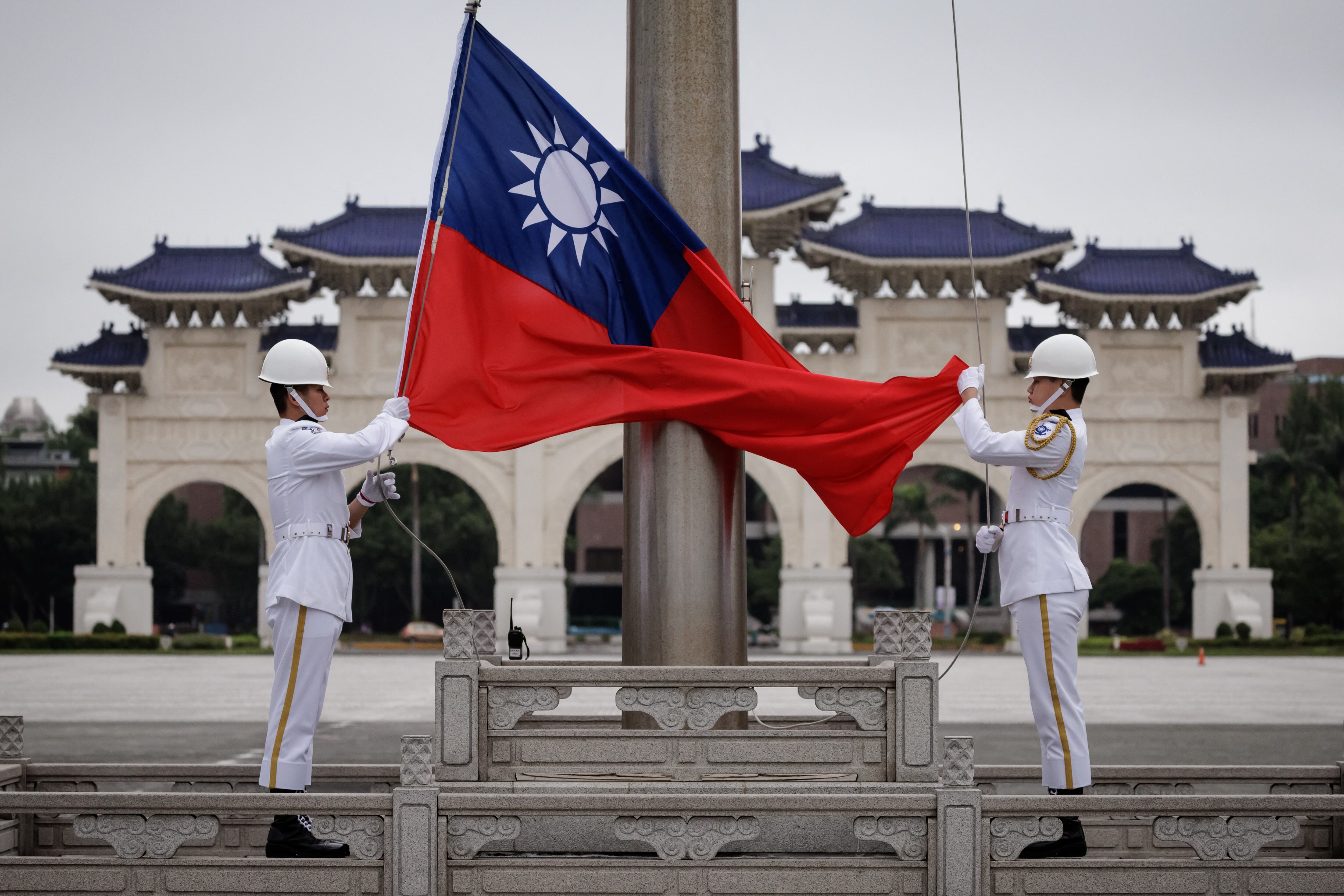
Few territories occupy as strategic a position in today's world as Taiwan. With a land area of just over 36,000 km² and a population of approximately 23 million people, the island exerts an economic, technological, and geopolitical influence far exceeding its size. Located at the center of the first island chain in the Western Pacific, just off the coast of mainland China, Taiwan has become both a cornerstone of the global economy and one of the world's most sensitive geopolitical flashpoints.
The Taiwan question now extends well beyond relations between Beijing and Taipei. It directly affects global supply chains, technological sovereignty, regional security in the Indo-Pacific, freedom of navigation, and, more broadly, the evolving balance of power between the major powers of the twenty-first century.
A Historical Legacy That Continues to Shape the Present
Taiwan's current status is rooted in the upheavals of the twentieth century. After being under Japanese colonial rule from 1895 to 1945, the island was placed under the administration of the Republic of China following the end of the Second World War.
In 1949, the victory of the Chinese Communist Party in the Chinese Civil War led the Nationalist government of the Kuomintang to retreat to Taiwan. Since then, two political authorities have historically claimed to represent China, although their political systems have evolved along markedly different paths.
While the People's Republic of China has represented China at the United Nations since 1971, Taiwan has progressively developed its own institutions, economy, and democratic political system. Today, the island holds free elections, maintains an independent judiciary, and benefits from a vibrant civil society.
This political evolution explains why a growing majority of its population identifies primarily as Taiwanese, whereas Beijing continues to regard the island as a province that should eventually be reunified with the mainland. This divergence remains at the heart of one of the most consequential geopolitical issues of our time.
An Economy Among Asia's Most Advanced
Despite its limited territory and scarce natural resources, Taiwan has built one of the world's most sophisticated economies. Its development model rests on several complementary strengths:
- a highly specialized manufacturing sector;
- strong innovation capabilities;
- a high-performing education system;
- deep integration into international trade.
Exports account for a substantial share of Taiwan's economy, with particular specialization in electronic equipment, semiconductor components, precision machinery, and advanced technologies.
The island maintains extensive trade relations with mainland China, the United States, Japan, the European Union, and economies across the Asia-Pacific region. This diversification has strengthened its resilience, although significant economic interdependencies remain.
In recent years, Taiwanese companies have also sought to reduce geopolitical risks by gradually expanding manufacturing capacity into other Asian countries and the United States.
The Global Center of Semiconductor Manufacturing
If there is one sector in which Taiwan holds an exceptional position, it is semiconductors. Semiconductor chips have become the invisible infrastructure of the modern economy. They power smartphones, computers, data centers, telecommunications networks, satellites, automobiles, medical equipment, and advanced defense systems.
Taiwan accounts for a significant share of global production of the world's most advanced semiconductor chips. This position is primarily built upon TSMC, which has become the world's leading semiconductor foundry, manufacturing chips for many of the largest technology companies worldwide.
Unlike companies that design their own processors, TSMC specializes in manufacturing chips developed by external clients, making it one of the most critical links in the global digital economy.
This concentration creates a strategic paradox. On one hand, it considerably strengthens Taiwan's international importance.
On the other, it represents a vulnerability for the global economy, as much of the world's most advanced chip manufacturing capacity remains concentrated on an island exposed to persistent geopolitical tensions.
This reality has prompted several major economies to launch ambitious industrial policies aimed at expanding domestic semiconductor production, although replicating Taiwan's accumulated expertise will require many years.
A Strategic Position at the Center of the Indo-Pacific
Beyond its economic significance, Taiwan occupies one of the most strategically important geographical positions in the Indo-Pacific. The island lies within the first island chain stretching from Japan to the Philippines and Southeast Asia. Its location directly influences:
- maritime trade routes;
- China's access to the Pacific Ocean;
- Japan's security environment;
- the United States' broader Indo-Pacific strategy.
A substantial share of global maritime commerce also passes through waters surrounding the Taiwan Strait. Any prolonged disruption in this region would have major consequences for global supply chains, financial markets, industrial production, and international trade.
For this reason, stability in the Taiwan Strait has become an issue of global concern extending far beyond the directly involved parties.
Sino-American Competition Beyond Taiwan Itself
Taiwan has become one of the principal focal points of strategic competition between the United States and China. For Beijing, reunification remains a fundamental national objective embedded in official political discourse. For Washington, preserving regional stability, ensuring freedom of navigation, and maintaining the strategic balance in the Indo-Pacific remain core interests.
The United States continues to adhere to its longstanding "One China" policy while maintaining unofficial relations with Taiwan and providing the island with defensive capabilities. This policy of strategic ambiguity seeks to discourage both a formal declaration of Taiwanese independence and the use of military force by China.
At the same time, regional partners—including Japan and Australia—closely monitor developments, recognizing that any destabilization would extend well beyond the Taiwan Strait.
Possible Scenarios for the Coming Decades
Several trajectories remain conceivable. The most likely scenario continues to be the maintenance of the current status quo: neither formal independence nor reunification, but a gradual increase in political, economic, diplomatic, and military pressure.
A second scenario would involve more frequent military demonstrations, large-scale exercises, or economic coercion intended to increase pressure on Taipei without triggering open conflict. A third scenario, increasingly examined by strategic analysts, would involve a maritime or aerial blockade designed to impose severe pressure while avoiding the enormous risks associated with an amphibious invasion.
Finally, the possibility of direct military conflict remains the most consequential scenario. Beyond its human cost, such a conflict would likely trigger severe disruptions across global supply chains, financial markets, maritime trade, and advanced technology production.
None of these outcomes is inevitable. Their likelihood will depend on the evolving military balance, political decision-making in Beijing, Taipei, and Washington, and the effectiveness of diplomatic mechanisms in preventing escalation.
Conclusion
Taiwan has become far more than a territorial dispute inherited from the Chinese Civil War. The island embodies several of the defining dynamics of the twenty-first century: great-power competition, technological sovereignty, supply chain resilience, critical technology leadership, and Indo-Pacific security.
Its ability to preserve its economic dynamism, industrial leadership, and democratic institutions will continue to shape both regional and global strategic balances. At the same time, developments in relations among Beijing, Taipei, and Washington will remain one of the most important indicators of the broader state of international affairs.
Taiwan ultimately illustrates a broader reality of the modern world: in an increasingly interconnected global economy where technology has become a central pillar of national power, the stability of a relatively small territory can produce consequences that extend far beyond its own borders.
Main Sources
- World Bank — Macroeconomic indicators and international trade statistics.
- International Monetary Fund (IMF) — Regional Economic Outlooks and macroeconomic data.
- World Trade Organization (WTO) — International trade statistics.
- Ministry of Economic Affairs (Taiwan) — Economic, industrial, and trade data.
- Taiwan Semiconductor Manufacturing Company (TSMC) — Annual reports and investor presentations.
- Stockholm International Peace Research Institute (SIPRI) — Military expenditure and regional security data.
- Institute for National Defense and Security Research (INDSR, Taiwan) — Strategic and defense analysis.
- U.S. Congressional Research Service (CRS) — Reports on U.S.–Taiwan relations.
- International Institute for Strategic Studies (IISS) — The Military Balance.
- United Nations — Demographic and historical reference data.
Atlas Limits Research Desk
Atlas Limits’ editorial and analytical desk.