For decades, the middle class represented more than an income category. It embodied a promise: that stable employment would gradually lead to a better standard of living, home ownership, savings, decent education for one's children and a reasonably secure retirement.
That promise has not disappeared. But it is becoming harder to fulfil.
Across much of the world, the problem is not necessarily that the middle class is statistically collapsing. The transformation is subtler: the incomes that qualify households as middle class increasingly fail to guarantee the way of life historically associated with that status. Between housing costs, education, healthcare, transportation, taxation, debt and the growing difficulty of accumulating assets, many middle-income households remain middle class by statistical definition while becoming progressively more economically vulnerable.
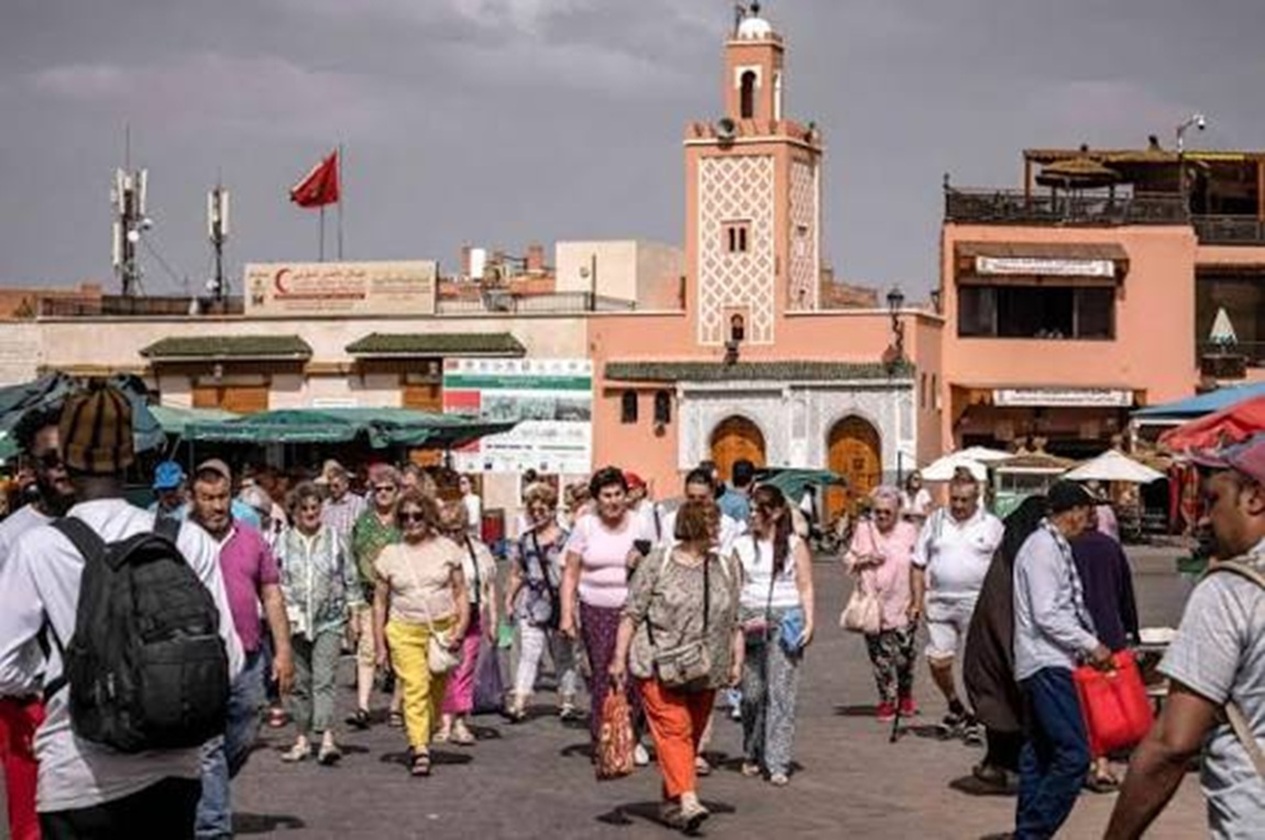
Morocco offers a particularly revealing illustration of this contradiction.
A Class That Is Difficult to Define
There is no universal definition of the middle class. Statisticians may measure it relative to median income, consumption levels, household wealth or a household's position within the national income distribution. Sociologists often add education, occupation, aspirations and lifestyle.
The OECD, for instance, uses thresholds relative to median income when analysing middle-income households. This makes it possible to compare developments across advanced economies, but it also exposes the limitations of the concept: belonging to the middle class primarily means occupying a relative position within a particular society. Two households considered "middle class" in two different countries may enjoy radically different absolute standards of living.
This is precisely what makes the question important.
A household can be relatively well-off compared with the rest of its country while remaining economically fragile in absolute terms. Conversely, an income considered modest in a wealthy economy may still provide consumption possibilities far beyond those available to much of the world's population.
The middle class, therefore, is not simply an amount of money. It is a position within an economy and, above all, the ability to convert income into security.
The Moroccan Paradox
In Morocco, this distinction is particularly striking.
Available data on declared wages in the formal economy show a distribution in which salaries that would remain modest by advanced-economy standards can already place an employee relatively high within the national wage hierarchy. A monthly income of around 10,000 Moroccan dirhams is therefore frequently associated in Moroccan public debate with the middle or upper-middle segments of formal salaried employment.
Precision matters, however. The CNSS does not officially define the Moroccan middle class as beginning at 10,000 dirhams. Its data primarily describe declared wages within the employment categories covered by the social security system. They capture neither the full spectrum of household income nor Morocco's substantial informal economy. The Moroccan middle class must therefore be assessed through a broader set of indicators.
Data from the High Commission for Planning, or HCP, provide a wider picture. In 2022–2023, average annual household income stood at approximately 89,170 dirhams, while average annual income per person was 21,949 dirhams. Inequalities remained considerable: in 2022, the wealthiest 20% of the population received 58.3% of total income, compared with just 4.2% for the poorest 20%.
Against this background, an individual earning 10,000 dirhams per month may occupy a relatively favourable position. But that statistical position does not necessarily translate into economic comfort.
This is where the paradox begins.
Mechanically converting 10,000 dirhams into euros or dollars would tell us very little. Prices, housing costs, taxation and social protection systems differ substantially between countries. Yet when compared with wage distributions in advanced economies, the same nominal amount would represent a very low income. The same individual can therefore appear relatively privileged within Morocco's income distribution while possessing a financial capacity that would be associated with low-income groups in many wealthy countries.
The contrast reveals something more important than the comparison itself: the widening distance between relative status and actual economic security.
When 10,000 Dirhams Does Not Mean Affluence
Consider an urban Moroccan household living on an intermediate income. Its budget extends far beyond food and housing.
To reproduce the lifestyle traditionally associated with the middle class, it may have to finance decent housing, a car or regular transportation, children's education, healthcare expenses, telecommunications, household equipment and, ideally, precautionary savings.
Some of these expenditures correspond elsewhere to services that are more extensively provided through public systems or collective risk-sharing mechanisms. When households believe public provision does not fully meet their expectations, they effectively purchase on the market a second layer of services they already help finance through taxes and social contributions: private schooling, private healthcare, individual transportation, residential security or supplementary retirement savings.
The pressure on disposable income can become substantial.
HCP figures illustrate the evolution of these trade-offs. Between 2014 and 2022, food's share of household expenditure increased from 37% to 38.2%, while housing and energy rose from 23% to 25.4%. Over the same period, the share allocated to leisure and culture fell from 1.9% to just 0.5%.
That last movement is particularly revealing. When household budgets tighten, discretionary expenditure is usually the first to disappear. Consumption continues, but its composition changes. The household does not necessarily cease to be statistically middle class; instead, it gradually loses the financial flexibility that once gave that status practical meaning.
The HCP has also found that living standards among intermediate social categories declined by 4.3% between 2019 and 2022, after increasing by 3.3% between 2014 and 2019. Across the entire 2014–2022 period, their average annual improvement amounted to only 0.8%, below the progress recorded at both ends of the distribution. The institution has also highlighted increasing vulnerability among groups that are not necessarily targeted by social protection policies.
The problem facing Morocco's middle class, therefore, is not simply that it wants to consume more. It is that a growing share of its income may be required to purchase the economic security associated with its social status.
A Phenomenon Far Beyond Morocco
This tension is not confined to emerging economies.
In advanced economies, it simply takes a different form.
The OECD has documented the pressure facing middle-income households for years. Across many member countries, their incomes have grown more slowly than those of higher-income groups, while some expenditures considered essential to a middle-class lifestyle — particularly housing — have risen faster than median real incomes.
Housing is probably the most visible manifestation of the change.
Across major North American and European metropolitan areas, becoming a homeowner often requires a considerably greater financial effort than it did a generation ago. Even households earning relatively comfortable incomes can devote a substantial proportion of their resources to rent or mortgage payments.
The wealth effect is profound. Generations that purchased homes before major property-price increases benefited from substantial asset appreciation. Those entering the market later must purchase the same assets at much higher prices.
Two households with similar incomes can therefore inhabit completely different economic realities depending on whether they already own their home or are still trying to acquire one.
The divide increasingly runs through the middle class itself.
From Income to Wealth
This may be the most profound transformation of all.
For decades, income was the principal indicator of economic status. It remains essential, but wealth increasingly determines economic security.
A household earning an average income but owning its home, carrying little debt and holding financial savings may enjoy considerable security. Another household earning more but paying high rent, servicing a car loan, covering childcare costs and carrying other debts may be far more exposed.
The relevant question is therefore no longer simply: how much do you earn?
It is also: how much remains after unavoidable expenses, and what assets do you possess to absorb a shock?
This evolution contributes to a new form of wealth stratification. Inheritance, family transfers and the timing of entry into the property market can become almost as decisive as salary.
Social mobility consequently changes in nature. Professional advancement may no longer be enough. Households must also cross the increasingly significant barrier of asset accumulation.
Too Rich to Receive Support, Not Rich Enough to Feel Secure
The middle class also occupies an uncomfortable position within social policy.
Social programmes legitimately concentrate resources on the most vulnerable populations. Wealthier groups, meanwhile, generally possess sufficient financial capacity to absorb part of an economic shock or privately purchase the services they require.
Between them lies a population that contributes substantially to financing the system but whose income does not always allow it to protect itself individually against every risk.
This intermediate zone can become particularly exposed when eligibility thresholds for public assistance are strict. A modest increase in income can result in the loss of benefits without the additional earnings being sufficient to compensate for them.
The mechanism varies across countries, but it produces a familiar sensation: working more, advancing professionally and earning more without experiencing a proportional improvement in disposable living standards.
At that point, the problem becomes psychological as well as economic.
The Breaking of the Promise
Societies can tolerate substantial inequality when social mobility remains credible.
Individuals are more likely to accept the existence of very high incomes when they believe they can improve their own circumstances and provide their children with a better life. But when that expectation weakens, perceptions of inequality begin to change.
The question is no longer simply how much the wealthy possess. It becomes: why does greater effort no longer produce the expected progress?
This is where economic pressure begins to intersect with political stability.
The middle class has traditionally played a stabilising role. Its members possess enough to have a stake in institutional continuity, while remaining sufficiently close to lower-income groups to preserve a degree of social fluidity. It provides a large share of the managers, teachers, technicians, professionals, entrepreneurs, civil servants and skilled employees on whom modern economies depend.
Its weakening does not necessarily produce an immediate crisis.
It produces something slower: an erosion of confidence.
The Real Measure of Prosperity
The Moroccan case ultimately raises a question that applies just as readily to Casablanca as it does to Paris, Toronto or Madrid: at what point can a household genuinely be considered middle class?
Income alone is no longer enough.
A more meaningful assessment would probably have to consider disposable income, housing costs, wealth, indebtedness, access to essential services, savings capacity and resilience to economic shocks simultaneously.
A household earning a respectable income but unable to withstand several months without earnings is not economically secure. A household forced to choose between healthcare, education, housing and savings may have an intermediate income but very limited financial room for manoeuvre. A household whose every salary increase is absorbed by rising unavoidable costs can become statistically richer while feeling that it is standing still.
This may be the defining transformation of the contemporary middle class.
It is not necessarily disappearing. It is losing part of what once defined it.
Home ownership becomes harder. Saving requires greater effort. Asset accumulation occurs later in life. Essential services absorb a growing share of income. Upward mobility becomes less automatic.
In Morocco, the contrast is particularly striking: an individual income of around 10,000 dirhams can indicate a relatively favourable position within formal salaried employment while remaining far from guaranteeing the material comfort that the expression "middle class" might imply.
In advanced economies, the figures are different, but the underlying mechanism increasingly converges: even incomes situated near the centre of the distribution no longer systematically guarantee access to housing, wealth accumulation and financial security.
The central question, therefore, may no longer be where the middle class begins.
It is what remains of the promise that once made belonging to it meaningful.
Main Sources
- High Commission for Planning (HCP), National Survey on Household Living Standards 2022–2023, report and principal findings.
- High Commission for Planning (HCP), data on the social distribution of income and household living standards.
- High Commission for Planning (HCP), Household Income: Levels, Sources and Social Distribution.
- OECD, Under Pressure: The Squeezed Middle Class.
Atlas Limits Research Desk
Atlas Limits’ editorial and analytical desk.