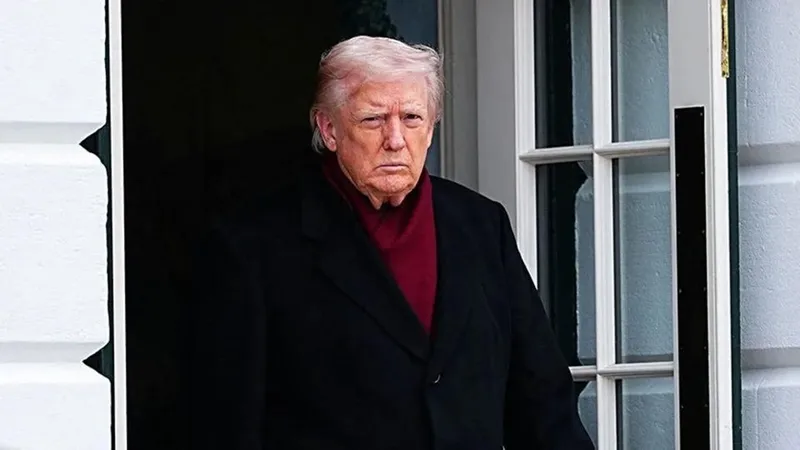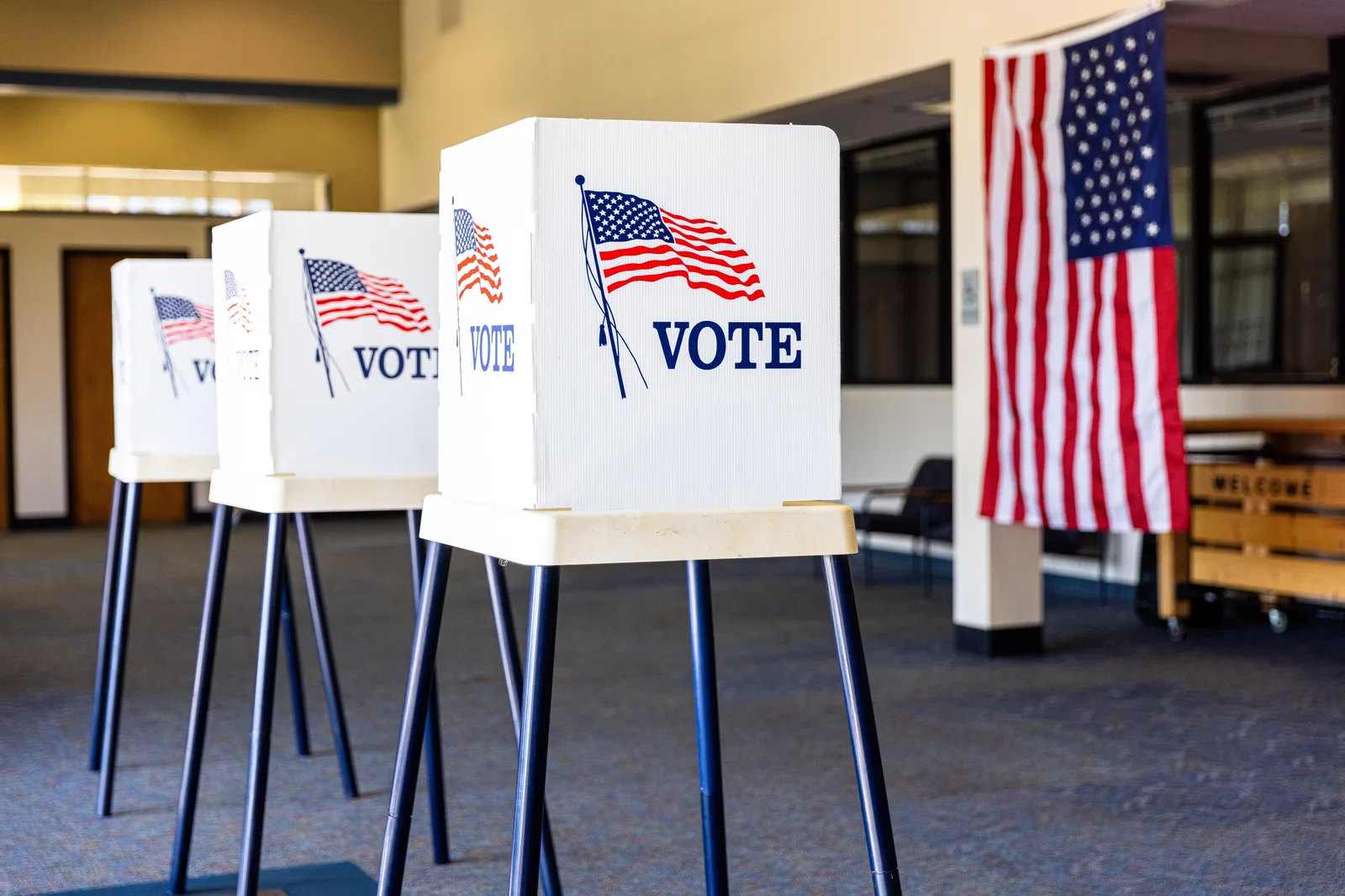
With twelve days remaining before the midterm elections, the United States is preparing to renew its Congress amid economic tensions, political realignment, and international uncertainty. Donald Trump will not appear on the November 3 ballot. Yet the election will determine a substantial part of the conditions under which he can exercise power during the final two years of his presidency.
All 435 seats in the House of Representatives will be contested, along with 35 Senate seats, including two special elections. Thirty-six states will also elect governors. Behind these simultaneous contests lies a fundamental institutional question: will the American president retain a Congress politically aligned with his administration, or will he have to contend with an opposition equipped with new instruments of oversight?
The stakes extend well beyond American borders. Since returning to the White House in January 2025, Donald Trump has pursued a reorientation of US trade, industrial, and diplomatic policy. Tariffs have become central instruments of negotiation, productive sovereignty has emerged as a strategic priority, and Washington's relationships with traditional partners have been subjected to new demands.
But this transformation faces constraints that American power alone cannot eliminate. Prices remain a major concern for households, businesses must absorb the consequences of trade uncertainty, and international commitments continue to require considerable resources.
The November 3 elections are therefore more than a contest between two political parties. They confront a strategy of national power with the economic, social, and institutional conditions required to sustain it.
A Presidency Confronted by Constitutional Constraints
The American political system rests on a separation of powers that limits a president's ability to govern indefinitely without congressional support.
The president directs the executive branch, commands the armed forces, and exercises significant authority over diplomacy. Congress nevertheless retains the power to pass legislation, authorize federal spending, amend taxation, and oversee the administration. The Senate also participates in confirming numerous presidential appointments.
Since January 2025, Republicans have held majorities in both chambers. At the beginning of the congressional term, they controlled 220 seats in the House of Representatives, compared with 215 for Democrats, and 53 Senate seats against 47 held by the Democratic caucus, including two independents.
These initial balances illustrate an important distinction between the two institutions.
In the House, a majority of only a few seats can make legislation dependent on relatively small parliamentary factions. In the Senate, procedural rules, particularly the filibuster for many categories of legislation, can require cooperation beyond a simple majority.
A presidential victory therefore does not guarantee unlimited legislative capacity.
Midterm elections provide voters with an opportunity to reconsider this institutional configuration.
American history demonstrates that voters have repeatedly used these elections to alter the balance of power. In 1994, Republicans gained 54 House seats under Bill Clinton. In 2010, they gained 63 seats during Barack Obama's presidency. In 2018, Democrats achieved a net gain of 40 seats during Donald Trump's first term.
These precedents do not determine the outcome of 2026. They nevertheless demonstrate that a presidential coalition can change considerably when voters move from choosing a candidate to assessing an administration's performance.
That distinction represents the election's first major challenge.
Purchasing Power Confronts the Promise of Industrial Renewal
Economic conditions occupy a central place in the electoral contest.
Donald Trump built part of his 2024 presidential campaign around a promise: restore American prosperity by protecting domestic producers, reducing certain trade dependencies, and encouraging investment within the United States.
The strategy follows an identifiable logic. An economy with substantial industrial capacity is less exposed to certain supply disruptions. Domestic production can support employment, strengthen tax revenues, and preserve strategically important technological capabilities.
But the benefits of this transformation do not necessarily materialize at the same pace as its costs.
Building a semiconductor fabrication plant, developing a battery production chain, or relocating industrial equipment manufacturing requires several years. Investments must be financed, infrastructure constructed, workers trained, and suppliers mobilized.
Households, meanwhile, assess their economic circumstances every week.
Food prices, housing expenses, insurance premiums, transportation costs, and debt repayments influence their perception of living standards far more directly than announcements of industrial investment.
This difference in time horizons has become a major political problem.
A Reuters/Ipsos survey published on October 9 indicated that 78% of Americans surveyed attributed some responsibility for rising prices to presidential policies. Among Republican respondents, 57% believed their expenses were increasing faster than their incomes.
These perceptions do not constitute a direct measurement of the contribution of government policies to inflation. They nevertheless show that economic concerns extend across partisan affiliations.
The phenomenon also goes beyond movements in the consumer price index.
Slowing inflation means that prices are rising less rapidly. It does not mean that goods and services have returned to their previous prices.
For households that have experienced several years of rising essential expenses, slower inflation is therefore not necessarily sufficient to restore lost purchasing power.
The problem is particularly sensitive in an economy where household consumption accounts for approximately two-thirds of gross domestic product.
The resilience of domestic demand depends not only on employment and income, but also on consumers' ability to absorb unavoidable expenses.
The 2026 campaign thus confronts two representations of American prosperity: that of a nation investing to rebuild its productive capacity, and that of households judging the economy through their disposable income.
Protectionism and the Distribution of Costs
Trade policy represents one of the principal instruments of Washington's economic transformation.
Tariffs pursue several objectives: protecting domestic production, changing competitive conditions, encouraging investment localization, and increasing American negotiating leverage.
Their effectiveness, however, depends on the structure of the markets concerned.
When an imported product is subject to a tariff, the American importing company pays the corresponding duty. It may subsequently absorb the expense, reduce its margins, seek another supplier, or pass part of the cost on to customers.
The effects vary considerably between industries.
A domestic manufacturer competing with imported goods may benefit from greater protection. An American company relying on foreign components may instead face higher production costs.
The consequences are particularly complex in industries whose value chains cross multiple borders.
Automobiles, electronics, industrial machinery, and energy equipment depend on international supplier networks. Changes in trade conditions can therefore simultaneously affect component prices, investment decisions, and the competitiveness of finished products.
The question is not simply whether the United States can produce more domestically.
It is whether it can do so at an acceptable cost, within realistic time frames, and with sustainable consequences for the wider economy.
This question reflects a deeper evolution in American strategic thinking.
For several years, dependence on certain foreign suppliers has increasingly been treated as a national security risk. Advanced semiconductors, critical minerals, electrical equipment, and defense technologies have become sectors where geopolitical considerations directly influence economic decisions.
This orientation extends beyond partisan divisions.
The Biden administration had already launched major industrial programs, notably through the 2022 CHIPS and Science Act, which provided approximately $52.7 billion in federal funding for semiconductors and related activities.
Differences between Democrats and Republicans therefore concern not only the general objective of preserving industrial capabilities, but also the instruments, priorities, and financing mechanisms employed.
November's elections could alter the political conditions surrounding this strategy without necessarily overturning its foundations.
The House of Representatives: The First Center of Gravity
The House of Representatives occupies a distinctive position in midterm elections.
Its 435 members serve two-year terms. Every national congressional election therefore renews the entire chamber.
Unlike the Senate, where only certain seats are contested during each electoral cycle, the House provides a comprehensive picture of America's territorial representation.
But that picture does not correspond exactly to the national popular vote.
The United States is divided into single-member congressional districts. In the overwhelming majority of cases, the candidate receiving the most votes in a district wins the seat.
The geographical distribution of voters therefore becomes decisive.
A party can gain support nationally without securing a proportional increase in seats. Conversely, relatively small shifts across several competitive districts can substantially change the composition of the House.
Redistricting reinforces this characteristic.
In several states, congressional boundaries result from political decisions or procedures challenged before the courts. Urban concentrations, rural territories, and suburban areas produce different electoral configurations.
The suburbs of major metropolitan areas are particularly important territories where demographic and economic transformations can reshape partisan coalitions.
Concerns in these communities frequently combine taxation, housing, education, public safety, and the cost of living.
In industrial regions, trade policy and manufacturing employment may carry greater weight.
In agricultural areas, exports, energy prices, and input costs become essential considerations.
The national contest is therefore fragmented into hundreds of local races.
For Donald Trump, control of the House will help determine the conditions under which new tax and budget legislation can be adopted.
For Democrats, gaining control of the chamber would provide additional means of overseeing the executive branch, organizing hearings, and initiating congressional investigations.
But a Democratic House majority would not automatically confer the ability to impose a legislative program.
Bills would still have to pass the Senate and, except under specific constitutional circumstances, receive presidential approval or secure the qualified majorities required to override a veto.
The issue is therefore as much about negotiation and oversight as it is about legislative production.
The Senate: A Different Institutional Contest
The Senate election follows a different logic.
Every state has two senators, regardless of population. California, with nearly 40 million inhabitants, therefore has the same number of Senate seats as Wyoming, whose population is below 600,000.
This institutional equality between states is one of the founding principles of American federalism.
It nevertheless produces considerable electoral consequences.
Control of the Senate depends on a territorial map that does not directly reflect the national distribution of population.
In 2026, 35 seats are being contested: the 33 regular Class II seats and two seats filled through special elections.
At the beginning of the congressional term, Republicans held 53 seats, compared with 47 for the Democratic caucus.
Starting from that balance, Democrats would need a net gain of four seats to reach 51 senators, given the Republican vice president's tie-breaking vote in a 50–50 Senate.
The difficulty lies in the geographical distribution of the seats being contested.
Senate elections are not uniform national referendums. They depend on candidates' popularity, local political conditions, turnout, and the distinctive characteristics of each state.
North Carolina, Maine, Michigan, Georgia, and New Hampshire illustrate different types of contests in which national issues interact with local political circumstances.
The results will have consequences extending beyond legislation.
The Senate participates in confirming federal judges, senior administration officials, and numerous diplomatic appointments. It also exercises a constitutional role in treaty ratification, subject to specific majority requirements.
Its composition will therefore influence the institutional instruments available to the presidency until January 2029.
Governors: Another Map of American Power
On November 3, voters will also elect 36 governors.
These elections generally receive less international attention than congressional contests. Yet they concern institutions essential to the functioning of the American economy.
State governments exercise substantial authority over education, infrastructure, economic regulation, public health, energy, and the implementation of numerous social policies.
Governors also play a major role in determining the industrial attractiveness of their territories.
Semiconductor projects, automobile factories, data centers, and energy installations frequently depend on decisions made at the state level.
Local taxation, land availability, electricity connections, transportation infrastructure, and workforce training directly influence corporate investment decisions.
This territorial dimension is particularly important in an economy entering a new phase of industrial competition.
Investments announced in Washington become productive capacity only when they are integrated into territories possessing the necessary infrastructure and resources.
The federal government can establish broad priorities. States participate in their implementation.
Gubernatorial elections therefore represent a second level of political decision-making, less visible but essential to understanding America's economic transformation.
The Republican Party and the Contradictions of Its Coalition
Since 2016, Donald Trump has profoundly transformed the political structure of the Republican Party.
The defense of free trade, once central to significant sections of the American right, has given way to industrial protection. Immigration has become a major identity and economic issue. Relations with federal institutions, international alliances, and large corporations have been redefined.
This transformation has brought together electorates whose interests are not always identical.
Business owners favoring lower taxes, workers in industrial regions, agricultural producers, social conservatives, and advocates of a more restrained foreign policy can belong to the same coalition without sharing every priority.
Tariffs illustrate these tensions.
They may benefit certain manufacturers while increasing the cost of equipment used by other industries.
Reducing public expenditure may satisfy advocates of fiscal discipline while generating resistance in territories dependent on federal programs.
Military ambitions and foreign commitments can also divide interventionist factions from those favoring limits on American involvement abroad.
Donald Trump remains the principal point of convergence within this coalition.
But midterm elections raise a different question from presidential contests: can Republican candidates maintain that convergence when the president himself is not on the ballot?
The answer will depend on local economic conditions, electoral mobilization, and candidates' ability to reconcile national priorities with the interests of their constituencies.
Beyond November, this question anticipates the debates that will accompany preparations for the 2028 presidential election.
The Republican Party will then have to organize a political succession within a movement profoundly reshaped by Donald Trump.
Democrats and the Challenge of Governing Together
The Democratic Party faces tensions of a different nature.
Opposition to Donald Trump's policies can unite progressive voters, centrists, urban minorities, college-educated metropolitan populations, and working-class groups concerned about purchasing power.
But this diversity does not automatically produce a common political direction.
Debates over immigration, taxation, environmental regulation, energy policy, and international relations reveal substantial differences between the party's various currents.
Industrial policy provides a significant example.
Some Democrats advocate ambitious public intervention to support strategic technologies, infrastructure, and the energy transition. Others place greater emphasis on fiscal discipline, corporate competitiveness, or preserving international trade relations.
These approaches can be complementary, but they sometimes require difficult compromises.
November's elections therefore confront Democrats with two simultaneous demands.
They must persuade voters who oppose presidential policies while offering sufficiently concrete responses to economic concerns to move beyond opposition centered on Donald Trump.
A congressional majority would not eliminate their internal differences.
On the contrary, those differences would become more visible during negotiations over budgets, reforms, and institutional compromises.
Electoral opposition and governing capacity remain two distinct exercises.
The Weight of Federal Finances
Behind the immediate political confrontations lies a more enduring constraint: the fiscal position of the United States.
American federal debt has exceeded $38 trillion in broad terms. Its financing depends on the Treasury's ability to regularly place securities with American and international investors.
The United States enjoys an exceptional advantage: the dollar remains the world's principal reserve currency, while Treasury securities serve as benchmark assets across global financial markets.
This advantage does not eliminate fiscal constraints.
When interest rates rise or debt must be refinanced under less favorable conditions, debt-servicing costs can absorb a growing share of public resources.
This development reduces the fiscal space available to finance military expenditure, social programs, infrastructure, and industrial policies simultaneously.
Debates over taxation and federal spending therefore concern more than the size of government intervention.
They concern the hierarchy of strategic priorities.
Can the United States pursue an ambitious industrial policy, maintain its international commitments, and preserve its social programs without permanently increasing its fiscal imbalances?
The composition of Congress will directly influence the answers to this question.
A majority politically aligned with the White House can facilitate certain decisions. Divided government can require more complex compromises, particularly during budget negotiations.
But no congressional configuration can eliminate the underlying financial constraints.
American power rests on considerable economic capabilities. It also depends on investors' sustained confidence in the country's institutions and public finances.
American Elections and the Rest of the World
For America's partners and competitors, November's elections represent a strategic event.
The composition of Congress will influence the financing of military programs, industrial policies, federal expenditure, and certain dimensions of trade relations.
In Europe, governments are particularly attentive to American debates concerning defense, tariffs, energy, and transatlantic relations.
The European Union remains closely connected to the United States through investment, trade, financial markets, and technology.
But this interdependence is increasingly accompanied by more pronounced industrial competition.
Subsidies, trade restrictions, and investment localization policies can influence corporate decisions on both sides of the Atlantic.
For China, the stakes are particularly significant in advanced technologies.
American restrictions on certain semiconductors, manufacturing equipment, and technology transfers form part of a strategic competition that extends beyond presidential alternation.
Both major American parties recognize, to varying degrees, the importance of preserving certain national technological capabilities.
Their differences concern primarily the methods, alliances, and economic instruments employed.
For emerging economies, the consequences may be more indirect, but they remain important.
American fiscal decisions influence global financial conditions. Trade policies can redirect investment flows. Geopolitical tensions affect energy prices, logistical networks, and growth prospects.
Changes in Washington's balance of power therefore also concern countries that do not participate in the election.
This international dimension highlights a distinctive feature of American democracy: decisions made by a national electorate generate economic and strategic consequences far beyond its borders.
Three Possible Institutional Configurations
The November 3 election could produce several political configurations.
The first would be continued Republican control of both chambers.
Donald Trump would retain a congressional environment favorable to pursuing his principal legislative priorities, subject to internal party divisions and Senate procedural rules.
The second would be a Democratic-controlled House of Representatives alongside a Republican Senate.
Such an arrangement would strengthen congressional oversight of the executive branch and require greater negotiation over legislation needing approval from both chambers.
The third would be Democratic control of both chambers.
This would more substantially alter the conditions for passing legislation and confirming presidential appointments, without eliminating the president's constitutional powers or his ability to veto legislation.
These configurations are not electoral forecasts.
They illustrate the institutional consequences of different possible outcomes.
In every case, Congress will confront the same structural realities: the weight of federal debt, industrial investment requirements, trade tensions, and international commitments.
Majorities can change the choices made. They cannot abolish the constraints.
American Power Confronts Its Own Limits
As November 3 approaches, the midterm elections reveal a transformation deeper than the confrontation between Donald Trump and his political opponents.
The United States is seeking to rebuild certain industrial capabilities, reduce technological dependencies, and strengthen its strategic autonomy.
But this ambition operates within an economy whose production chains, capital flows, energy prices, and export markets remain profoundly internationalized.
American power therefore faces a fundamental tension.
The country possesses an immense domestic market, exceptional innovative capacity, dominant financial institutions, and global military influence.
Yet it must also finance its ambitions, preserve household purchasing power, maintain the cohesion of its political coalitions, and negotiate with partners whose interests do not always coincide with its own.
The midterm elections will not resolve these contradictions.
They will, however, determine which institutions are responsible for navigating them during the final two years of the Trump presidency.
The election will be followed by the inauguration of the new Congress on January 3, 2027. The presidential term will continue until January 2029.
Between these two dates, Washington will continue making decisions whose consequences extend far beyond American borders.
In 2024, Donald Trump returned to the White House promising to restore America's control over its economy, its borders, and its power.
In 2026, the question is no longer simply what direction the president intends to give the country.
It is under what institutional, economic, and social conditions that direction can be maintained.
On November 3, Americans will not choose a new president.
They will determine the composition of the Congress with which he must govern.
In a constitutional system designed to distribute power, that distinction is not secondary.
It is one of the foundations of American democracy.
Main Sources
- USAGov — Congressional Elections and Midterm Elections. Electoral calendar, midterm election procedures, and congressional renewal.
- Federal Election Commission (FEC) — 2026 federal election calendar and official election documentation.
- US House of Representatives — Institutional composition of the House, elections, and legislative procedures.
- United States Senate — Senate composition, senatorial classes, and parliamentary procedures.
- Reuters/Ipsos — Surveys published in August and October 2026 concerning the cost of living, economic concerns, and the midterm elections.
- US Bureau of Labor Statistics — Consumer Price Index and employment and wage statistics.
- US Bureau of Economic Analysis — National accounts, household consumption, and developments in the American economy.
- Congressional Budget Office — Federal budget projections, public debt, and interest expenditure.
- US Department of the Treasury — Official federal debt data.
- Congressional Research Service — Institutional analyses of congressional powers and American trade policy.
- US Department of Commerce — Documentation on the CHIPS and Science Act and federal semiconductor industry support programs.
Atlas Limits Research Desk
Atlas Limits’ editorial and analytical desk.