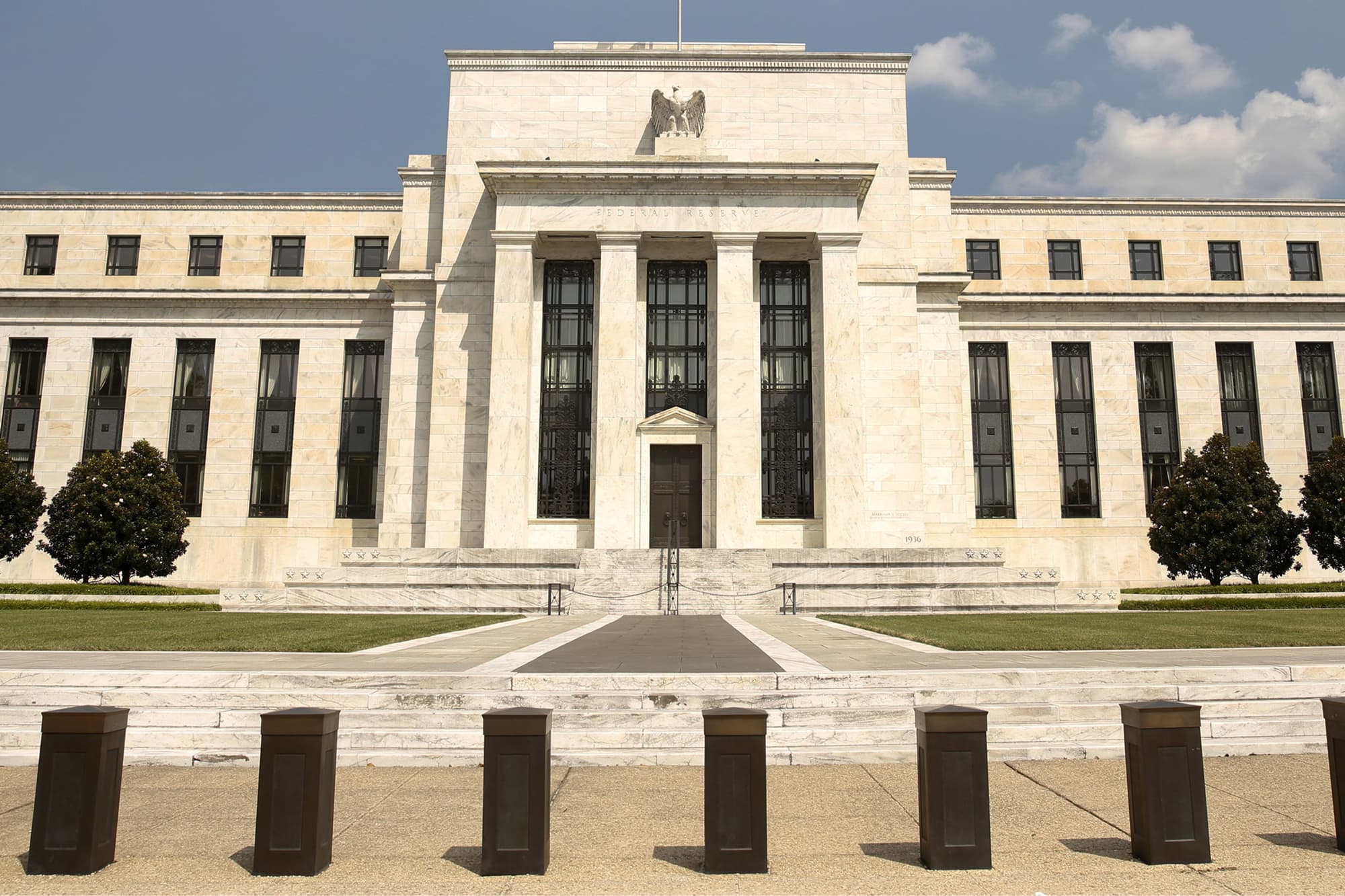
They do not vote on budgets, generally do not levy taxes, and do not govern countries. Yet a handful of institutions wield enormous influence over the functioning of modern economies. By changing interest rates, creating or withdrawing liquidity, purchasing trillions in assets, or intervening in financial markets, central banks influence credit, investment, currencies, asset prices, government financing and, indirectly, employment and economic growth.
The Federal Reserve, the European Central Bank, the People’s Bank of China, the Bank of Japan and the Bank of England are neither interchangeable nor omnipotent. Their mandates differ, as do their political systems and the economies in which they operate. Some enjoy considerable institutional independence. Others function much more directly within the orbit of executive power.
Since the global financial crisis of 2008, followed by the pandemic and the return of inflation in the early 2020s, their role has expanded further. Central banks no longer merely adjust a policy rate discreetly. They manage enormous balance sheets, provide emergency liquidity, stabilize markets, sometimes supervise banks, manage foreign-exchange reserves and participate in a financial infrastructure that has become inseparable from state power.
Understanding central banks therefore means understanding an essential part of the architecture of global economic power.
At the Heart of the Monetary System
In a modern economy, money is not limited to banknotes issued by a public institution. Most of the money used every day exists in the form of bank deposits, created notably when commercial banks extend credit.
The central bank nevertheless occupies a unique position within this architecture. It issues central bank money: banknotes in circulation and the reserves held by commercial banks at the central bank. These reserves form one of the foundations for settling transactions between financial institutions.
Central bank money therefore sits at the top of the national monetary hierarchy.
This position allows the central bank to influence the conditions under which the banking system obtains funding. When a central bank changes its policy rates or the terms on which it provides liquidity, the effects gradually spread through money markets, bond markets, bank lending, mortgages and corporate financing.
A decision taken by a small monetary policy committee can therefore alter the cost of capital for hundreds of millions of people.
The Interest Rate as an Instrument of Power
The traditional instrument of central banks remains the policy interest rate.
When an economy slows sharply and inflation is low, a central bank can reduce rates. Credit generally becomes cheaper, potentially supporting investment, consumption and economic activity.
When inflation becomes excessive, the opposite response is available. Higher rates increase financing costs, restrain demand and help reduce price pressures.
But this apparently simple mechanism operates through numerous channels.
Higher rates can weigh on property markets, reduce the value of certain bonds, alter equity valuations, strengthen a currency, increase debt-servicing costs and weaken highly leveraged companies. Internationally, decisions made in the largest economies can trigger massive movements of capital.
The Federal Reserve occupies a particularly important position in this respect. The dollar remains the world's principal reserve currency and plays a central role in trade, international debt and global banking finance. A significant change in US monetary conditions can therefore produce effects far beyond the United States.
Central banks operate nationally. Some of their decisions are global.
When Interest Rates Are No Longer Enough
The 2008 financial crisis profoundly transformed both the instruments and the public perception of central banks.
When policy rates approached zero in several major economies, monetary authorities developed interventions on a scale that had previously been exceptional. The most emblematic was quantitative easing.
The principle involves, among other measures, purchasing large quantities of government bonds and sometimes other financial assets. These purchases inject central bank money into the financial system and are intended in particular to lower longer-term interest rates and support financing conditions.
The balance sheets of the major central banks consequently changed scale.
According to their own data, the Federal Reserve’s balance sheet, which stood below $1 trillion before the global financial crisis, exceeded $4 trillion after successive asset-purchase programs, before expanding dramatically again during the pandemic and approaching $9 trillion in 2022. The European Central Bank’s balance sheet also reached several trillion euros after years of refinancing operations and asset-purchase programs.
Monetary policy was no longer merely interest-rate policy. It had become balance-sheet policy.
When global inflation accelerated sharply after the pandemic, the direction of travel reversed. Several central banks rapidly increased interest rates and began gradually reducing their asset portfolios through quantitative tightening.
In less than fifteen years, developed economies had therefore experienced near-zero interest rates, massive asset purchases, extraordinary balance-sheet expansion, rapid rate increases and monetary contraction.
The Lender of Last Resort
Central banks also perform an older function: preventing a liquidity crisis from destroying a financial system that may still be fundamentally solvent.
During a panic, depositors or investors may simultaneously attempt to retrieve their money. A bank or financial institution can then face an immediate liquidity shortage even though a substantial proportion of its assets retain longer-term value.
The central bank can intervene by temporarily providing funds against collateral.
This lender-of-last-resort function is one of the pillars of modern banking stability.
It nevertheless creates a permanent dilemma. Too little intervention can allow a financial crisis to spread. Systematic intervention, however, can encourage institutions to take greater risks if they assume they will ultimately be rescued.
The modern history of central banking is therefore marked by a persistent tension between stability and discipline.
The global financial crisis, the pandemic and the banking tensions of 2023 demonstrated how central monetary authorities remain indispensable when confidence suddenly disappears from financial markets.
Fed, ECB, PBoC, BoJ: Very Different Institutions
Speaking of “central banks” can create the impression that they all perform essentially the same function. Institutional reality is considerably more complex.
In the United States, the Federal Reserve pursues the objectives established by Congress, including price stability and maximum employment. Its structure combines a Board of Governors in Washington with twelve regional Federal Reserve Banks. The Federal Open Market Committee is the principal monetary policymaking body.
The European Central Bank operates within a fundamentally different framework. It conducts monetary policy for a monetary union whose member states retain their own budgets, public debts and political systems. Its primary objective, established by the European treaties, is price stability.
This architecture creates a fundamental peculiarity: a single monetary policy must operate across economies whose productive structures, debt levels and economic cycles can diverge significantly.
The People’s Bank of China represents another model. It possesses a broad range of instruments — interest rates, reserve requirements, financing facilities and foreign-exchange interventions — but operates within an institutional architecture in which monetary policy is closely integrated with the economic priorities of the state and the Chinese Communist Party.
The Bank of Japan provides yet another model. Confronted for decades with extremely low inflation and periods of deflation, it experimented with particularly expansionary policies, including near-zero or negative interest rates, massive asset purchases and yield-curve control.
Behind a common function therefore lie very different conceptions of monetary power.
Independence: Principle and Reality
Since the 1980s and 1990s, central bank independence has become one of the dominant principles of the international monetary architecture.
The reasoning is relatively straightforward. A government facing electoral deadlines might be tempted to maintain excessively accommodative monetary conditions to support short-term economic activity, potentially at the cost of higher inflation. Entrusting monetary decisions to an institution enjoying a degree of autonomy is intended to strengthen the credibility of inflation control.
But “independence” does not mean the absence of politics.
Central bank mandates are established by political institutions. Their leaders are appointed through public procedures. Their decisions have major distributive consequences. And when a crisis threatens the entire financial system, the boundary between monetary policy, financial stability and fiscal policy can become much less distinct.
Independence must also be distinguished from isolation. A central bank may be legally independent while facing intense political pressure. It may possess operational autonomy while remaining constrained by the structure of the economy, the level of government debt or the stability of the banking system.
Monetary independence is therefore less an absolute separation from political power than a particular organization of that power.
The Inflation Problem
Price stability is the central mission of many central banks. Several have formalized this objective around inflation of approximately 2% over the medium term.
But not all inflation is the same.
A central bank can act relatively effectively when aggregate demand becomes excessive relative to the economy’s productive capacity. By raising interest rates, it gradually reduces demand and inflationary pressures.
It is far less capable of producing oil, natural gas, grain, housing or semiconductors.
When inflation originates from an energy shock, a war, logistical disruption or a natural disaster, monetary policy faces a difficult trade-off. It can suppress demand to prevent inflation from spreading throughout the economy, but it cannot directly eliminate the original source of the shock.
The 2021–2024 period illustrated this difficulty. Economic reopening, supply-chain disruptions, fiscal policy, labor-market tensions and the energy shock associated with the war in Ukraine produced an unusual combination of inflationary pressures.
Central banks ultimately responded with one of the fastest monetary-tightening cycles in several decades.
The episode highlighted a fundamental limitation: central banks can control monetary conditions. They do not control the real economy.
A Power That Redistributes
Monetary policy is often presented as a technical discipline. Its consequences, however, are deeply distributive.
Very low interest rates generally favor borrowers and support the value of many financial and property assets. They can also reduce the return available to savers on low-risk investments.
High rates produce a different set of winners and losers. New borrowers pay more. Companies dependent on external financing may reduce investment. Homeowners refinancing mortgages can face significantly higher payments. Savers, by contrast, may receive higher returns on certain assets.
Governments themselves are not neutral observers.
After years of exceptionally low rates, a sustained increase in bond yields can gradually increase the interest burden on public finances. As more debt is refinanced, monetary conditions increasingly feed into government budgets.
Central banks do not directly decide how this redistribution occurs. But they influence the price around which much of the financial system is organized: the price of money over time.
The Global Power of the Dollar
No analysis of central banking can ignore the asymmetry of the international monetary system.
According to the International Monetary Fund, the dollar still accounted for well over half of disclosed global foreign-exchange reserves in the mid-2020s. It also remains central to international payments, financial markets, bond issuance and cross-border banking.
This position gives the Federal Reserve exceptional global influence.
When international markets suddenly face a shortage of dollars, the Fed can provide dollar liquidity to certain other central banks through swap lines. During major financial crises, these mechanisms can become critical infrastructure for stabilizing the international monetary system.
Not all central banks therefore possess equal power.
The central bank issuing the world's principal reserve currency sits at the center of a financial network that extends far beyond US borders.
Foreign-Exchange Reserves Become Geopolitical
Central banks also manage a substantial proportion of their countries’ international reserves: foreign currencies, sovereign securities, gold and other reserve assets.
For decades, these reserves were primarily analyzed as instruments of financial stability and exchange-rate policy. They are now clearly associated with geopolitical power as well.
The sanctions imposed on Russia following its invasion of Ukraine in 2022 marked an important turning point. A substantial portion of the Central Bank of Russia’s international reserves held within sanctioning jurisdictions was immobilized.
The episode demonstrated that an international reserve is not merely a financial asset. Its accessibility also depends on the legal and political infrastructure in which it is held.
This does not imply the imminent disappearance of the dollar. Alternatives capable of simultaneously providing deep markets, liquidity, convertibility, legal security and a large supply of safe assets remain limited.
But several states are seeking greater reserve diversification, increasing their gold holdings, expanding settlement in national currencies or developing financial infrastructure less dependent on Western-controlled networks.
The central bank consequently becomes an actor in geopolitics.
The Battle Over Digital Money
Another transformation is taking shape: central bank digital currencies.
The expansion of electronic payments, the declining use of cash in some economies and the emergence of crypto-assets followed by stablecoins have encouraged many central banks to investigate the possibility of directly issuing a digital form of central bank money accessible to the public.
China has conducted large-scale trials of its e-CNY. The European Central Bank has continued its work on a digital euro. Numerous other countries are researching or testing different models.
The stakes extend far beyond technology.
Public digital money raises questions about privacy, monetary sovereignty, competition with commercial banks, payment-system resilience and the future role of private companies in monetary infrastructure.
It also raises a geopolitical question: who will control the technical standards and networks through which twenty-first-century money circulates?
The Limits of Monetary Power
The growing importance of central banks since 2008 has sometimes created the impression that they can neutralize almost any economic crisis.
That perception is misleading.
A central bank can provide liquidity. It cannot indefinitely make solvent a company whose business model has failed.
It can reduce interest rates. It cannot force a company to invest or a household to borrow.
It can combat excessive inflation by suppressing demand. It cannot build power stations, reopen a maritime chokepoint or instantly increase agricultural production.
It can stabilize a bond market. It cannot permanently substitute for sustainable fiscal policy.
And it can create domestic currency, but not necessarily the foreign currencies its economy may require.
Central bank power is therefore immense but specialized. It derives from their position at the center of the monetary and financial system, not from a general capacity to administer the economy.
The Return of the Monetary State
For several decades, the modern central bank was often portrayed as a technocratic institution whose principal task was simply to keep inflation under control.
That definition is no longer sufficient.
Financial crises restored their role as systemic stabilizers. The pandemic demonstrated how far their balance sheets could be mobilized when the global economy came to a halt. The return of inflation demonstrated their ability to impose dramatically tighter financial conditions. International sanctions exposed the geopolitical dimension of foreign reserves. Global economic fragmentation now raises questions about the future of payment systems, reserve currencies and financial infrastructure.
Central banks therefore sit at the intersection of several transformations: high public debt, demographic ageing, the energy transition, Sino-American rivalry, the digitization of money and the gradual fragmentation of globalization.
They will have to continue defending monetary stability while operating in a world where money itself is once again becoming an instrument of power.
The Power Behind Money
A central bank does not govern a country. But it determines some of the fundamental conditions within which governments, banks, companies and households must operate.
It sets or influences the price of financing. It guarantees central bank money. It can become the ultimate provider of liquidity when markets cease to function. It holds strategic reserves. It contributes to financial stability. And in the world's major economies, its decisions travel far beyond national borders.
Yet this power contains a fundamental contradiction.
The more indispensable central banks become to the stability of the system, the more their interventions generate economic, social and political consequences that extend beyond the technical management of money.
They were designed to operate at a certain distance from political power. They have become too important to remain genuinely outside politics.
Within the global financial architecture, central banks therefore occupy a singular position: they do not control the economy, but they control one of its most consequential parameters.
Money.
Main Sources
Bank for International Settlements (BIS) — central banking statistics and research, international financial markets, monetary systems, reserves, payment infrastructure and central bank digital currencies.
International Monetary Fund (IMF) — International Financial Statistics, COFER database on the currency composition of official foreign-exchange reserves, Global Financial Stability Report and research on the international monetary system.
Federal Reserve System — historical Federal Reserve balance-sheet data, monetary policy, Federal Open Market Committee documentation, liquidity facilities and central-bank swap lines.
European Central Bank — Eurosystem monetary policy, consolidated balance-sheet data, asset-purchase programs, the price-stability objective and work on the digital euro.
People’s Bank of China — monetary policy reports, liquidity and credit instruments, reserve requirements and documentation concerning the digital renminbi.
Bank of Japan — monetary statistics, balance-sheet data and documentation on asset purchases, negative interest rates and yield-curve-control policies.
Bank of England — institutional documentation on monetary policy, financial stability and lender-of-last-resort functions.
World Bank — international macroeconomic data covering inflation, interest rates, debt and global financial conditions.
Atlas Limits Research Desk
Atlas Limits’ editorial and analytical desk.