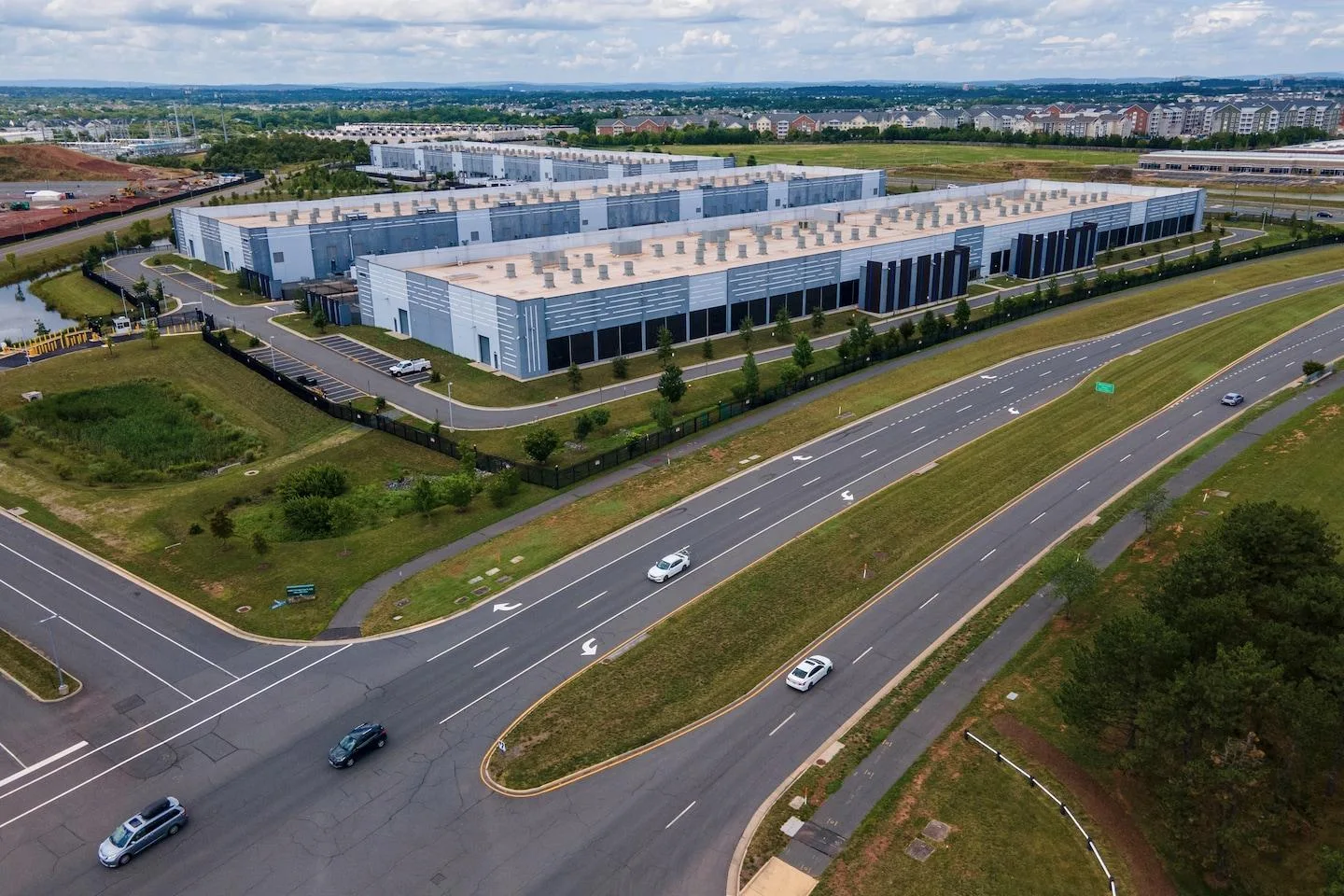
Artificial intelligence promises to transform economies, accelerate scientific research and redefine the balance of global power. But before delivering those benefits, it needs electricity, water, land and communities willing to accommodate its infrastructure. It is precisely at this level, far from research laboratories and financial markets, that a new form of political resistance is emerging.
In the United States, the November 3, 2026 elections marked a significant stage in this development. Dozens of communities voted on measures concerning the construction of data centers. Some proposals sought to prohibit new facilities, others to suspend approvals, amend zoning regulations or impose additional obligations on developers. Preliminary results indicated substantial support for restrictions in numerous localities.
The phenomenon is not simply another manifestation of opposition to large industrial projects. It exposes a contradiction that could have lasting consequences for artificial intelligence: infrastructure considered essential to national technological competitiveness does not necessarily enjoy political legitimacy in the communities expected to host it.
When Infrastructure Becomes an Electoral Issue
The shift is measurable. According to Ballotpedia, 41 data center-related measures appeared on ballots across ten American states on November 3. Twenty-eight were designed to restrict development, while thirteen sought to authorize or facilitate it. Including other consultations held or scheduled during the year, the number of local measures identified for 2026 reached fifty.
Ohio alone accounted for twenty-one votes, followed by Illinois, Maine and Kansas. This distribution is no coincidence. Ohio has become one of America's principal territories for digital infrastructure expansion, with more than two hundred operational data centers and potential investment approaching $40 billion by 2030, according to state figures reported by the American press.
Results available immediately after the election showed strong support for restrictive measures. In Ohio, at least nineteen of the twenty-one proposals had passed according to initial counts reported on November 4. In Granville, approximately 82% of voters supported a municipal charter amendment limiting data center construction, even though no active project had been identified in the community.
That final detail is revealing. Opposition is no longer confined to disputes over specific construction projects. It can become preventive, with voters seeking to establish development conditions before an investor has even submitted a proposal.
In El Dorado, Kansas, a measure approved according to preliminary results establishes a ten-year prohibition targeting, among other facilities, data centers with substantial implications for local resources. The measure uses electricity demand and water consumption thresholds to turn technical characteristics into legal criteria for development approval.
These consultations do not all carry the same legal significance. Some decisions are binding, others advisory, and several results remain subject to certification. Nevertheless, they share a common political meaning: computing infrastructure itself has become an object of democratic decision-making.
The Paradox of Digital Prosperity
For several decades, data centers have been presented as particularly attractive investments. They mobilize considerable capital, contribute to tax revenues, support construction activity and can strengthen a region's economic attractiveness.
The development of artificial intelligence has dramatically amplified that promise. The most powerful facilities are no longer simply buildings containing servers. They are becoming industrial complexes combining computing equipment, electrical networks, cooling systems, telecommunications infrastructure and security installations.
Yet this transformation is also changing the relationship between investors and host communities.
Construction can generate substantial employment over several years, but the routine operation of a highly automated data center generally requires fewer direct workers than other industrial activities involving comparable capital expenditure. Actual employment varies according to the facility and the functions performed on site. The promise of jobs is therefore not always sufficient to offset the local constraints perceived by residents.
Taxation introduces a second ambiguity. To attract investment, numerous American states have introduced exemptions and other fiscal incentives. As of April 2026, Ballotpedia identified thirty-eight states that had adopted tax incentives for data centers.
A community can therefore accommodate a facility representing several billion dollars in investment without immediately receiving tax revenues proportional to its construction cost. The outcome depends on the structure of exemptions, the taxes involved, negotiated commitments and the public expenditure actually required.
The political question becomes one of territorial return on investment. Infrastructure can be profitable for its owner, strategically valuable to the federal government and nevertheless produce a more uncertain economic balance for the community hosting it.
This separation between national benefits, private profits and local costs is one of the principal drivers of opposition.
Electricity: The New Frontier of Conflict
The most significant source of friction concerns energy.
Modern data centers concentrate enormous electricity requirements. Facilities designed to train and operate advanced artificial intelligence models can require tens or even hundreds of megawatts. At that scale, a computing project becomes a major component of regional energy planning.
Moreover, a data center does not simply consume electricity. Connecting it to the grid may require substations, transmission lines, network reinforcement and, in some cases, additional generating capacity.
These investments raise a fundamental economic question: who should pay for them?
Operators may finance certain connection facilities, negotiate specific contracts with electricity suppliers or contribute to new infrastructure. But tariff structures and regulatory decisions determine how much of the associated network expenditure is borne by the companies concerned and how much is distributed among other electricity consumers.
It would be incorrect to attribute every increase in electricity bills automatically to data centers. Prices also depend on fuel costs, network investment, weather conditions, available generation and regulatory decisions. Nevertheless, rapidly expanding computing demand can intensify pressures on electricity systems already facing capacity constraints.
Local opposition develops within this uncertainty. Households may support the principle of a national artificial intelligence industry while rejecting the possibility of contributing, directly or indirectly, to infrastructure whose benefits appear remote from their everyday lives.
The conflict extends beyond prices. Electricity capacity is limited in the short term, particularly when networks require substantial reinforcement. Allocating several hundred megawatts to a computing facility can affect the connection timetable for other industrial or residential projects.
Computing power therefore enters into competition with other uses of electricity. What was previously treated largely as a technical allocation problem is increasingly becoming an economic and political decision.
Water, Land and the Geography of Externalities
Water consumption represents another source of mobilization.
Certain cooling architectures use substantial quantities of water, particularly when facilities rely on evaporative systems. Other technologies can significantly reduce direct water withdrawals, although potentially at the cost of higher electricity consumption, greater capital expenditure or additional technical complexity.
There is consequently no single water-consumption profile applicable to all data centers. Requirements depend on climate, equipment, cooling methods, server utilization and sources of supply.
This technical diversity does not eliminate the territorial problem. In regions experiencing water stress, even relatively controlled consumption may generate concern. Elsewhere, recycled water or closed-loop systems can substantially improve the acceptability of a project.
Additional issues include land conversion, noise from cooling equipment, backup generators, electrical installations and changes to the surrounding landscape.
The geography of artificial intelligence is becoming visible. What was previously perceived as an immaterial service is taking the form of buildings, power lines and concentrated physical resource consumption.
The digital economy does not eliminate the material constraints of industry. It relocates and concentrates them.
Opposition Across Party Lines
One of the most important characteristics of the American backlash is its political breadth.
Resistance to data centers does not correspond to a single ideological position. Depending on the locality, it can bring together environmental advocates, property owners, neighborhood associations, taxpayers concerned about energy costs and political representatives seeking to preserve local autonomy.
A University of Massachusetts Amherst survey published in September 2026 indicated that only 11% of Americans surveyed supported the construction of an artificial intelligence data center in their own community. This finding measures attitudes expressed in a national survey, rather than votes on particular projects. Nevertheless, it helps explain why the issue has gradually moved from planning commissions into electoral campaigns.
Traditional partisan divisions have not disappeared, but they are insufficient to explain local positions.
A politician who supports private investment may oppose a project because of its potential effects on electricity bills. An elected official committed to the energy transition may challenge a facility that would place additional pressure on the grid. Conversely, representatives from different political traditions may support a project when they believe its tax revenues, infrastructure investment or employment benefits justify its development.
This diversity helps explain why opposition can emerge simultaneously in Republican- and Democratic-leaning communities.
Major technology companies consequently face a more complicated political environment than the one associated with conventional negotiations with governments and economic development agencies. Securing institutional approval no longer necessarily guarantees public acceptance.
Territorial Consent Becomes a Factor of Production
The economic consequences of this development could be substantial.
Until recently, data center location strategies were primarily organized around a relatively limited set of variables: electricity availability, connectivity, land costs, taxation, regulatory stability, climatic conditions and proximity to customers.
An additional political variable is now becoming increasingly important: the likelihood that a project will be accepted, challenged, delayed or subjected to further restrictions.
Unlike electricity prices or land costs, this variable is difficult to quantify.
It can nevertheless influence the entire investment process.
Developers generally incur significant expenditure before a facility becomes operational, including land acquisition or reservation, technical studies, administrative procedures, supply agreements, equipment procurement and grid connection commitments. When approval becomes uncertain, financial risks increase.
For specialized real estate investors, energy infrastructure providers and data center operators, local political risk can therefore affect construction schedules, financing costs and asset valuations.
It would, however, be premature to conclude that American data center development is entering a generalized standstill. Reuters reported in early November that data center capacity under construction in the United States had increased by 48% between December and June. Growing opposition therefore coexists with continued industrial expansion.
It is precisely this coexistence that makes the situation significant. Investment continues to rise, but implementation depends on an expanding range of constraints that cannot be resolved through capital availability alone.
The pace of artificial intelligence development may consequently depend as much on permitting procedures, electrical networks and territorial negotiations as on processor performance.
A Tension Extending Beyond the United States
The phenomenon is not confined to America.
In Northern Europe, where technology companies have long sought relatively competitive electricity and climatic conditions favorable to cooling, the trade-offs are also becoming more complex.
In Norway, policymakers are examining the implications of data center expansion for electricity prices and local employment benefits. In Finland, a Google-related project in the Muhos region is subject to an investigation into possible environmental violations associated with preparatory work. The existence of that investigation does not prejudge its findings.
In Australia, environmental approval procedures have also contributed to delays affecting a major project.
These situations are neither legally nor politically identical to American ballot measures. They nevertheless reveal a common mechanism: digital infrastructure is increasingly being assessed according to its material and territorial consequences, rather than solely its contribution to innovation.
This development could also affect countries seeking to attract new investment in digital services, particularly in the Middle East, Asia and Africa.
For these economies, hosting data centers can offer opportunities for industrial diversification, telecommunications development and integration into artificial intelligence value chains. But project viability will also depend on electricity availability, water resources, network quality and the economic benefits actually captured locally.
The risk is the emergence of a form of enclave economy: capital-intensive facilities connected to international markets but only weakly integrated into their surrounding productive environment.
Conversely, policies linking data centers to workforce training, electrical infrastructure, research and domestic businesses could strengthen their territorial benefits.
The distinction between these two trajectories will be decisive.
Technological Sovereignty Meets Local Democracy
The politicization of data centers ultimately introduces a tension into national technological sovereignty strategies.
Governments increasingly regard computing power as a strategic resource. It underpins artificial intelligence model development, scientific research, certain defense capabilities, cybersecurity and industrial competitiveness.
From this perspective, accelerating infrastructure construction becomes an objective of economic policy and national security.
Yet local authorities retain, depending on the legal system, powers over planning, environmental protection, local infrastructure and certain administrative approvals. Affected populations can also use electoral or judicial mechanisms to influence decisions.
Two forms of legitimacy consequently intersect: that of the state seeking to develop a strategic capability, and that of communities seeking to control changes to their own environment.
The conflict is not necessarily irreconcilable. It can produce more transparent agreements, a fairer allocation of electricity costs, verifiable environmental commitments and mechanisms for compensating host communities.
It can also generate delays, litigation and greater concentration of investment in the most accommodating territories.
The outcome will depend largely on how public authorities organize relations among investors, electricity providers and local communities.
Excessively uncertain regulation can discourage useful investment. Conversely, a policy focused exclusively on accelerating construction may transfer insufficiently compensated costs to residents and intensify opposition.
The central challenge is therefore not to choose abstractly between innovation and resistance, but to establish the economic, environmental and democratic conditions under which infrastructure can be developed.
The Political Cost of Artificial Intelligence
The American elections of November 2026 do not demonstrate that populations reject artificial intelligence as a whole. Rather, they show that support for a technology does not automatically translate into acceptance of every infrastructure project required to operate it.
This distinction could become central in the years ahead.
The artificial intelligence industry has built much of its narrative around model capabilities, capital availability and the speed of technological progress. The emergence of data centers as electoral issues demonstrates that a fourth dimension must now be considered: the political and territorial conditions under which computing capacity can be produced.
Companies capable of financing the most advanced facilities will not necessarily be those able to build them most rapidly. Grid availability, permitting rules, environmental commitments and relations with host communities could reshape the geography of investment.
More fundamentally, the phenomenon reveals a broader transformation of digital capitalism. As the information economy requires ever-larger physical infrastructure, it encounters the familiar conflicts of industrialization: access to resources, distribution of costs, land use and decision-making authority.
Computing power can be measured in processors, megawatts and billions of dollars. Its development also depends on something that technological acceleration cannot eliminate: the agreement, or at least the acceptance, of the societies expected to accommodate its infrastructure.
Artificial intelligence has entered a new phase of development. Its infrastructure is no longer exclusively a matter of corporate strategy. It is becoming a question of public policy and, increasingly, one submitted directly to voters.
Principal Sources
- Ballotpedia, Voters in ten states will vote on data center-related ballot measures November 3, November 3, 2026. Local ballot measures, their legal characteristics and state tax incentives.
- Reuters, Data center opposition hits the ballot box, November 3, 2026. American opposition, industrial expansion and developments in Europe and Australia.
- Fortune, Ohio just poured onto its existing 125 data center moratoriums, November 4, 2026. Ohio ballot measures, moratoriums and announced investments.
- Environmental Protection, Voters Approve New Data Center Restrictions, November 5, 2026. Preliminary results in Granville and El Dorado.
- Stateline, Data center backlash set to sway midterm elections, October 12, 2026. Electoral mobilization, political positions and the University of Massachusetts Amherst survey.
- S&P Global Market Intelligence, Data center backlash shapes midterm ballots, campaigns across US, October 2026. Regulatory risks, taxation and local political developments.
Methodological note: Election results cited reflect information available as of November 5, 2026. Some votes remain subject to official certification. Counts of local ballot measures may vary depending on the scope of the survey and the date of the latest update.
Atlas Limits Research Desk
Atlas Limits’ editorial and analytical desk.