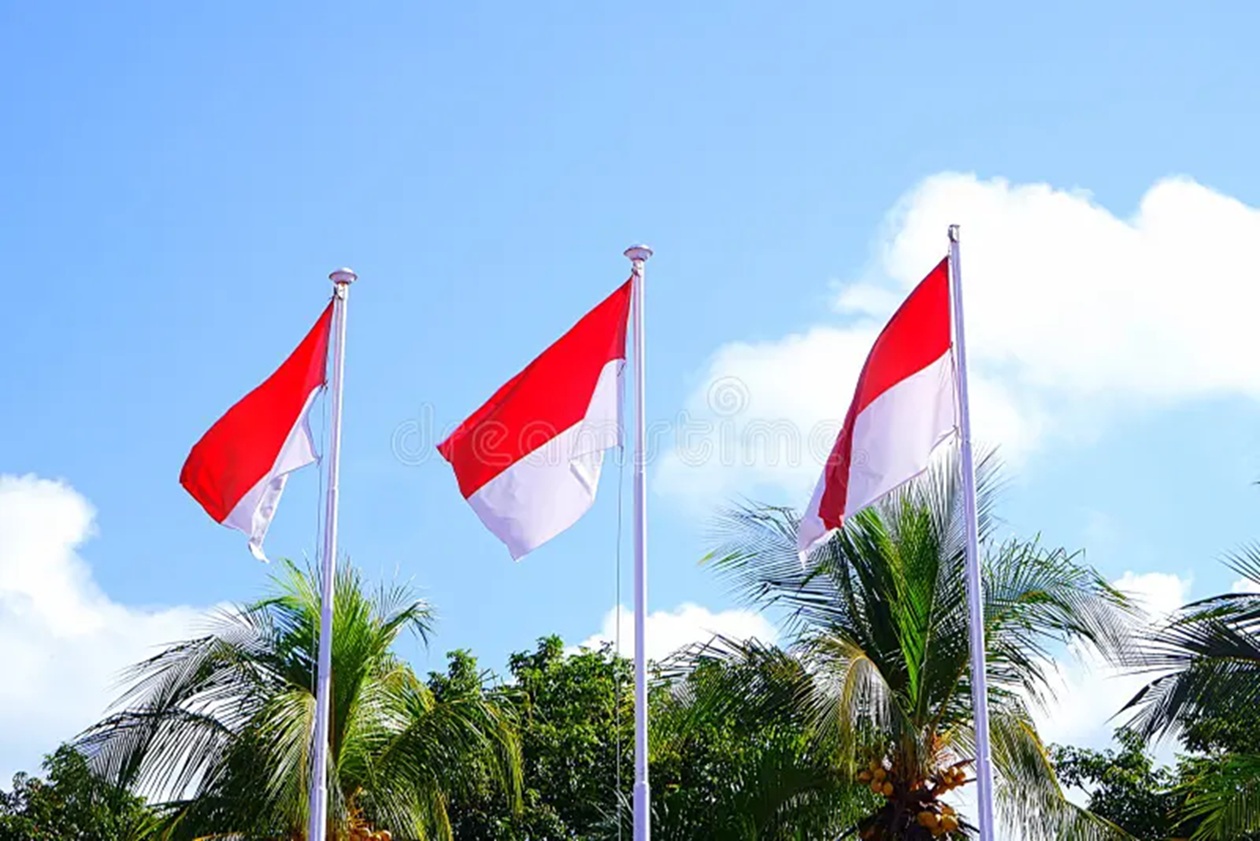
With more than 285 million people, some 17,000 islands, Southeast Asia’s largest economy and a geographic position at the heart of the maritime routes connecting the Indian and Pacific Oceans, Indonesia possesses nearly all the attributes of a major power. Yet it remains relatively absent from the global geopolitical imagination. That discretion may become increasingly difficult to maintain.
For decades, Indonesia was largely viewed from abroad as a vast emerging economy, a commodity exporter and the demographic heavyweight of ASEAN. That reading is no longer sufficient. Jakarta is increasingly seeking to transform its population, natural resources and geography into instruments of industrial development and strategic autonomy.
The implications extend far beyond the archipelago. In an Indo-Pacific that has become one of the central arenas of global economic and strategic competition, Indonesia occupies precisely the kind of position that neither Beijing nor Washington can afford to ignore.
A Continent Disguised as an Archipelago
Indonesia’s scale can be difficult to grasp from Europe. The country stretches thousands of kilometres across Sumatra, Java, Kalimantan, Sulawesi, Papua and thousands of smaller islands.
The World Bank estimates its population at approximately 285.7 million in 2025, making Indonesia the world’s fourth-most populous country. Its nominal GDP stands at roughly $1.45 trillion, with GDP per capita slightly above $5,000. The World Bank describes Indonesia as Southeast Asia’s largest economy and the world’s sixteenth-largest. (data.worldbank.org)
But Indonesia’s power does not lie in scale alone.
It begins with geography.
The archipelago sits between the Indian and Pacific Oceans, alongside some of the most important commercial shipping routes on Earth. The Strait of Malacca, between Sumatra and the Malay Peninsula, is one of the major arteries of international maritime trade. Farther east, the Sunda, Lombok and Makassar straits provide alternative passages between the two oceans.
Indonesia therefore does not need to acquire a strategic position. It already occupies one of the principal geographic junctions of world trade.
That location becomes increasingly important as the Indo-Pacific emerges as the centre of gravity of strategic competition between the United States and China.
An Economy Growing at Around 5%
One of the most striking characteristics of contemporary Indonesia is the consistency of its economic expansion.
Following the Asian financial crisis of 1997-1998, the country gradually strengthened its macroeconomic institutions, banking system and public finances. Since then, excluding the pandemic shock, growth has settled around levels that many more heavily publicised emerging economies have struggled to sustain.
The World Bank estimates real GDP growth at 5.1% in 2025. The IMF similarly regards Indonesia as one of the more resilient growth poles of the global economy and expects expansion of around 5% in 2026, despite an international environment marked by trade tensions and geopolitical uncertainty. (data.worldbank.org)
Much of that resilience comes from Indonesia’s enormous domestic market. Household consumption reduces the country’s dependence on exports alone and provides an important buffer against fluctuations in international demand.
But Jakarta no longer wants simply to expand the economy. It wants to transform its structure.
The government’s stated ambition is considerable: to accelerate growth sufficiently for Indonesia to achieve high-income status by 2045. President Prabowo Subianto’s government has notably targeted growth of as much as 8% by the end of the decade, considerably above the central projections of international institutions. (worldbank.org)
Achieving that objective will require investment, infrastructure, productivity gains and, above all, the domestic transformation of Indonesia’s natural resources.
Nickel as Industrial Doctrine
Nickel encapsulates Indonesia’s changing economic strategy.
The country possesses enormous reserves of a metal that has become strategic for stainless steel and several battery technologies. According to the U.S. Geological Survey, Indonesia produced approximately 2.6 million tonnes of mined nickel in 2025, compared with estimated global production of 3.9 million tonnes. In other words, roughly two-thirds of the nickel mined worldwide now comes from Indonesia. Its reserves are estimated at approximately 62 million tonnes. (pubs.usgs.gov)
Jakarta has chosen to use this dominance not merely as a source of mining rents, but as an instrument of industrialisation.
The principle is straightforward: instead of exporting only raw ore, Indonesia wants an increasing share of processing to take place domestically. Export restrictions, investment in smelters, stainless-steel production, battery precursor facilities and electric-vehicle projects all form part of the same downstreaming strategy.
The message to global manufacturers is clear: access to Indonesian resources should increasingly mean producing in Indonesia.
The policy has attracted tens of billions of dollars in investment, particularly from Chinese companies, into mining and metallurgical infrastructure.
Yet it has also created a new dependency.
A significant part of Indonesia’s rapid expansion in nickel processing relies on Chinese capital, technology and industrial groups. Jakarta therefore faces a delicate challenge: using China to accelerate industrialisation while preventing that relationship from becoming a strategic dependency.
It is one of the central paradoxes of the Indonesian model.
China: Indispensable Partner, but Not Master of the Game
China now occupies a central position in Indonesia’s economy.
During the first eleven months of 2025, China absorbed 23.8% of Indonesia’s non-oil-and-gas exports, ahead of the United States at 11.5% and India at 6.7%. Indonesian exports to China include iron and steel, mineral fuels and nickel-related products. (bps.go.id)
Chinese companies are simultaneously deeply involved in infrastructure, mining, smelting and several of Indonesia’s major industrial projects.
But Indonesia has little interest in alignment.
It maintains important economic relationships with the United States, Japan, South Korea, the European Union, India, the Gulf states and, naturally, its ASEAN neighbours. This diversification is not accidental. It functions as a form of strategic insurance.
Jakarta wants to work with Beijing without belonging to a Chinese camp, cooperate with Washington without becoming a formal U.S. military ally, and attract investment from several competing centres of global power.
Choosing No Camp
This position has deep historical roots.
Since the early decades following independence, Indonesia has pursued what it calls a *“free and active” — bebas aktif — foreign policy*. Free, because the country refuses to subordinate its foreign policy to a particular bloc. Active, because independence does not imply systematic neutrality or withdrawal from international affairs.
In July 2026, Indonesian Foreign Minister Sugiono again presented this doctrine as particularly suited to an international system fragmented by strategic rivalry: the objective is to preserve national freedom of action while multiplying partnerships. (kemlu.go.id)
This tradition also explains Indonesia’s historical role in the Non-Aligned Movement. The 1955 Bandung Conference, held in Indonesia, remains one of the foundational events in the diplomatic emergence of the postcolonial world.
Seven decades later, that logic has acquired remarkable contemporary relevance.
In an international system where Washington and Beijing are attempting to organise coalitions around themselves, large middle powers have gained new diplomatic room for manoeuvre. Indonesia intends to occupy it.
ASEAN’s Centre of Gravity
That ambition begins in Southeast Asia.
Indonesia alone accounts for a substantial share of ASEAN’s population and economic output. It is not formally the organisation’s leader, but no credible regional architecture can realistically be constructed without it.
This position allows Jakarta to promote a particular vision of the Indo-Pacific: a region that should not be organised exclusively around Sino-American confrontation.
For Indonesia, ASEAN must retain sufficient diplomatic “centrality” to prevent Southeast Asian states from becoming merely the terrain on which larger powers compete.
The difficulty is obvious.
ASEAN members have very different interests in relation to China. The Philippines is directly involved in maritime confrontations with Beijing in the South China Sea. Cambodia is considerably closer to China. Singapore maintains extensive security cooperation with Western powers while preserving major economic ties with Beijing. Vietnam combines strategic resistance with deep commercial interdependence.
Indonesia must therefore exercise regional influence without appearing to seek regional hegemony.
The South China Sea Reaches Indonesia
Jakarta is not entirely removed from the region’s maritime tensions.
Indonesia does not consider itself a party to the principal territorial disputes in the South China Sea. Yet Chinese maritime claims have historically overlapped with areas corresponding to Indonesia’s exclusive economic zone around the Natuna Islands.
The issue is fundamental.
For a state composed of thousands of islands, maritime law is not an abstract legal matter. It is one of the foundations of national sovereignty.
Indonesia must therefore maintain a deep economic relationship with China while preventing that relationship from constraining its ability to defend its maritime interests.
This balancing act captures the essence of Indonesian foreign policy: economic cooperation, political autonomy and selective firmness on questions of sovereignty.
Nusantara: A Capital for Another Century
Indonesia’s ambitions are also taking physical form through one of the world’s most spectacular urban projects: the gradual relocation of the national capital from Jakarta to Nusantara, in Kalimantan on the island of Borneo.
Jakarta remains the country’s economic and demographic heart, but its metropolitan area suffers from extreme congestion, pollution, flooding and severe land subsidence in certain areas.
Moving the capital, however, reflects a broader objective.
Java has long concentrated a disproportionate share of Indonesia’s population, economic activity and political power. Building a capital in Kalimantan is therefore also an attempt to rebalance the archipelago both symbolically and materially.
The project remains enormous, expensive and subject to considerable financial and operational uncertainty. But it has not been abandoned. In July 2026, the Nusantara Capital Authority said the second phase of construction was continuing, with the objective of establishing Nusantara as Indonesia’s political capital by 2028, in accordance with the government’s framework. (ikn.go.id)
Nusantara is therefore as much a political project as an urban one: an attempt to physically construct the Indonesia its leaders envision for the middle of the century.
The Contradictions of an Emerging Power
Indonesia’s trajectory is far from guaranteed.
The country must create enough productive employment for its enormous population, improve education and infrastructure, increase productivity, deepen its financial markets and prevent its industrial strategy from becoming excessively dependent on a limited number of commodities.
The IMF has stressed that converting Indonesia’s potential into sustained growth will require structural reforms, improvements to the business environment and the preservation of the policy safeguards that have gradually strengthened the country’s macroeconomic credibility. It has also highlighted risks associated with insufficiently controlled quasi-fiscal expansion and emphasised the importance of governance surrounding the new sovereign wealth fund and state holding company Danantara. (imf.org)
Environmental pressures represent another major contradiction.
Indonesia wants to become a central participant in the supply chains of the energy transition while remaining a major coal power. Nickel extraction can provide materials required for batteries, yet mining and processing themselves can impose substantial costs on ecosystems, water resources and carbon emissions.
Indonesia’s industrial transition therefore cannot be reduced to a simple story of green growth.
It is more complex: a resource-rich country is attempting to use those resources to escape its historical role as a supplier of raw materials.
The Next Giant?
Indonesia is not yet a superpower, nor does it necessarily seek to become one in the traditional sense.
Its military capabilities remain limited relative to the enormous territory they must cover. Income per capita remains far below advanced-economy levels. Infrastructure and institutional capacity remain uneven. And despite its demographic weight, Indonesia’s global cultural and diplomatic influence remains smaller than that of several much less populous countries.
But international power is not measured only by present conditions.
It is also determined by trajectory.
With nearly 286 million people, an economy worth more than $1.4 trillion, growth of around 5%, an exceptional maritime position, unrivalled dominance of global nickel production and a diplomatic tradition built around autonomy, Indonesia is gradually accumulating several different forms of power. (data.worldbank.org)
Its greatest advantage may lie elsewhere: Indonesia does not need to replace an existing power in order to become more important.
In an increasingly multipolar world, countries capable of trading across competing blocs, controlling strategic resources, preserving their autonomy and acting as pivots between major economic regions can acquire considerable influence without themselves forming a bloc.
That is precisely the position Indonesia is attempting to build.
For decades, the archipelago could remain a quiet giant.
As the world’s centre of gravity shifts towards the Indo-Pacific, that discretion may become impossible.
Main Sources
World Bank — Indonesian demographic and macroeconomic data, 2025; country economic overview. (data.worldbank.org)
International Monetary Fund — Indonesia: 2025 Article IV Consultation, published January 2026; economic growth, macroeconomic outlook, risks and structural reforms. (imf.org)
BPS – Statistics Indonesia — 2025 foreign-trade statistics; export destinations, trade structure and economic relations with China, the United States and India. (bps.go.id)
U.S. Geological Survey — Mineral Commodity Summaries 2026; global nickel production and reserves, 2025 data. (pubs.usgs.gov)
Ministry of Foreign Affairs of the Republic of Indonesia — Indonesia’s bebas aktif foreign-policy doctrine and diplomatic positioning, 2026. (kemlu.go.id)
Nusantara Capital Authority — progress of Nusantara’s second construction phase and the objective of establishing it as Indonesia’s political capital by 2028, July 2026. (ikn.go.id)
Atlas Limits Research Desk
Atlas Limits’ editorial and analytical desk.