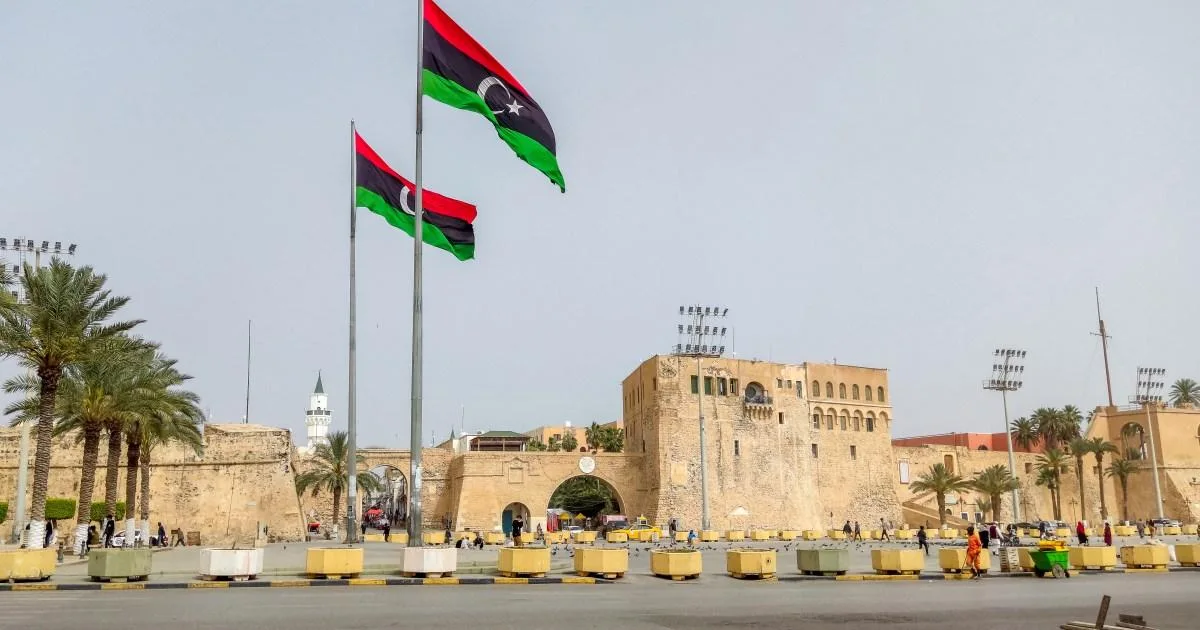
Fifteen years after the fall of Muammar Gaddafi, Libya remains trapped in a political transition with no clear end. Behind the rivalry between Tripoli and the country's eastern authorities, institutional fragmentation has produced a political economy in which hydrocarbons, armed groups and foreign intervention sustain an unstable equilibrium. Renewed electoral negotiations in 2026 reveal both the possibilities of reunification and the interests standing in its way.
A Country Unable to Complete Its Transition
In Libya, the provisional has gradually become a permanent form of government. Authorities succeed one another, political agreements accumulate and international mediation efforts are repeatedly renewed, yet the country remains unable to restore a central government capable of exercising uncontested authority over its entire territory. Fifteen years after the international military intervention of 2011 and the fall of Muammar Gaddafi, Libya is no longer experiencing a nationwide civil war comparable to the confrontations of previous years. Nor has it entered a genuine period of institutional peace.
This situation defies conventional categories of conflict analysis. The Libyan state has not disappeared. It retains institutions, a central bank, a national oil company, an administrative apparatus, public revenues and international recognition. Yet political authority, military control and economic decision-making no longer coincide. Institutions continue to operate while the forces claiming to direct them dispute their legitimacy.
The distinction is fundamental. A collapsed state must rebuild its administration. Libya faces a more complex challenge: much of its institutional architecture still exists, but its operation is embedded in fragmented power relations that prevent effective reunification.
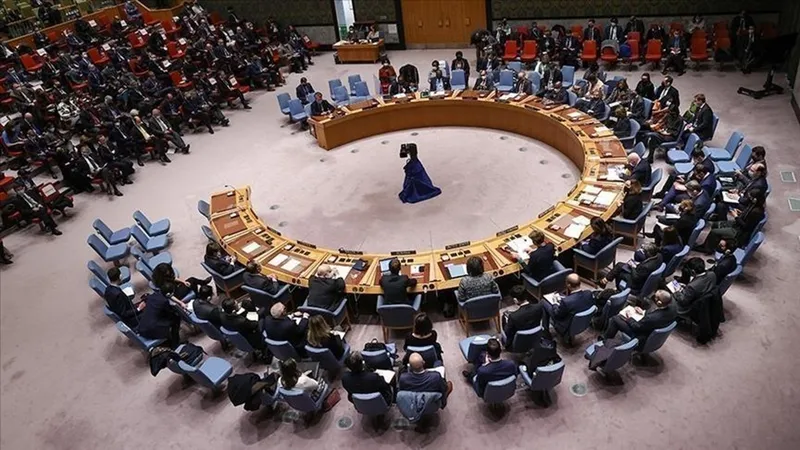
The year 2026 illustrates this contradiction. On August 30, representatives of the main rival institutions signed a United Nations-mediated agreement intended to revive the electoral process. The arrangement included changes to the electoral commission and adjustments to the legal framework, with the objective of holding presidential and parliamentary elections within a maximum of twenty-four months. Two months later, the Security Council extended the mandate of the United Nations Support Mission in Libya until October 31, 2027.
These developments demonstrate genuine diplomatic activity. They do not, however, mean that the principal obstacles have disappeared. Libya's recent history is marked by agreements whose implementation proved considerably more difficult than their negotiation.
The central question is therefore no longer simply how to end a conflict. It is why fragmentation continues to reproduce itself even as almost every actor officially declares a commitment to overcoming it.
The Legacy of a Centralized State Without Autonomous Institutions
The current crisis has deep roots in the organization of power under Muammar Gaddafi. For more than four decades, the regime maintained a highly centralized political system based largely on personal networks, tribal balances, security services and the redistribution of oil revenues. Institutions existed, but their autonomy was constrained by a system in which effective authority depended on the leadership at the top.
This structure had a major consequence: the country's stability rested less on institutional mechanisms capable of surviving its ruler than on his ability to arbitrate rivalries and distribute resources.
The 2011 revolution overthrew the regime without immediately producing a unified security apparatus capable of replacing it. Armed groups that emerged from the uprising retained their organizations, commanders and territorial bases. Some were gradually incorporated, at least formally, into public institutions while preserving independent chains of loyalty.
The political vacuum was subsequently aggravated by rivalries among ideological movements, cities, regions and military coalitions. The crisis of 2014 established a lasting division between competing institutions in the east and west. Successive attempts at reunification repeatedly altered the balance of power without eliminating the underlying fractures.
The Libyan Political Agreement signed in Skhirat, Morocco, in December 2015 under United Nations auspices sought to restore a common institutional framework. It represented an important diplomatic milestone but failed to resolve the fundamental question of the state's monopoly over the use of force. Subsequent fighting, particularly the offensive launched against Tripoli in 2019 by forces loyal to Khalifa Haftar, demonstrated how vulnerable political arrangements remained to military power.
The October 2020 ceasefire helped reduce large-scale hostilities. The establishment of a Government of National Unity in 2021 was intended to prepare elections. Those scheduled for December of that year were ultimately postponed, opening another period of contested executive legitimacy.
Since then, Libya has lived with an institutional paradox: transitional arrangements are presented as necessary instruments for restoring popular sovereignty, yet their extension keeps authorities in power whose electoral mandates remain disputed.
Two Centers of Power, One Contested Sovereignty
Libya's division is frequently described as a confrontation between Tripoli and Benghazi. This provides a useful geographical outline of the conflict but obscures a more complicated reality.
In the west, the Government of National Unity led by Abdul Hamid Dbeibah remains based in Tripoli and retains the international recognition associated with the United Nations-backed political process. Its authority nevertheless depends on arrangements with armed formations and institutional networks whose interests do not always coincide with those of the government.
In the east, the House of Representatives and rival executive authorities rely on a political and military apparatus dominated by Khalifa Haftar and his forces. Their influence extends across much of eastern and southern Libya, areas essential to the country's energy and strategic geography.
Neither political camp is entirely homogeneous. In Tripoli, rivalries between armed groups can destabilize internal power arrangements. In the east, military centralization around Haftar does not eliminate local interests or questions surrounding succession and the distribution of authority.
Libyan fragmentation is therefore less a conventional territorial partition than an overlapping system of competing authorities. Some institutions possess legal recognition but limited coercive capacity. Others control territory and infrastructure without enjoying equivalent national political legitimacy.
This imbalance makes reunification particularly difficult. Establishing a common government is insufficient if military chains of command remain separate. Holding elections cannot guarantee stability if defeated factions retain the means to reject their outcome through force.
The difficulty is not merely deciding who will govern. It is determining who will accept no longer governing, and under what conditions.
Oil as a National Resource and an Instrument of Power
Libya possesses an extraordinary economic advantage. Its proven oil reserves, generally estimated at approximately 48 billion barrels, are the largest in Africa. Relative to a population of around seven million, they represent exceptional potential national wealth.
Yet this abundance has not protected the country from deteriorating public services, monetary instability and economic hardship.
The explanation lies in the structure of the economy. Hydrocarbons generate the overwhelming majority of export earnings and a decisive share of government revenue. The state therefore depends heavily on oil production, while households depend extensively on public spending, government salaries, subsidies and imports financed through foreign currency earnings.
In such a concentrated economy, controlling access to oil revenue means controlling an essential component of political power.
The National Oil Corporation, responsible for oil production and marketing, occupies a strategic position. The Central Bank of Libya, meanwhile, plays a central role in managing foreign currency, reserves and payment systems. Between these institutions lies one of the principal tensions of the Libyan system: revenues belong to the nation, but financing demands originate from competing authorities and networks whose legitimacy and priorities differ.
Oil can consequently become both a source of economic unity and an instrument of political confrontation.
Production disruptions and blockades of petroleum facilities have repeatedly served as instruments of pressure. They allow certain actors to convert territorial control into national bargaining power. Yet they also reduce the revenues available to the country as a whole.
The mechanism is particularly destructive. A faction may seek a greater share of resources by threatening the very activity on which the national economy depends. Bargaining power thus rests on the ability to interrupt wealth creation.
Libya's crisis is therefore not simply a shortage of resources. It exposes the limitations of a rentier economy when the institutions responsible for distributing revenues no longer exercise uncontested authority.
The Central Bank at the Heart of Fragmented Sovereignty
Disputes surrounding the Central Bank demonstrate how institutional rivalry has increasingly shifted toward control over financial mechanisms.
In 2024, a conflict over the institution's leadership triggered a major political and economic crisis. A subsequent compromise between rival institutions enabled the appointment of Naji Issa as governor.
Two years later, the issue returned to the forefront.
On November 2, 2026, the House of Representatives meeting in Sebha voted to appoint Fawzi Abu Khazam as governor of the Central Bank following Naji Issa's resignation. According to information reported by Reuters, 78 of the 90 members present supported the decision. The Central Bank subsequently reported a transfer of responsibilities, while the head of the Government of National Unity met the new governor to discuss economic difficulties and the stabilization of the dinar.
This episode cannot be reduced to a dispute over appointments. The Central Bank represents one of the remaining instruments capable of maintaining financial continuity across the country. Its leadership affects monetary credibility, foreign currency availability and confidence in public institutions.
An administrative handover does not, however, resolve disagreements over financial governance. The decisive questions remain the rules governing decisions, control over expenditure and transparency regarding commitments undertaken in the name of the state.
When multiple authorities claim the right to commit public resources, fiscal policy becomes difficult to coordinate. Expenditure can expand without corresponding to a coherent national strategy. Long-term investment is displaced by the immediate financing needs of administrative and security structures.
The Central Bank is consequently expected to preserve monetary stability in an environment where political decisions themselves contribute to undermining it.
This contradiction illuminates an often overlooked dimension of the conflict: Libyan sovereignty is contested not only at borders or within representative institutions. It is also contested through the power to determine who spends, who receives, who borrows and who controls foreign currency.
A Rentier Economy That Sustains Fragmentation
The persistence of this system does not mean that every actor desires division. Rather, it indicates that the costs and benefits of reunification are distributed profoundly unequally.
For ordinary Libyans, instability means deteriorating infrastructure, disrupted services, economic uncertainty and unpredictable public administration. For certain groups enjoying privileged access to resources, fragmentation can instead preserve established positions.
The mechanisms are varied.
Public appointments provide influence over administrations and budgets. Reconstruction contracts can become instruments of political redistribution. Subsidies, particularly those covering fuel, create differences between administered prices and market prices that can sustain smuggling networks. Armed groups enjoying official recognition may receive public financing while maintaining operational autonomy.
These practices do not necessarily characterize every institution or political actor. They nevertheless illustrate the structural risks of a system in which administrative, judicial and parliamentary oversight has been weakened.
Fragmentation therefore produces more than competition for political office. It creates opportunities for economic capture that may make transition less attractive to those benefiting from the status quo.
The problem becomes particularly apparent in reconstruction policy. Libya's needs are substantial, especially in electricity, water, transportation, healthcare and urban infrastructure. Damage from armed conflict, years of underinvestment and natural disasters has increased these requirements.
Yet the availability of financial resources does not guarantee rational project selection or effective implementation. Without independent oversight, expenditure may consolidate political alliances rather than improve public services.
Libya thus confronts a rentier paradox: it potentially possesses the means to finance its recovery, but competition for those means contributes to delaying the reforms necessary to use them effectively.
Militias and the Transformation of Armed Power
Military fragmentation constitutes the second pillar of this equilibrium.
In western Libya, several armed formations have gradually established themselves within or alongside public institutions. Some perform security functions, control facilities or exercise influence over administrative bodies. This partial incorporation has helped maintain certain services and occasionally limit confrontation, but it has not produced a unified national chain of command.
In some cases, it has created a situation in which armed groups simultaneously possess administrative legitimacy, public resources and independent coercive power.
In the east, forces commanded by Khalifa Haftar display a more centralized organization. This distinction should not, however, be confused with the existence of a unified national army. Institutional loyalty, family power structures and relations with foreign partners continue to shape military authority.
The coexistence of these models complicates security negotiations. Genuine reunification would require agreement on command structures, recruitment, budgets, weapons control and accountability mechanisms.
Above all, it would require transforming organizations whose political influence depends precisely on their military capacity.
Disarmament and demobilization therefore cannot be considered independently of an agreement on institutions and resources. Asking an armed group to surrender its autonomy without credible guarantees effectively means asking it to abandon one of its principal instruments of security and negotiation.
The dilemma is reversed for the state: permanently recognizing the privileges of each armed formation would institutionalize the very fragmentation that reunification seeks to overcome.
Foreign Powers and the Limits of Sovereignty
Libya's crisis would not have become so prolonged without its internationalization.
Turkey played a decisive military role in defending the Tripoli-based government against the 2019–2020 offensive. Its presence also forms part of a broader Mediterranean strategy encompassing maritime agreements, military cooperation and economic interests.
Russia has developed military and strategic relationships with eastern Libyan forces. Russian military networks and interest in Libyan infrastructure form part of an influence strategy extending beyond the country itself to the Sahel, the Mediterranean and wider Africa.
Egypt considers stability along its western border a major security priority. Its relations with eastern authorities reflect security concerns alongside economic and regional interests.
The United Arab Emirates historically supported Haftar's camp, particularly amid the regional rivalries that emerged after 2011. Its involvement formed part of a broader policy of influence over political and security balances in the Arab world.
European powers, particularly Italy and France, pursue objectives combining energy security, migration management, countering criminal networks and Mediterranean stability. Their priorities do not always coincide, even when they formally support the United Nations-led political process.
This overlap of interests partly explains why international calls for reunification do not automatically lead to reduced support for competing centers of power.
Foreign actors may regard Libyan unity as desirable in the long term while considering it necessary, in the short term, to maintain relations with authorities controlling territories or infrastructure relevant to their interests.
The contradiction is significant: stability is pursued as a diplomatic objective, but bilateral arrangements can contribute to prolonging structures of division.
It would nevertheless be excessive to portray foreign powers as solely responsible for the crisis. Libya's rivalries have deep domestic origins. External interventions have amplified, financed or redirected them without creating them entirely.
Southern Libya: Strategic Territory and Institutional Blind Spot
Understanding Libya exclusively through its two principal political centers frequently leaves Fezzan and the southern regions in the background.
Yet the south occupies a central position in the country's geography. It contains important energy infrastructure, trans-Saharan commercial routes and border areas connecting Libya with Niger, Chad, Algeria and Sudan.
In these regions, state authority faces particular constraints: vast distances, inadequate infrastructure, local rivalries, informal economies and cross-border movements of people, goods and weapons.
Local communities, including Tuareg and Tebu populations, have experienced tensions involving political representation, access to resources, administrative rights and control over commercial routes.
National fragmentation has frequently intensified these difficulties. Competing authorities seek to consolidate their influence in the south, while local populations may remain distant from the centers where budgetary decisions are made.
The war in Sudan has added another regional dimension to these vulnerabilities, increasing humanitarian pressures and risks associated with the movement of fighters and weapons across border areas.
Fezzan is therefore not a secondary periphery. It is one of the places where the vulnerabilities of the Libyan state intersect with those of its Sahelian environment.
Any reunification strategy limited to an agreement between elites in Tripoli and eastern Libya would risk reproducing political centralization without resolving territorial inequalities.
Migration Between Illicit Economies and European Externalization
Libya's geographical position also makes it a major transit territory along migration routes connecting sub-Saharan Africa and parts of the Middle East to Europe.
Since 2011, fragmented security institutions have facilitated the expansion of human trafficking, migrant smuggling and exploitation networks. International organizations have documented arbitrary detention, violence, extortion and inhuman treatment affecting migrants and asylum seekers.
These abuses cannot be regarded as merely peripheral consequences of the crisis. They reveal the effects of a coercive economy in which control over movement and individuals can become a source of revenue and influence.
European cooperation with Libyan authorities, particularly in maritime surveillance and migration control, involves a persistent dilemma. European governments seek to reduce irregular crossings and deaths in the Mediterranean. Yet the effectiveness of these policies depends partly on Libyan institutions whose governance and practices have repeatedly attracted criticism.
The issue therefore extends beyond border management. It concerns the responsibility of international partners when they finance, equip or support structures operating in a fragmented institutional environment.
Migration policy that is not accompanied by credible protection and accountability mechanisms risks strengthening coercive actors without contributing to the reconstruction of the rule of law.
The 2026 Elections: A Genuine but Conditional Opening
The political process revived in 2026 represents an attempt to break this deadlock.
The roadmap presented by the United Nations Special Representative, Hanna Tetteh, rests on three complementary objectives: establishing a viable electoral framework, unifying institutions under a common executive authority and organizing a structured dialogue on the underlying causes of the conflict.
The August 30 agreement represents progress because it addresses two issues that had long obstructed the process: the composition of the electoral commission and the legal rules governing elections.
It does not, however, guarantee that elections will take place.
Organizing national elections requires agreement on candidate eligibility, presidential powers, institutional succession and security conditions. It also requires competing authorities to recognize the results, including when those results are unfavorable to them.
The precedent of December 2021 remains instructive. Technical preparation for an election is insufficient when the principal actors cannot agree on fundamental political rules.
Resolution 2835, adopted by the Security Council on October 30, 2026, reflects this difficulty. It supports the electoral process while emphasizing the reunification of political, military, security and judicial institutions, together with the establishment of a single executive authority.
This approach implicitly recognizes that elections held within a fragmented institutional system could generate another legitimacy crisis rather than resolve the existing one.
The real test of the process will therefore not simply be the announcement of an election date. It will be the ability of the parties to accept common rules, limit opportunities for obstruction and effectively transfer power to national institutions.
National Wealth That No Longer Protects Purchasing Power
Economic difficulties make this transition increasingly urgent.
During her briefing to the Security Council on October 14, 2026, Hanna Tetteh reported inflation exceeding 14%, while Libyans faced rising food prices, a depreciating dinar and unreliable public services.
The situation is particularly striking for an oil-exporting country.
Higher petroleum revenues can improve external accounts without generating an equivalent improvement in living conditions. Much depends on how those revenues are converted into expenditure, investment, imports and public services.
Dependence on imports increases monetary vulnerability. When the dinar depreciates, goods purchased abroad become more expensive in local currency. Rising prices then reduce purchasing power, even when nominal wages remain unchanged.
Problems affecting electricity and water supply illustrate another dimension of the crisis. Infrastructure requires continuous investment, maintenance systems and administrative coordination. Yet these are precisely the functions weakened by institutional fragmentation.
Oil revenues can finance current expenditure without ensuring the renewal of public capital.
This distinction is fundamental. A state can receive substantial revenues while remaining unable to provide essential services when its resources are primarily used to sustain immediate political arrangements.
Libya's crisis has consequently become a crisis of institutional productivity: the problem lies not only in the amount of wealth generated, but in the state's ability to transform that wealth into durable public goods.
Three Possible Trajectories for Libya
Over the medium term, three broad trajectories appear possible.
The first is gradual reunification. This would require implementation of the electoral agreement, establishment of a common executive authority, improved coordination of public expenditure and sufficiently credible security arrangements to permit peaceful political competition. Such a scenario would offer the strongest economic prospects but demand substantial concessions from the principal holders of power.
The second is the continuation of a negotiated status quo. Institutions would remain fragmented but continue cooperating selectively on hydrocarbons, monetary affairs, public expenditure and certain security matters. Crises would be contained without being fundamentally resolved. This trajectory resembles aspects of Libya's recent experience and could continue if political actors prefer preserving their positions to accepting the risks of a decisive transition.
The third is renewed deterioration. A dispute over financial resources, a breakdown between armed groups or disagreement over electoral rules could trigger localized fighting, oil disruptions and further monetary instability. A return to nationwide war is not inevitable, but fragmentation preserves mechanisms capable of generating escalation.
These scenarios are not entirely mutually exclusive. Libya could make progress on certain institutional issues while retaining military divisions, or reach financial agreements without resolving questions of political legitimacy.
It is precisely this ability to produce partial compromises without comprehensive transformation that explains the system's longevity.
Reunification as a Redistribution of Power
Libya's future will depend less on the multiplication of diplomatic declarations than on changes to the incentives sustaining division.
A durable political settlement would need to address several questions simultaneously: how national revenues are distributed, how public expenditure is controlled, how security forces are unified, how institutional independence is guaranteed and how electoral outcomes are respected.
Each of these questions involves material interests and established positions of power.
Reunification is therefore not simply a matter of restoring a central administration. It requires redistributing resources, reducing certain forms of autonomy and subjecting powerful actors to common rules.
Such a transformation cannot be achieved through external pressure alone. It requires a Libyan negotiation process capable of producing guarantees sufficiently credible for the principal actors to regard institutional stability as preferable to preserving their existing privileges.
The international community can facilitate this evolution by supporting financial transparency, limiting military interference and coordinating diplomatic initiatives. It cannot, however, substitute for the construction of a national compromise.
Libya possesses the resources necessary to re-emerge as a major economic center in North Africa and the Mediterranean. Its energy potential, geographical position and reconstruction needs could support substantial growth within a stabilized institutional environment.
The decisive obstacle is therefore neither geological, demographic nor exclusively financial.
It is political.
Fifteen years after the disappearance of Gaddafi's regime, Libya is not simply a country waiting for its transition to end. It has become a country in which the transition itself structures a significant part of the distribution of power.
As long as division allows certain actors to retain resources, territories and positions they might lose under a unified system, political agreements will continue to encounter the same resistance.
A genuine resolution will begin when national unity ceases to be merely a declared objective and becomes, for those who hold power, a stronger interest than fragmentation.
Principal Sources
- United Nations Support Mission in Libya (UNSMIL), Political Roadmap, presentation and updates, 2025–2026.
- UNSMIL, Agreement on Next Steps Towards National Elections, August 30, 2026.
- United Nations Security Council, statement concerning Libya's political agreement, September 8, 2026.
- Hanna S. Tetteh, briefing to the United Nations Security Council on Libya's political, economic and security situation, October 14, 2026.
- United Nations Security Council, Resolution 2835 (2026), October 30, 2026.
- Reuters, reporting on the succession of the Governor of the Central Bank of Libya, October 22 and November 2, 2026.
- U.S. Energy Information Administration (EIA), structural data on Libya's oil reserves and petroleum industry.
- World Bank, economic analysis and development indicators for Libya.
- International Organization for Migration (IOM) and Office of the United Nations High Commissioner for Human Rights (OHCHR), documentation on migration and human rights violations in Libya.
Analysis current as of November 5, 2026. Forward-looking scenarios and interpretations of the mechanisms sustaining fragmentation represent the independent editorial analysis of Atlas Limits.
Atlas Limits Research Desk
Atlas Limits’ editorial and analytical desk.