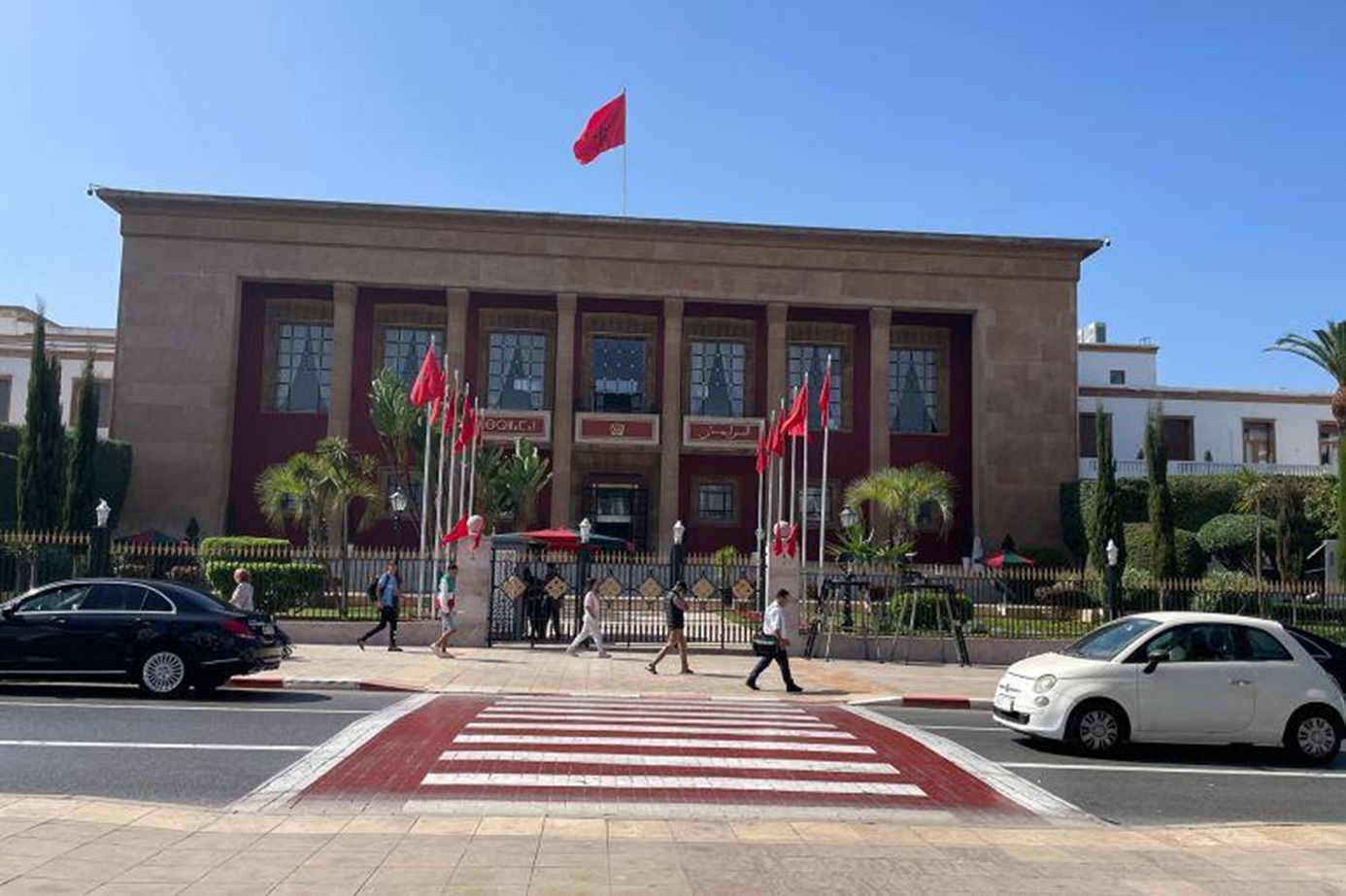
As Morocco approaches the September 23, 2026 legislative elections, the country’s main political parties are not short of proposals or targets. Employment, purchasing power, healthcare, education, social protection, investment, sovereignty and inequality now occupy a central place in almost every electoral platform.
At first glance, there is considerable convergence. The National Rally of Independents (RNI), the Istiqlal Party, the Authenticity and Modernity Party (PAM), the Socialist Union of Popular Forces (USFP) and the Party of Progress and Socialism (PPS) all acknowledge, to varying degrees, that Morocco’s next political cycle will have to address an increasingly difficult equation: creating more jobs, improving public services and protecting living standards without undermining the country’s economic balances.
Behind this apparent consensus, however, lie significantly different conceptions of the economy and the role of the state.
The real debate in the 2026 legislative elections may therefore be less about promises than about competing models. How far should the state intervene? Who should finance the expansion of social protection? What role should the private sector play? How should the benefits of growth be distributed?
Another question must now be added: can these platforms actually be implemented?
An electoral programme cannot be assessed solely on the basis of its objectives. Its credibility also depends on how it is financed, the growth assumptions on which it relies, its ability to generate productive employment, the strength of the institutions responsible for implementing it and the trade-offs that will inevitably arise when not every promise can be delivered simultaneously.
But caution is not a policy in itself either.
A programme may be perfectly feasible yet fail to address the economy’s structural weaknesses. That creates another form of risk: successful implementation without sufficient transformation.
The comparison must therefore incorporate two dimensions simultaneously: implementation risk and transformation potential.
It is at the intersection of these two variables that the differences between the platforms become most revealing.
A new consensus around the social state
The first transformation may be the least spectacular, but it is probably the most important.
The principle of the social state itself is hardly contested anymore.
The expansion of social protection, direct assistance, health insurance, healthcare reform and improvements to education have gradually shifted the centre of gravity of Morocco’s political debate. The question is no longer primarily whether such mechanisms should be developed, but how far they should extend, how they should be financed and how their effectiveness can be improved.
This helps explain why parties with very different political traditions now advocate measures that sometimes look remarkably similar: higher incomes for the lowest-paid, support for families, improved pensions, job creation, investment in social infrastructure and measures to protect purchasing power.
The consensus ends, however, when the discussion turns to the instruments.
Behind similar objectives emerge five different conceptions of public action.
RNI: consolidating rather than rebuilding
The RNI naturally enters the 2026 elections from a particular position: that of the leading party in the outgoing governing majority.
Its platform is based more on continuity than rupture. It revolves around three broad priorities — purchasing power, public services and employment — and implicitly defends the major reforms undertaken during the previous legislature while acknowledging the need to improve their tangible impact.
Among its proposals are indexing certain social benefits to inflation, further increases in the minimum wage and pensions, introducing a tax credit linked to education expenses, and strengthening mechanisms supporting people who lose their jobs.
Its flagship target remains the creation of one million additional jobs and bringing unemployment below 9% by 2031.
Yet the defining feature of the RNI platform lies less in these figures than in its conception of the state.
The state’s primary role is to create the conditions in which private investment, industry, tourism, digital activities, agriculture and major infrastructure projects can generate more growth and employment. Redistribution then acts as a mechanism to protect vulnerable households and mitigate some of the consequences of the market.
It is, in essence, the model of an enabling state.
From an implementation perspective, the RNI has an obvious advantage: part of its programme extends policies, administrative structures and mechanisms that already exist. Incremental policy is generally less complex to implement than a comprehensive transformation of the fiscal or social architecture.
But this continuity is also its main vulnerability.
The party must answer a question that opposition formations can more easily avoid: if some of the problems identified in 2026 already existed in 2021, why were they not resolved during the outgoing legislature?
The RNI therefore probably presents the lowest implementation-risk profile among the five platforms examined. But it carries a different risk in return: insufficient transformation.
Continuity can be manageable without being sufficient.
Istiqlal: protecting society as well as the economy
Istiqlal presents a substantially different architecture.
Its platform combines social protection, purchasing power, economic sovereignty, governance and support for the family. The family is treated not merely as a social institution, but as one of the main arenas in which contemporary economic pressures are felt: housing, education, ageing, dependency, youth employment and the cost of living.
The party therefore proposes various mechanisms to support households and young people while emphasising gradual improvements in incomes and pensions.
Two dimensions, however, particularly distinguish its programme.
The first concerns rents and economic governance. Istiqlal advocates stronger rules on conflicts of interest, asset declarations, illicit enrichment and whistleblower protection. It also proposes tougher taxation of certain monopolistic situations.
The second is sovereignty.
Strategic reserves of fuel, grain and medicines, pharmaceutical production, digital sovereignty, cybersecurity, greater local content in energy investments and the reconstruction of a national maritime capacity all form part of an attempt to reduce Morocco’s exposure to external vulnerabilities.
This approach reflects a broader transformation in the global economic debate. After health crises, supply-chain disruptions, energy shocks and the return of geopolitical competition, economic efficiency is no longer the only criterion. Resilience has itself become an economic policy objective.
Istiqlal’s model could therefore be described as a market economy protected by a social and sovereign state.
Its difficulty, however, lies in the breadth of that ambition. Building greater industrial, energy, food and digital sovereignty simultaneously requires capital, expertise, time and substantial coordination between the state and private companies.
Sovereignty is not free. In the short term, it can even cost more than the dependency it is intended to reduce.
Yet unlike transformations requiring a wholesale redesign of the fiscal or social system, such a strategy can be prioritised and implemented progressively.
This places Istiqlal in a distinctive position on the risk-transformation curve: more transformative than simple continuity, without necessarily reaching the fiscal risk associated with the most interventionist programmes.
Its principal challenge would therefore be less about financing an immediate rupture than about deciding which forms of sovereignty should come first.
PAM: redistribution and markets within the same platform
The PAM platform is probably the most difficult to place within traditional economic categories.
On the one hand, it contains some of the most ambitious redistributive proposals of the campaign. On the other, it seeks to expand considerably the role of private investment.
The party proposes a major overhaul of personal income tax: exemption for gross monthly incomes of up to MAD 15,000, an intermediate rate of 10%, followed by a maximum rate of 20%. It also proposes a minimum pension of MAD 3,000, minimum levels for certain social benefits and mechanisms to reduce electricity costs for low-consuming households.
At the same time, PAM wants the private sector eventually to account for roughly two-thirds of total investment.
This combination is revealing.
The objective is not systematically to expand public ownership or direct state involvement in the economy, but rather to alter the distribution of disposable income significantly while relying more heavily on the private sector as the engine of investment.
The party also sets one of the campaign’s most ambitious employment targets: at least one million net jobs and an unemployment rate reduced to 7%. Young people occupy a central place in the platform, with measures dedicated to first employment, entrepreneurship and professional mobility.
Public intervention becomes more pronounced, however, in sectors regarded as strategic, particularly agriculture and food security.
PAM’s model could therefore be summarised by an apparent paradox: more market-driven investment, more state-led redistribution and stronger regulation.
But this is precisely where the programme encounters its principal stress test.
A substantial reduction in personal income tax immediately increases the disposable income of affected households, but it also reduces an existing source of government revenue unless growth, a broader tax base or economic formalisation compensate sufficiently for the loss.
At the same time, PAM proposes additional social spending and public investment.
The party estimates that approximately MAD 350 billion in additional resources will be required over five years. A decisive part of the equation depends on the additional revenue that stronger economic growth is expected to generate.
The risk is therefore also one of timing: tax cuts and spending can be immediate, while gains from stronger growth, private investment or formalisation are more gradual and uncertain.
If PAM’s assumptions materialise, the programme has substantial transformative potential. If they materialise only partially, fiscal trade-offs could quickly become difficult.
PAM therefore offers a potentially powerful risk-transformation proposition, but with considerably greater variance.
USFP: transforming mechanisms rather than multiplying transfers
The USFP platform is closer to a conventional social-democratic architecture.
Its objective is not merely to expand social protection but to alter the primary distribution of income through wages, employment, women’s economic participation, SME development and a reduction in territorial inequalities.
The party sets targets for increasing average wages and employees’ net income while seeking to bring unemployment below 8%.
One important difference with the RNI concerns the relationship between the state and business.
Where a more liberal approach generally favours incentives designed to stimulate investment, the USFP places greater emphasis on conditionality. Public subsidies, tax exemptions and economic advantages would be more closely linked to effective job creation or measurable economic outcomes.
The same reasoning applies to public procurement. A significant share of public contracts would be reserved for small and medium-sized enterprises, while a dedicated public financial institution would seek to improve their access to funding.
The platform also places particular emphasis on territorial disparities. Public investment would be directed more strongly towards less-developed regions in order to reduce differences in income, infrastructure and access to services.
This reflects a different conception of development: national growth is insufficient if its geography remains excessively concentrated.
It is also what makes the platform particularly interesting from a risk-transformation perspective.
Rather than relying primarily on a massive expansion of transfers or a dramatic fiscal rupture, it seeks to alter several mechanisms that determine the distribution of economic outcomes: SME access to procurement and finance, conditionality of public support, job creation, wages, industry and the territorial distribution of investment.
In theory, this strategy can produce structural transformation without immediately imposing the same fiscal burden as a much larger expansion of public expenditure.
But it shifts the risk elsewhere.
Its main bet is on administrative quality.
Making public support more conditional, directing procurement towards SMEs and rebalancing investment geographically require a state capable of measuring outcomes, monitoring beneficiaries, evaluating public policies and preventing new mechanisms from generating new rents.
The USFP therefore presents a different paradox from PAM: its risk is less about financing than about the quality of implementation.
If the administration performs, the transformation potential could be significant. If it does not, a substantial part of the programme’s logic loses effectiveness.
PPS: the return of the strategic state
Among the major platforms presented so far, the PPS most clearly embraces an interventionist shift.
Its programme is also the most extensive: 220 commitments and nearly one thousand measures, accompanied by a financial framework involving several hundred billion dirhams in additional expenditure and revenue over the legislature.
At its core is a substantial strengthening of public services.
Healthcare and education would receive major additional recruitment and investment. The party also proposes increases in the minimum wage, the agricultural minimum wage and public-sector salaries, accompanied by an indexation mechanism designed to protect incomes against inflation.
But the real departure lies in financing.
The PPS advocates a more redistributive tax system, including greater contributions from non-productive wealth, economic rents, certain high profits and windfall gains. Fighting tax fraud and reducing some tax exemptions are also intended to generate additional resources.
The same philosophy runs through its industrial policy.
The objective is no longer merely to attract investment or facilitate business activity, but to build more domestic productive capacity, develop import substitution in selected areas and, where necessary, reassess the effects of trade agreements on Morocco’s productive base.
The state would therefore no longer be simply a regulator or facilitator. It would explicitly return as a strategist, investor and organiser of certain economic transformations.
Of the five models, this is probably the one furthest removed from the approach advocated by the RNI.
But the PPS also presents one of the most demanding programmes for the state apparatus itself.
With approximately MAD 575 billion in additional expenditure announced, it must win several bets simultaneously: mobilise sufficient new revenue, administer a more redistributive tax system, substantially expand public-service capacity and transform those additional resources into measurable gains in healthcare, education and productivity.
Greater spending, however, does not automatically mean better outcomes.
Recruiting more doctors is insufficient if their territorial distribution remains unequal. Building more institutions does not guarantee their quality. Developing an industrial policy is not enough if supported firms never become competitive.
The PPS therefore probably presents the greatest transformation potential of the five programmes, but also the highest level of fiscal and administrative risk.
It sits at the far end of the curve: maximum ambition, maximum demands.
The PJD: still difficult to integrate into the comparison
The absence of the Justice and Development Party from this detailed comparison does not mean that it is absent from the electoral contest.
The party has initiated a process to develop its platform for the 2026 legislative elections and has progressively outlined several policy orientations. But until a sufficiently detailed and consolidated final document is available under conditions that allow for an equivalent comparison, assigning the party a complete programme by inference would create a methodological imbalance.
Its platform should therefore be incorporated once its final commitments can be assessed according to the same criteria: employment, taxation, public services, investment, social protection, governance, financing and implementation capacity.
The distinction matters. Comparing electoral platforms requires comparing commitments that parties have actually presented, rather than positions presumed from their political history.
The battle for one million jobs
Despite their ideological differences, one striking point of convergence emerges: employment.
Several parties directly or indirectly converge on the symbolic target of one million jobs. Others set unemployment targets between 7% and 9%.
These commitments respond to a genuine economic concern. Morocco’s growth has long struggled to generate enough jobs to absorb changes in the labour force, while graduate unemployment, youth unemployment and low female labour-force participation remain structural challenges.
But announcing one million jobs is not yet an employment policy.
The decisive question concerns their nature.
How many would come from industry? How many from services? How many would be directly or indirectly supported by public spending? How many would represent the formalisation of existing activities rather than genuinely new jobs? What levels of productivity and wages would be associated with them?
One million public, subsidised or low-productivity jobs would not have the same economic effect as one million private-sector jobs generated by competitive companies capable of growing and exporting.
The distinction is fundamental.
A sustainable employment policy must progressively generate its own fiscal base: more formal employees, more profitable businesses, more declared consumption and more social contributions. Otherwise, employment itself risks becoming a permanent burden on public finances.
More fundamentally, an economy cannot simply decree an unemployment rate.
Governments can influence investment, training, labour costs, regulation, infrastructure and access to finance. But the eventual outcome also depends on global growth, exports, climate conditions, private investment and changes in labour-force participation.
The targets should therefore be assessed less as arithmetic promises than as economic assumptions.
First stress test: who pays?
Almost every platform simultaneously promises more social protection, more investment, greater support for households, better public services and a more ambitious economic policy.
The main differences concern how this expansion would be financed.
The RNI relies more heavily on growth, private investment and the gradual expansion of available resources.
PAM combines substantial personal income-tax reductions with expectations of a broader tax base, greater formalisation of the economy and faster growth.
The USFP seeks to make public incentives more conditional and redirect resources towards employment, SMEs and territorial development.
The PPS explicitly proposes stronger fiscal redistribution, asking more from certain forms of wealth, rents and profits.
Istiqlal, meanwhile, seeks to combine economic discipline, social protection, action against rents and greater productive sovereignty.
These choices constitute the core of the economic debate.
Every additional dirham allocated to pensions, healthcare or education has to come from somewhere: additional growth, tax revenue, budgetary reallocation, borrowing or greater efficiency in public expenditure.
And each of these solutions has limits.
Taxation can generate additional revenue, but excessive or poorly designed pressure can discourage investment and encourage avoidance or informality. Borrowing can spread costs over time but increases future obligations. Tax cuts can stimulate activity and disposable income, but their ability to pay for themselves through stronger growth is never guaranteed.
The credibility of an electoral platform therefore depends not only on whether its proposed spending is desirable, but on whether the equation financing it is robust.
Second stress test: administrative capacity
There is another constraint, less visible than debt or deficits: implementation capacity.
A government can vote a budget. It cannot instantly decree a more effective administration.
Yet the success of all five platforms requires extensive coordination between ministries, local authorities, public agencies, social institutions, tax administrations, healthcare systems, educational institutions and the private sector.
The more a programme multiplies schemes, subsidies, conditions, beneficiaries and sector-specific targets, the more complex its implementation becomes.
This naturally favours policies that extend existing mechanisms and makes programmes requiring the simultaneous creation of numerous new institutions or procedures more difficult to execute.
But continuity has its own limitation: if existing mechanisms perform poorly, extending them does not necessarily solve the underlying problem.
The real issue is therefore not choosing between reform and continuity, but determining whether the state possesses the institutional capacity required by the level of ambition being assigned to it.
Third stress test: what kind of growth?
Almost every programme would benefit substantially from a sustained acceleration in Moroccan economic growth.
This is also their most important implicit assumption.
An expanding economy creates more jobs, raises tax revenues without necessarily increasing tax rates, strengthens social insurance finances and makes public investment easier to fund.
But not all growth is equal.
Growth driven by highly capital-intensive sectors may increase GDP without generating enough employment. Growth fuelled primarily by public spending may prove difficult to sustain. Growth centred on property or import-heavy consumption does not produce the same effects as expansion in export manufacturing, high-value services or agricultural productivity.
The real objective for 2026-2031 is therefore probably not simply faster growth.
It is growth that generates more employment, productivity and sustainable fiscal revenue.
Fourth stress test: how much transformation for how much risk?
This final question changes the way the platforms should be read.
The least risky programme is not necessarily the strongest economic choice. Conversely, the most transformative programme is not necessarily preferable if the probability of successful implementation becomes too low.
The challenge is therefore to identify an efficiency frontier: achieving the greatest structural transformation for an acceptable level of fiscal, macroeconomic and administrative risk.
From this perspective, the five platforms occupy different positions.
The RNI stands out for predictability. Continuity in policy instruments and governing experience relatively reduce implementation risk. But transformation potential is also more limited because the programme seeks primarily to improve the existing model rather than alter its fundamental mechanisms.
At the opposite end, the PPS presents the greatest transformation potential but also the highest risk. Its programme simultaneously requires more revenue, more spending, greater administrative capacity and a more strategic state.
PAM also offers significant transformative potential, particularly for disposable income and taxation. But a substantial part of its balance depends on stronger growth, private investment and formalisation generating additional resources quickly enough. Its profile is therefore one of potentially high returns accompanied by greater uncertainty.
Between these positions lie Istiqlal and the USFP.
Istiqlal combines a largely preserved market economy with targeted transformation around sovereignty, resilience, governance and social protection. Its principal risk lies less in an immediate fiscal rupture than in the dispersion of priorities.
The USFP, meanwhile, seeks to transform the mechanisms of the economy itself — employment, wages, SMEs, public procurement, industry and territorial development — without making the entire programme dependent on an expansion of public spending as large as that proposed by the PPS or a tax reduction as radical as PAM’s.
On the narrow criterion of transformation sought relative to risk assumed, the USFP and Istiqlal therefore emerge as particularly notable intermediate positions, but for different reasons.
The USFP prioritises transformation in the internal functioning of the economy.
Istiqlal places greater emphasis on the resilience of the model against external vulnerabilities.
The relative strength of these two approaches therefore depends largely on the diagnosis of Morocco’s principal challenge over the coming decade.
If the central problem is the difficulty of converting investment and growth into employment, wages, dynamic SMEs and territorial development, the USFP approach has a particular internal logic.
If the principal risk lies instead in water, energy, supply chains, industrial dependency and broader geoeconomic vulnerabilities, Istiqlal’s approach becomes especially relevant.
This distinction is more informative than an absolute ranking.
Above all, it demonstrates that there is no single form of economic risk.
The constraint no platform controls
A significant part of Morocco’s economic environment between 2026 and 2031 will remain beyond the control of the next government.
Morocco remains exposed to European economic conditions, energy prices, international financial conditions, trade tensions, drought and water stress. At the same time, the country will have to finance substantial infrastructure, continue rebuilding areas affected by the 2023 earthquake, support the energy transition, expand transport networks and prepare for major international events, particularly the 2030 FIFA World Cup.
Fiscal space will therefore not be unlimited.
Stronger growth would make implementation of these programmes considerably easier. A succession of external shocks could instead force any governing majority to choose between competing commitments.
That is precisely why the most spectacular numerical targets should be treated with caution.
No platform dominates across every criterion
Once the promises are tested against these constraints, none of the five platforms emerges mechanically as superior to the others.
The RNI benefits from the strongest institutional continuity and probably the lowest implementation risk, but it must demonstrate that continuity can deliver substantially stronger social outcomes and, above all, job creation than during the previous legislature.
Istiqlal presents one of the most developed approaches to sovereignty and resilience, with a relatively contained degree of disruption, but it will have to prioritise ambitions whose simultaneous implementation could prove costly.
The USFP proposes transformation focused more directly on the mechanisms that produce and distribute income. Its balance between ambition and risk appears comparatively favourable, but depends heavily on the quality of the administration responsible for implementation.
PAM presents significant potential to transform disposable income and investment, but with greater dependence on favourable assumptions regarding growth, formalisation and private-sector mobilisation.
The PPS embraces the deepest social and interventionist transformation, but consequently carries the highest fiscal and administrative risk if expected new revenues or efficiency gains fail to materialise.
A simplified representation would therefore place the RNI towards the implementation-security end of the spectrum, the PPS towards maximum transformation, and PAM in a zone of high potential but greater variance, while Istiqlal and the USFP occupy two different intermediate positions along the frontier between risk and transformation.
This is not an electoral ranking.
It is a map of the economic bets being offered to the country.
Five platforms, one common test
Ultimately, the 2026 campaign reveals something deeper than competition between political parties.
Morocco appears to be entering a new phase in its economic debate.
The model built primarily around infrastructure, investment, trade openness and international attractiveness is not being abandoned. None of the major parties is seriously proposing to turn away from these pillars.
But a second requirement has become increasingly difficult to ignore: converting more of that growth into employment, income, social mobility and public services that citizens can actually experience.
The parties differ primarily over how this transformation should occur.
The RNI favours continuity and an enabling state. Istiqlal combines social protection, resilience and sovereignty. PAM mixes fiscal redistribution with greater private investment. The USFP proposes a social-democratic shift centred on labour, SMEs and territorial development. The PPS advocates the strongest state intervention in redistribution and productive transformation.
But this classification is no longer sufficient.
Four additional criteria must be considered: fiscal sustainability, the quality of jobs created, administrative capacity and the extent to which each platform depends on favourable growth assumptions.
Then comes a fifth question, perhaps the most important: how much transformation does each level of risk actually buy?
Seen through this lens, the most ambitious programmes are not necessarily the most robust, while the most cautious programmes are not necessarily the most appropriate.
This is probably where the real economic choice of 2026 lies.
Not between the state and the market, since all major parties now combine the two to varying degrees.
But between different ways of allocating risk: more to the state, more to private investment, more to taxation, more to future growth, or more to the ability of institutions to transform available resources into tangible outcomes.
The September 23 election will determine a parliamentary majority.
The real evaluation will begin the following day.
Between 2026 and 2031, the performance of the next government will ultimately be measured neither by the number of commitments published nor by the scale of the figures announced, but by a handful of much simpler outcomes: how many productive jobs were actually created, how incomes evolved, whether improvements became visible in schools and hospitals, what new productive capabilities were built, and at what cost to the public finances.
The platforms describe five possible futures.
The real choice is not only which appears most desirable, but how much risk Morocco is prepared to take in order to transform its model.
The economy will determine which of those futures were actually possible.
Main sources
— Electoral platforms, official communications and documents published by the National Rally of Independents (RNI), Istiqlal Party, Authenticity and Modernity Party (PAM), Socialist Union of Popular Forces (USFP) and Party of Progress and Socialism (PPS) during the 2026 legislative campaign.
— High Commission for Planning (HCP), data on Morocco’s labour market, employment, unemployment and economic conditions.
— Bank Al-Maghrib, macroeconomic reports and projections.
— Ministry of Economy and Finance of the Kingdom of Morocco, public finances, investment and budgetary framework.
— Official institutions and publications concerning the expansion of social protection and reforms to healthcare and education.
— Médias24, Le Desk and the Moroccan press for detailed presentations and financial estimates of electoral platforms published in 2026.
Atlas Limits Research Desk
Atlas Limits’ editorial and analytical desk.