Some countries’ contemporary histories are best understood through their ruptures. Morocco is better understood through its continuities. The monarchy, the state, the country’s territorial architecture and a particular conception of sovereignty have endured across decades without the institutional dislocations experienced elsewhere in the region. This continuity can create the impression of a relatively immobile country. Yet beneath it, Morocco has been undergoing a profound transformation.
Since the beginning of the twenty-first century, Morocco has been changing scale. Motorways, ports, railways, industrial zones, renewable energy, tourism infrastructure, urban development, automotive and aerospace manufacturing, the rise of Tanger Med and the expansion of Moroccan investment across Africa are no longer simply components of economic modernisation. Together, they point towards a broader strategy of positioning.
Morocco is increasingly seeking not merely to catch up, but to establish its place: between Europe and Africa, the Atlantic and the Mediterranean, developed economies and emerging markets. Yet this ambition rests on a paradox. The country’s transformation has been rapid in infrastructure, industrial capacity and international integration, but considerably more uneven in living standards, education, productivity, employment and the reduction of territorial disparities.
This may be the essence of the Moroccan equation: turning stability from a comparative advantage into the foundation of a transformation deep enough to reshape the country’s economic and social structure.
Stability as Strategic Capital
In a region marked for decades by wars, difficult political transitions, institutional crises and geopolitical realignments, Morocco’s continuity represents a considerable asset.
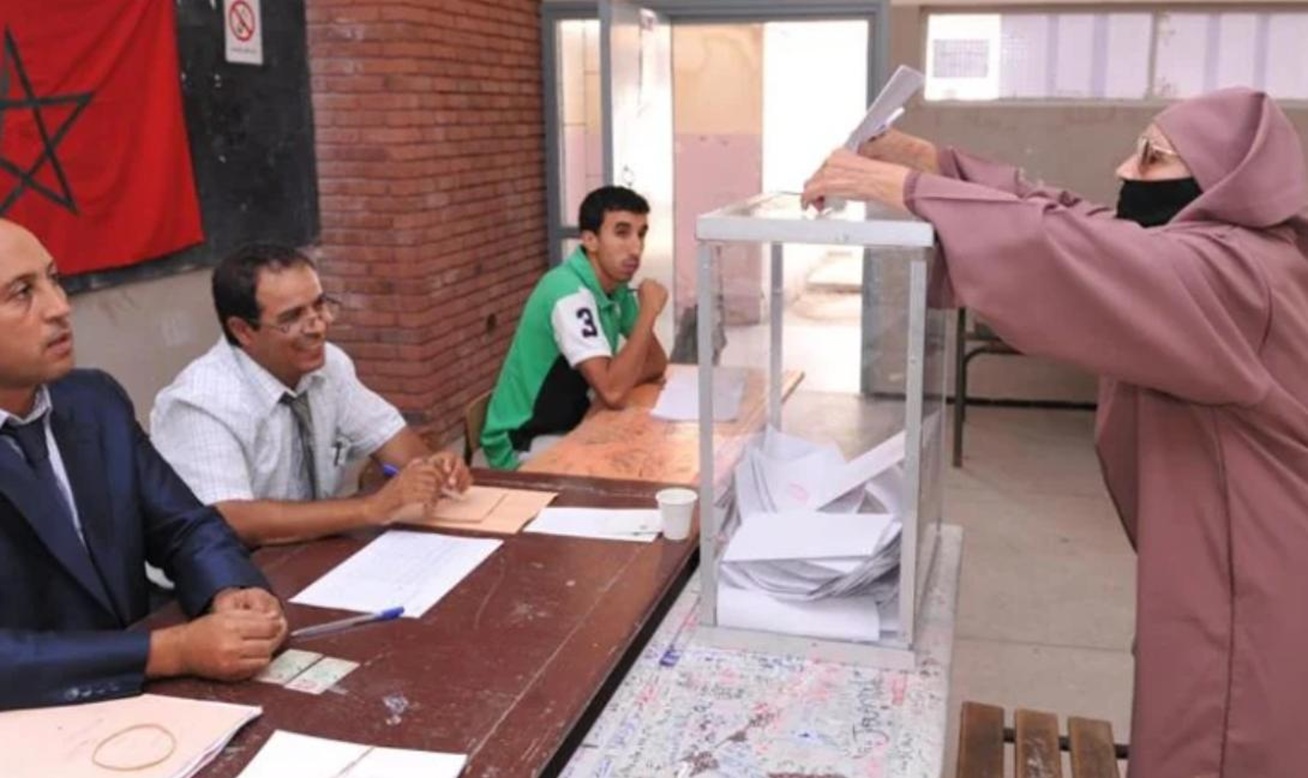
The monarchy occupies a central position within this architecture. It is not simply a political institution. It also provides historical, religious and territorial continuity around which much of the institutional system is organised. The 2011 Constitution strengthened some of the powers of the government and Parliament while preserving the King’s central role in strategic areas.
This configuration distinguishes Morocco both from the presidential republics of the Maghreb and from the rentier monarchies of the Gulf. The Kingdom has limited fossil-fuel resources and cannot finance stability through hydrocarbon revenues comparable to those available to major energy exporters. It must therefore generate growth, employment, tax revenues, infrastructure and redistribution simultaneously.
Moroccan stability can consequently never be regarded as entirely self-sustaining. It depends on the system’s ability to absorb demographic and social change, maintain prospects for economic advancement and respond to the expectations of an increasingly urbanised, connected and demanding population.
It is precisely this political continuity that has enabled the country to pursue strategies extending far beyond individual electoral cycles.
The Infrastructure Choice
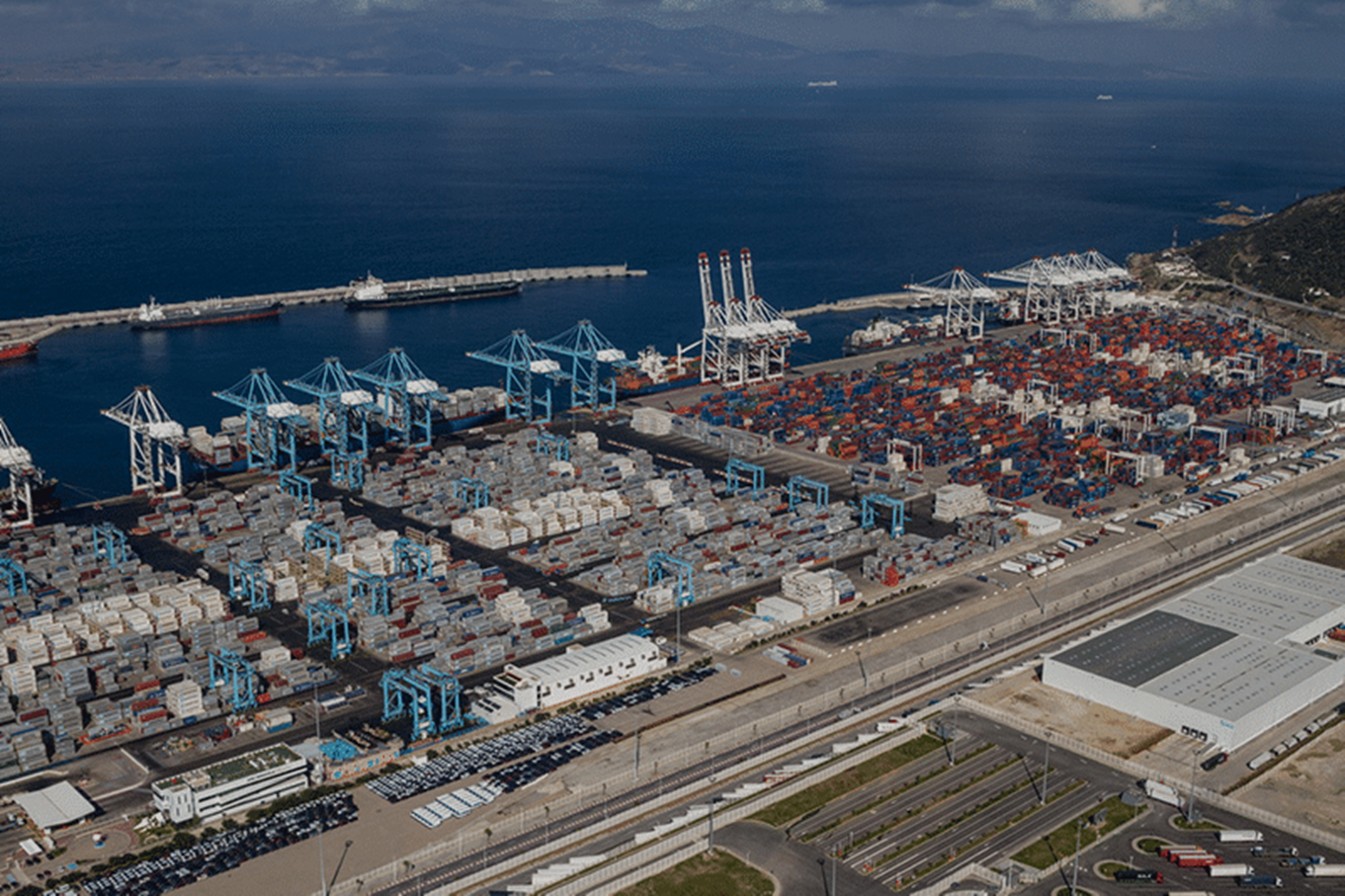
Morocco’s transformation is first visible across its territory. Tanger Med is perhaps its most spectacular expression. The port complex has fundamentally altered northern Morocco’s position within global logistics chains and supported the emergence of an industrial ecosystem around Tangier and Kenitra. Motorways, railway development, logistics platforms and the Al Boraq high-speed railway have gradually brought the country’s principal economic centres closer together.
Casablanca remains the financial and entrepreneurial centre. Rabat concentrates much of the country’s institutional apparatus. Tangier has established itself as an industrial and logistics interface with Europe. Kenitra is expanding its industrial base. Marrakech and Agadir remain major tourism centres, while several intermediate cities are seeking their own development models.
Yet this economic geography remains uneven. The Atlantic corridor concentrates a substantial share of economic activity, infrastructure and investment. Rural areas, parts of the mountain regions and provinces located far from the main economic corridors have access to fewer opportunities. Infrastructure can reduce distance. It does not automatically eliminate territorial inequality.
From a Cost Economy to an Industrial Economy
One of the most significant changes has occurred within Morocco’s productive structure. For decades, Morocco’s competitive advantages were largely associated with proximity to Europe, competitive labour costs, tourism, agriculture, phosphates and remittances from Moroccans living abroad. These pillars remain essential, but they are no longer sufficient to describe the economy.
The automotive industry provides the clearest example. An increasingly complex industrial value chain has developed around manufacturers and their suppliers. Aerospace, wiring systems, electronics, agribusiness and several export-oriented service industries reflect the same evolution.
OCP Group illustrates another dimension of this strategy: moving beyond the extraction of a natural resource towards an integrated industrial chain encompassing fertilisers, chemicals, research and agricultural solutions, particularly for African markets.
These developments reflect a broader ambition: to establish Morocco as an industrial platform connecting Europe, Africa and, increasingly, the wider Atlantic space.
But the real test is not simply how many factories the country attracts. It lies in the amount of value genuinely created locally, the ability of Moroccan companies to enter supplier networks, the development of skills and research, and the emergence of companies capable of developing their own technologies and brands. Assembly is one stage. Capturing a greater share of value is another.
Africa as Strategic Depth
Morocco’s African policy has become one of the pillars of its external strategy. The Kingdom’s return to the African Union in 2017 formalised a reorientation that had begun much earlier. Moroccan banks, insurers, telecommunications companies, property groups, phosphate businesses and service providers have progressively expanded across sub-Saharan Africa.
This expansion serves several purposes. It creates new markets for Moroccan companies, reduces dependence on Europe and provides the Kingdom with greater diplomatic depth.
The Atlantic initiative directed towards the Sahel states belongs to this broader vision. It reflects an ambition in which Morocco’s Atlantic coastline could become one of the gateways connecting landlocked Sahelian economies to international trade, provided that the necessary infrastructure, financing and, above all, political and security conditions allow such a project to materialise.
Morocco is therefore attempting to transform geography into strategic advantage: European through proximity, African through belonging, Atlantic through its maritime opening and Mediterranean through its commercial history. Few countries combine all four dimensions.
The Sahara at the Centre of Foreign Policy
No analysis of Morocco’s trajectory can ignore the question of Western Sahara, a territory whose status remains internationally disputed and which Rabat considers a fundamental issue of sovereignty and territorial integrity.
Morocco administers most of the territory and has advocated since 2007 an autonomy proposal under Moroccan sovereignty. The Polisario Front, by contrast, seeks independence, while the United Nations continues to pursue a political solution through its established process.
Several diplomatic developments in recent years have strengthened Morocco’s position. The United States recognised Moroccan sovereignty over the territory in 2020. Other partners have expressed varying degrees of support for Rabat’s autonomy proposal, without bringing the international dispute itself to an end.
The issue extends far beyond the territory. It structures relations with Algeria, influences the geopolitical balance of the Maghreb and affects Morocco’s diplomatic strategies in Africa, Europe and its relations with major powers.
It also helps explain one of the region’s central paradoxes: while deeper Maghreb economic integration could represent a powerful source of development, relations between its two principal powers remain profoundly strained.
A Diplomacy of Diversification
Europe remains fundamental. The European Union is a major economic partner, while proximity to Spain and France has shaped commercial, human and financial exchanges for decades. But Morocco no longer wants to depend on a single strategic space.
Relations with the United States are longstanding and now include an important security and military dimension. Ties with the Gulf monarchies remain significant. Relations with China are expanding through investment and industry. The normalisation of relations with Israel in 2020 opened new areas of cooperation, particularly in technology and security, while also requiring Rabat to navigate the enduring sensitivity of the Palestinian question within Moroccan public opinion.
This diversification reflects a pragmatic diplomacy: multiplying partnerships without becoming locked into exclusive dependence. In an increasingly fragmented international system, the ability to maintain several strategic relationships simultaneously is itself becoming a source of power.
Energy as a New Frontier
Morocco possesses few hydrocarbon resources but considerable solar and wind potential. A historical constraint has therefore gradually been transformed into an energy strategy.
The Noor solar complex in Ouarzazate has become one of its most visible symbols. Wind generation is also expanding, while discussions surrounding green hydrogen, electricity interconnections and industrial decarbonisation are placing the country at the centre of new energy ambitions. The implications extend beyond energy security.
As the European Union strengthens environmental requirements and global industry seeks to reduce its carbon footprint, access to competitive low-carbon electricity could become an industrial advantage comparable to labour costs or geographic proximity.
Yet potential does not guarantee results. The investment requirements are substantial, technologies are evolving rapidly and international competition to attract green industries is intensifying.
Water, the Constraint of the Century
If energy represents an opportunity, water is likely to become one of Morocco’s most significant structural constraints. Repeated droughts, pressure on groundwater resources, urban growth and agricultural demand are exposing the country to increasing water stress. This is as much an economic question as an environmental one.
Agriculture remains essential to rural employment and several major export sectors, but it is highly exposed to climatic conditions. Climate change is intensifying this vulnerability and forcing increasingly difficult choices between agricultural, industrial and domestic uses.
The Kingdom is developing dams, water-transfer infrastructure and desalination capacity. Such investment can reduce vulnerability, but it cannot remove the need for greater efficiency in water use.
Moroccan development will therefore have to accomplish something particularly difficult: continue industrialising and urbanising in an environment where water is becoming scarcer.
Social Transformation, the Decisive Challenge
Infrastructure can be built relatively quickly. Social transformation takes considerably longer. Morocco continues to face significant disparities in income, public-service quality and access to opportunity. Youth and graduate unemployment remain persistent challenges. The informal economy absorbs a substantial share of economic activity. Female labour-force participation remains low relative to the economic potential it represents.
Education is perhaps among the most consequential issues. A country seeking to move higher in global value chains cannot indefinitely separate its industrial ambitions from the quality of its human capital.
The expansion of social protection undertaken in recent years represents, in this respect, a major transformation of Morocco’s social architecture. Health coverage, direct assistance and reforms to support mechanisms are progressively altering the relationship between the state and households.
Their success, however, will depend on implementation, financing and the ability of the formal economy to generate sufficient productive employment.
The fundamental question is therefore how widely growth is distributed. An economy can develop modern infrastructure, attract foreign investment and increase exports without the entire population immediately experiencing a proportional improvement in living standards.
It is within this gap between visible transformation and lived transformation that one of the principal tensions of contemporary Morocco can be found.
2030 as an Accelerator
The 2030 FIFA World Cup, which Morocco will host jointly with Spain and Portugal, represents far more than a sporting event. It imposes a timetable.
Transport systems, stadiums, airports, accommodation, urban development, digital services and tourism infrastructure are receiving substantial investment. As in other countries that have hosted major international events, there is a risk of confusing accelerated expenditure with sustainable development. But 2030 can also act as a catalyst for projects whose usefulness will extend far beyond the tournament.
The real measure of success will therefore not be whether Morocco successfully hosts several weeks of football, but what the infrastructure built for 2030 will have changed ten or twenty years later.
The Productivity Question
Behind almost all these challenges lies a less spectacular variable: productivity. Morocco has considerably strengthened its physical capital. The next stage will depend more heavily on human capital, institutional quality, competition, innovation, business financing and the ability of smaller companies to grow.
The economic fabric remains characterised by a contrast between several highly capable large groups, industrial companies integrated into international markets and a multitude of small businesses operating at relatively low levels of productivity. Narrowing this divide is essential.
The deeper economic transformation will begin when investment in infrastructure translates more systematically into higher productivity for Moroccan companies and workers. It is also under these conditions that a broader and more resilient middle class can emerge.
Morocco Confronting Its Own Success
The Morocco of the early 2000s and the country preparing to host the World Cup in 2030 already belong to markedly different realities.
Morocco today possesses infrastructure, industrial capabilities, diplomatic networks and international visibility that would have been difficult to imagine only a few decades ago. It also benefits from a degree of institutional continuity that remains unusual within its regional environment. But success itself changes expectations.
As countries modernise, their populations cease to compare their circumstances only with their own past. They increasingly compare them with international standards visible every day. Expectations concerning education, healthcare, incomes, transportation, justice, public services and professional opportunities rise alongside development. Morocco’s challenge is therefore changing in nature.
It is no longer simply a matter of building infrastructure, attracting investors or maintaining stability. The task is to convert these achievements into productivity, social mobility, skills and a sufficiently broad improvement in living conditions. Stability made transformation possible. Transformation must now strengthen the economic and social foundations of that stability.
This is likely where the next stage of Morocco’s trajectory will be decided: not through a rupture with the model constructed over recent decades, but through its ability to cross a new threshold. Morocco has largely demonstrated that it can build. It must now demonstrate that it can turn what it has built into prosperity broad enough to transform society itself.
Main Sources
High Commission for Planning (HCP) — National accounts, labour market, demographics, living standards and social indicators.
Bank Al-Maghrib — Annual reports, monetary policy, economic financing and macroeconomic data.
Ministry of Economy and Finance of the Kingdom of Morocco — Public finances, investment, economic policy and budget documentation.
Office des Changes — Foreign trade, foreign direct investment, remittances from Moroccans living abroad and balance-of-payments data.
World Bank — Morocco Economic Monitor, development indicators, employment, productivity, human capital and water constraints.
International Monetary Fund — Article IV consultations and macroeconomic assessments of Morocco.
African Development Bank — Economic outlook, infrastructure and private-sector development in Morocco.
Tanger Med Port Authority — Port, logistics and industrial activity data.
OCP Group — Annual reports and information concerning industrial activities, phosphates and fertilisers.
International Energy Agency / IRENA — Data and analysis concerning Morocco’s energy system and renewable-energy development.
United Nations — Documentation concerning Western Sahara and the UN-led political process.
FIFA — Official documentation concerning the 2030 FIFA World Cup.
Atlas Limits Research Desk
Atlas Limits’ editorial and analytical desk.