International law proclaims the equality of states. Global power, however, determines their unequal capacity to act. Between asserted sovereignty, foreign interference and institutionalised hegemony, a more fragmented international order is taking shape—without yet having found either its rules or its equilibrium.
All states are sovereign, but not all enjoy the same degree of freedom. Some define international standards, control critical infrastructure, secure global trade routes or issue the currencies through which the world conducts its transactions. Others must contend with financial, military, technological or food dependencies that constrain their room for manoeuvre. Between them lies a broad hierarchy of middle powers, non-aligned countries, autonomous allies and states that are formally independent yet materially vulnerable.
This contradiction is not a temporary anomaly. It forms the underlying architecture of the international system. Sovereignty provides its legal principle, interference reveals its contested boundaries, and hegemony organises its enduring power relations. The emerging world order is therefore not merely the product of Western decline, China’s rise or the return of war. It reflects a more fundamental transformation: the widening gap between the formal independence of states and their actual ability to control the conditions of their existence.
Legal Equality, Strategic Inequality
The United Nations Charter rests on a decisive principle: states are legally equal, regardless of their size, wealth or military power. It also prohibits the threat or use of force against their territorial integrity and political independence. This principle accompanied decolonisation and allowed dozens of newly independent nations to enter international society with the same formal rights as the former imperial powers.
That equality remains one of the strongest protections available to weaker states. Without it, power alone would create law, and borders would become little more than temporary expressions of military strength. Yet the order established in 1945 has always been governed by a second logic. The Security Council grants veto power to five states; financial institutions distribute influence through rules that largely reflect economic weight; and alliances provide collective guarantees without eliminating the asymmetry between protectors and protected states.
The international system therefore possesses a dual constitution. The first affirms sovereign equality. The second organises a hierarchy of capabilities. A country may possess a flag, an army, a seat at the United Nations and its own constitution while remaining externally dependent for security, financing, digital systems, energy, medicines or access to export markets. It is sovereign in law, but its decision-making sovereignty remains constrained.
Sovereignty can no longer be reduced to the absence of foreign occupation. It increasingly means the ability to choose one’s dependencies, limit their consequences and prevent them from becoming instruments of coercion. It does not require autarky, which has become impossible in deeply integrated economies. It does, however, require a state to retain enough alternatives to ensure that no single partner can determine its policies.
Interference and Its Shifting Boundaries
Every international relationship generates influence. Diplomacy, alliances, investment, development assistance, the circulation of ideas or public criticism of a government do not automatically constitute unlawful interference. In its 1986 judgment concerning military and paramilitary activities in and against Nicaragua, the International Court of Justice placed coercion at the centre of the non-intervention principle: intervention becomes unlawful when a state uses coercive means to impose choices that should remain within another state’s political freedom.
The distinction appears clear, but its application is far more difficult. Military intervention, armed support for an insurgency or the forced organisation of regime change are among the most visible forms of interference. Contemporary instruments, however, are often more diffuse. A cyber operation can disrupt public services without physically crossing a border. An information campaign can seek to influence an electoral process. Financial restrictions can paralyse entire industries. Extraterritorial measures can compel foreign companies to enforce policies decided by a third state.
Interference has therefore become a matter of degree. It extends from persuasion to pressure, from pressure to coercion, and from coercion to the direct use of force. Its classification depends on the means employed, the objective pursued, the consent of the state concerned and the possible existence of international authorisation. An operation conducted at the request of a recognised government does not have the same status as an imposed intervention. A sanction authorised by the Security Council does not belong to the same legal framework as a unilateral measure with extraterritorial effects. Diplomatic criticism cannot be equated with a covert attempt at subversion.
Sovereignty, however, cannot become an absolute right to impunity. In 2005, United Nations member states recognised a responsibility to protect populations from genocide, war crimes, ethnic cleansing and crimes against humanity. The doctrine sought to resolve a major legal and moral tension: preventing non-intervention from becoming a shield for mass atrocities while ensuring that collective action remained governed by the Charter and the Security Council.
The Libyan experience of 2011, in which a mandate to protect civilians was followed by regime change and the lasting collapse of the state, severely weakened the trust required for such a mechanism. Since then, major powers have increasingly suspected one another of using humanitarian norms as strategic instruments. The dilemma remains unresolved: sovereignty without responsibility can protect governments against their own populations, while intervention without limits can turn the protection of civilians into cover for a project of power.
Hegemony, or the Power to Define What Is Possible
Interference seeks to alter a particular decision. Hegemony operates at a deeper level: it shapes the environment in which decisions are made. A hegemonic power does not merely issue commands. It establishes standards, provides collective goods, controls infrastructure and turns its own preferences into the ordinary functioning of the system.
The international order constructed after 1945 was largely organised around American power. The United States played a central role in maritime security, Western alliances, the Bretton Woods institutions, global financial markets and the international monetary architecture. This order facilitated the expansion of trade, the reconstruction of Europe and Asia, and the progressive integration of much of the world into the global economy. It also gave Washington disproportionate influence over international rules, capital flows, strategic technologies and access to the financial system.
American hegemony has never rested on force alone. Its longevity derives from its ability to create benefits for other states, attract capital, support alliances and provide institutions open enough for participants to find value in them. Consent, however, does not eliminate asymmetry. An infrastructure may serve everyone while still granting exceptional power to the actor that controls it.
The dollar’s international role offers the clearest example. Despite extensive discussion of de-dollarisation and reserve diversification, the US currency still accounted for 57.13 per cent of global foreign exchange reserves in the first quarter of 2026, compared with 20.03 per cent for the euro and 1.99 per cent for the renminbi, according to the International Monetary Fund’s COFER data. This centrality does not result from political decisions alone. It rests on the depth of US financial markets, the liquidity of dollar-denominated assets, established financial infrastructure and the absence of an alternative capable of combining the same characteristics.
China is nevertheless constructing its own sources of leverage: industrial power, control over essential segments of global value chains, infrastructure financing, the scale of its domestic market, leadership in selected technologies and the gradual development of commercial and financial channels that are less dependent on the West. The European Union exercises a different form of influence, based on the size of its market and its regulatory power. Russia possesses considerable military, nuclear and energy capabilities, but a narrower economic base from which to build a universal architecture. India, the Gulf powers and several large emerging states are developing negotiating power that makes the consolidation of a strictly bipolar system increasingly unlikely.
The emerging order is therefore not being shaped by a single replacement hegemon. Several powers are becoming capable of imposing constraints in different domains, without any of them being able to organise the entire system alone.
When Interdependence Becomes a Weapon
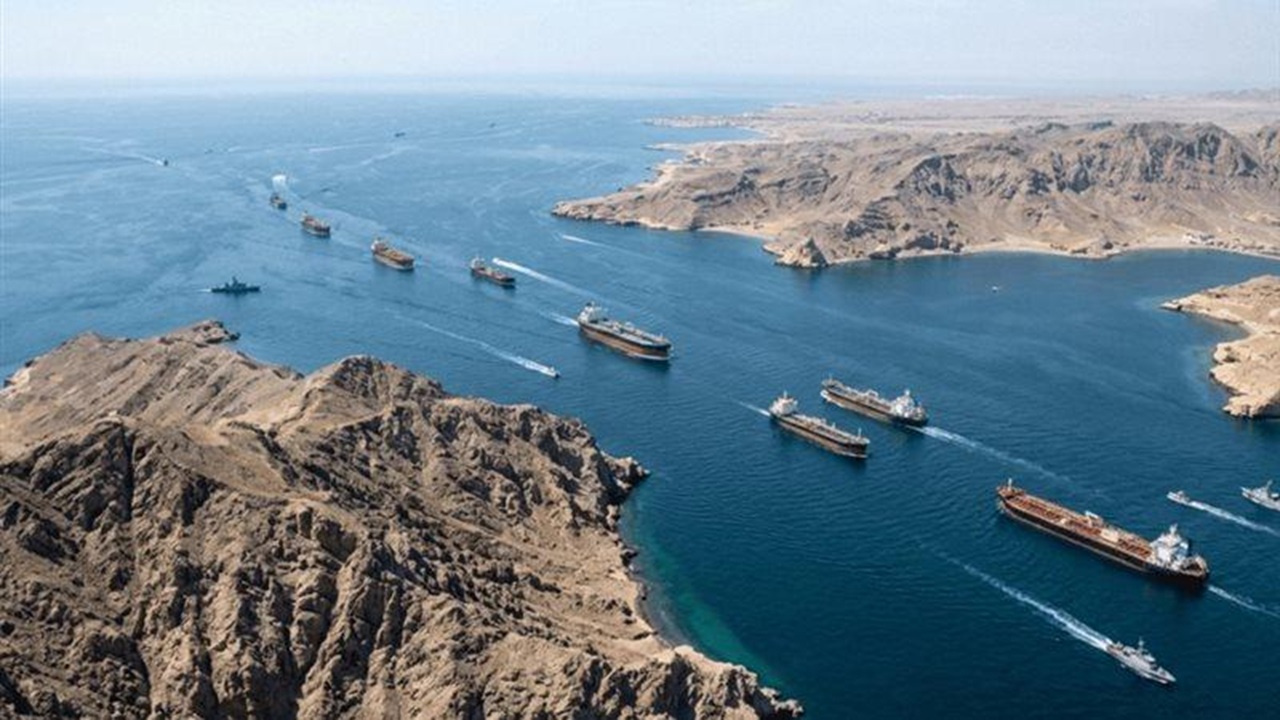
Globalisation was once presented as the gradual transcendence of geopolitics. In reality, it changed the instruments through which geopolitics operates. States accepted growing interdependence because it lowered costs, facilitated trade and accelerated economic growth. But these networks also created points of concentration: dominant currencies, payment systems, maritime insurance, satellites, undersea cables, digital platforms, cloud services, semiconductor manufacturing equipment, critical minerals and strategic transport routes.
Controlling an essential gateway creates the ability to influence those who depend on it. Financial sanctions, export controls, asset freezes, investment restrictions and limits on access to strategic technologies have consequently acquired an importance that, in certain circumstances, rivals that of military instruments. Coercion no longer necessarily requires territorial conquest. It may instead seek to prevent an economy from financing its imports, an industry from obtaining components or an army from acquiring decisive technologies.
Russia’s invasion of Ukraine illustrated the combination of these two forms of power. The territorial violation condemned by the United Nations General Assembly was followed by a response based simultaneously on military support, alliances, trade restrictions and financial isolation. The battlefield and the networks of the global economy became complementary dimensions of the same confrontation.
The weaponisation of interdependence nevertheless creates its own limits. Every coercive use of an infrastructure encourages states that feel vulnerable to seek alternatives. Central banks diversify their assets, some transactions move into local currencies, alternative payment networks are developed, and governments attempt to relocate industries considered strategically essential. These efforts have not displaced the existing architecture, but they are gradually increasing the political cost of dependency.
Research by the IMF and the World Trade Organization shows that trade and investment are already being partially redirected according to geopolitical affinities. This does not yet amount to generalised deglobalisation: value chains remain deeply interconnected, and many flows are now being rerouted through intermediary countries. The result is less a clean division into rival blocs than a more political form of globalisation, in which economic efficiency must increasingly compete with national security and resilience.
The Return of Hard Sovereignty
The rise in military expenditure reveals the depth of this transformation. According to SIPRI, global military spending reached $2.887 trillion in 2025 after eleven consecutive years of growth. The United States, China and Russia together accounted for slightly more than half of that total. The increase has been particularly visible in Europe and Asia, where governments are seeking both to strengthen their domestic capabilities and consolidate their alliances.
This rearmament does not merely signal the return of conventional warfare. It reflects declining confidence in the ability of international institutions to guarantee security on their own. States are investing more heavily in defence, strategic reserves, industrial capacity, cybersecurity, energy and critical infrastructure. Industrial policies, once widely treated as distortions of the market, have again become openly accepted instruments of sovereignty.
The boundaries of national security are expanding accordingly. Semiconductors, artificial intelligence, telecommunications, data, medicines, batteries and food supply chains are now treated as strategic assets. The distinction between economics and defence is fading. A factory can become an instrument of deterrence; a technical standard, a source of influence; and market access, a means of pressure.
Yet the search for sovereignty produces a contradiction. To protect themselves, many states strengthen alliances that improve their security while creating new dependencies. An external military guarantee may preserve a country’s territorial integrity while reducing its diplomatic autonomy. A localisation policy may secure production while increasing costs and shifting dependency towards other inputs. Sovereignty is therefore not the elimination of every constraint. It is the capacity to decide which constraints are acceptable and prevent them from becoming irreversible.
The Global South Is Not a Bloc
The expression “Global South” sometimes creates the impression of a coherent coalition seeking to replace the Western-led order. This interpretation obscures profoundly different interests, political systems, historical trajectories and strategic objectives. India does not pursue the same goals as China. The Gulf states do not necessarily share the priorities of Brazil or South Africa. African countries themselves do not constitute a uniform diplomatic grouping.
What brings many of these countries together is less a shared vision of the future than a challenge to the current distribution of power. Many refuse to choose permanently between Washington, Beijing, Moscow and Brussels. They seek Chinese investment, Western markets, equipment from multiple suppliers and diversified security partnerships. Their non-alignment is no longer a position of distance. It has become an active policy of multiplying options.
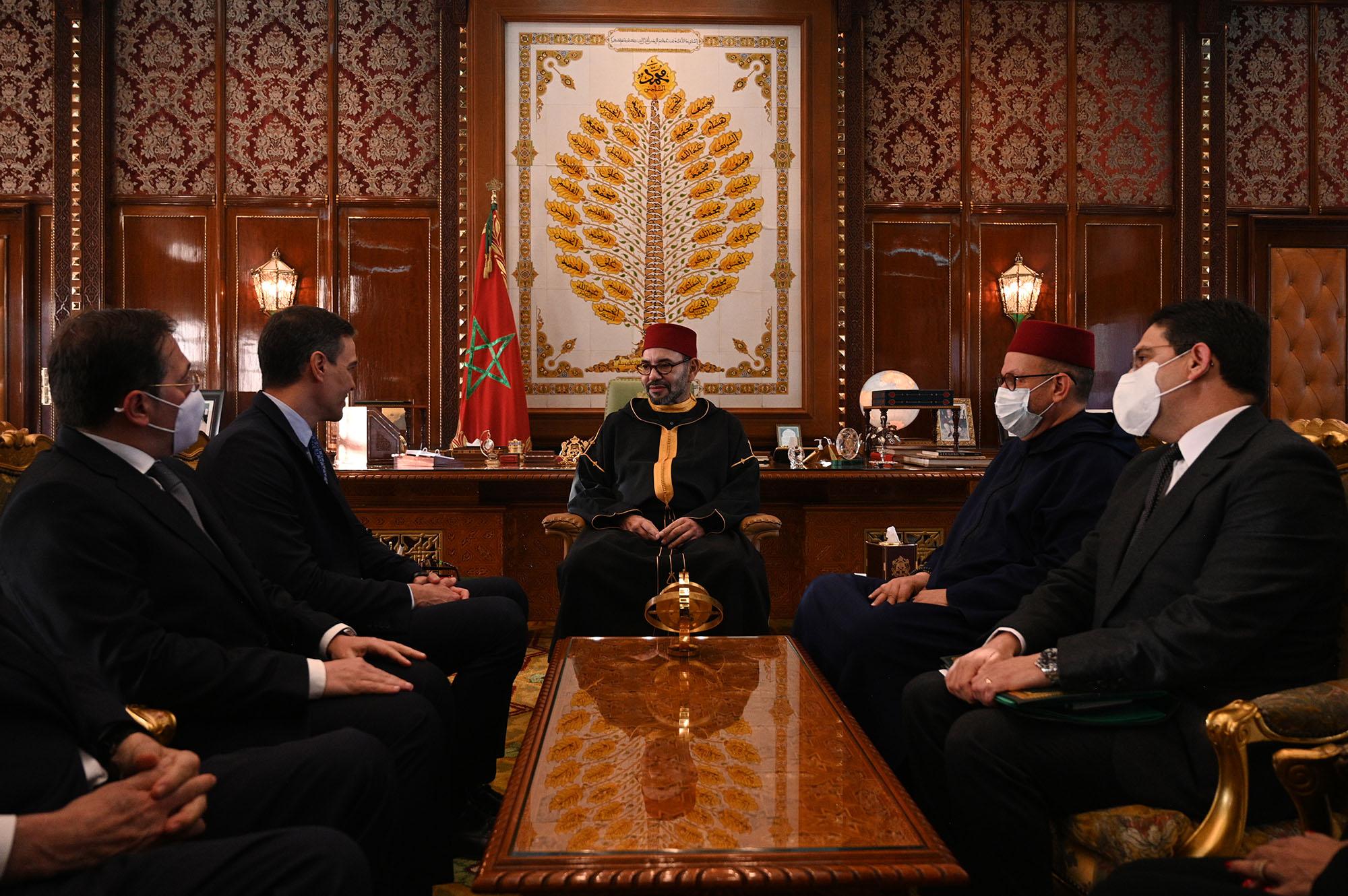
At very different scales, from Morocco and the Gulf states to India and Brazil, the same logic appears in different forms: expanding partnerships without abandoning existing anchors. Sovereignty then takes the form of a portfolio of relationships in which no single partner should become powerful enough to dictate national choices.
This strategy is effective only when supported by domestic capabilities. Without strong institutions, human capital, infrastructure, sustainable public finances and an industrial vision, diversification may amount to little more than competition between dependencies. A state can multiply its partnerships while remaining unable to convert external investment into national power. Sovereignty is not measured by the number of agreements signed, but by the ability to transform external relationships into lasting autonomy.
Middle powers therefore occupy a central place in the emerging order. They can serve as commercial connectors, diplomatic mediators and regional balancing points. Their influence grows as the major powers increasingly depend on them to prevent the world from separating completely into antagonistic blocs.
A Polycentric but Still Hierarchical Order
The emerging world is often described as multipolar. The term remains imperfect because it suggests the existence of several comparable poles, each possessing comprehensive power and a coherent sphere of influence. Reality is more disorderly. The United States retains systemic military, financial and technological power. China holds an industrial and commercial position unmatched by other emerging powers. The European Union possesses a vast market and considerable regulatory influence but incomplete strategic autonomy. Russia remains a major military power capable of disrupting regional balances without offering a competing global economic model. India is advancing but continues to face substantial development needs.
The order is therefore becoming polycentric in terms of its actors while remaining hierarchical in its infrastructure. A state may depend on the United States for security, China for trade, Europe for regulatory access and a regional supplier for energy. Its foreign policy is no longer defined by a single alignment, but by the constant management of several systems of dependency.
This configuration also fragments hegemony. Power is no longer concentrated entirely in a single centre. It is distributed among those who control currencies, resources, technologies, standards, platforms, maritime routes and security guarantees. The same state may dominate one sector while remaining vulnerable in another. Sovereignty is becoming multidimensional.
That evolution does not necessarily promise a more balanced order. The absence of an uncontested hegemon can increase the room for manoeuvre available to other states, but it can also weaken the ability to produce common rules. When several powers contest existing norms without succeeding in replacing them, the danger is not fragmentation alone. It is the return of a system in which every actor invokes international law when it offers protection and strategic necessity when it wishes to escape its constraints.
The Struggle Over the Freedom to Decide
Twenty-first-century sovereignty will be neither absolute nor solitary. It will depend on the ability of states to identify their vulnerabilities, diversify their relationships, build credible institutions and preserve a sufficient productive base. It will also require cooperation, because no country can address climate change, pandemics, financial instability, cyber threats or technological proliferation on its own.
International rules remain especially important for small and middle powers. For them, law is not an abstract constraint imposed by multilateralism. It is a force multiplier. Weakening the prohibition on the use of force, the protection of borders or the peaceful settlement of disputes would not liberate weaker states. It would expose them more directly to coercion by stronger ones.
A durable order will therefore have to resolve three contradictions. Power must be sufficiently constrained to prevent it from arbitrarily creating law. Sovereignty must be accompanied by responsibilities so that it does not become a refuge from every obligation. Interdependence must remain open enough to generate prosperity without allowing a small number of centres to turn every global network into an instrument of domination.
The emerging world order will not be decided solely on battlefields or at diplomatic summits. It will be shaped by each society’s ability to determine what it is willing to share, what it refuses to endure and what it remains capable of deciding for itself. The true frontier of sovereignty no longer runs only around national territory. It now passes through the currencies, technologies, infrastructure, alliances and institutions that define the freedom of nations to act.
Main Sources
- Charter of the United Nations — Full Text
- International Court of Justice — Military and Paramilitary Activities in and against Nicaragua
- United Nations — About the Responsibility to Protect
- United Nations General Assembly — Resolution ES-11/1 on the Aggression against Ukraine
- IMF — Geopolitics and Its Impact on Global Trade and the Dollar
- IMF — Currency Composition of Official Foreign Exchange Reserves, First Quarter of 2026
- WTO — Is the Global Economy Fragmenting?
- SIPRI — Trends in Global Military Expenditure, 2025
Atlas Limits Research Desk
Atlas Limits’ editorial and analytical desk.