Arctic routes, resources and strategic rivalry at the top of the world
On the flat maps that have long shaped our perception of the world, the Arctic appears to belong to its outer margins. Greenland is pushed toward the top, Siberia and Alaska seem far apart, while Europe, Asia and North America appear to face away from the pole. Yet looking at a globe from the north immediately reverses that geography. Russia and North America become neighbours. Scandinavia moves closer to the North American continent. Greenland occupies a central position between the Atlantic and the Arctic Ocean. The North Pole is no longer the edge of the world: it becomes one of its crossroads.
This geographical reality is not new. What is changing is the growing ability to exploit it. Climate change is transforming the physical conditions of the Arctic, while the deterioration of relations between Russia and Western powers is reshaping its political environment. At the same time, developments in military technology, the search for new resources, the growing importance of critical minerals and China’s interest in polar routes are bringing the High North back to the centre of strategic calculations.
The Arctic remains an exceptionally difficult, costly and dangerous environment. It would therefore be excessive to suggest that a new commercial ocean comparable to the Atlantic or Pacific is about to emerge. Yet the trend is sufficiently profound to alter national policies. In 2026, seven of the eight Arctic states are members of NATO. Russia is the eighth. A region that had been largely organised since the end of the Cold War around mechanisms of cooperation is therefore increasingly crossed by one of the main strategic fault lines of the international system.
The High North is changing function. For a long time, it was a frontier. It is gradually becoming an interface.
I. A Vast Territory That Is No Longer Entirely Inaccessible
There is no single universally accepted definition of the High North. The Arctic is generally associated with territories located north of the Arctic Circle, at approximately 66°34′ north latitude. This area encompasses roughly 21 million square kilometres of land and sea and involves eight states: Canada, Denmark through Greenland, Finland, Iceland, Norway, Russia, Sweden and the United States through Alaska. More than four million people live in Arctic regions, including roughly half a million Indigenous people.
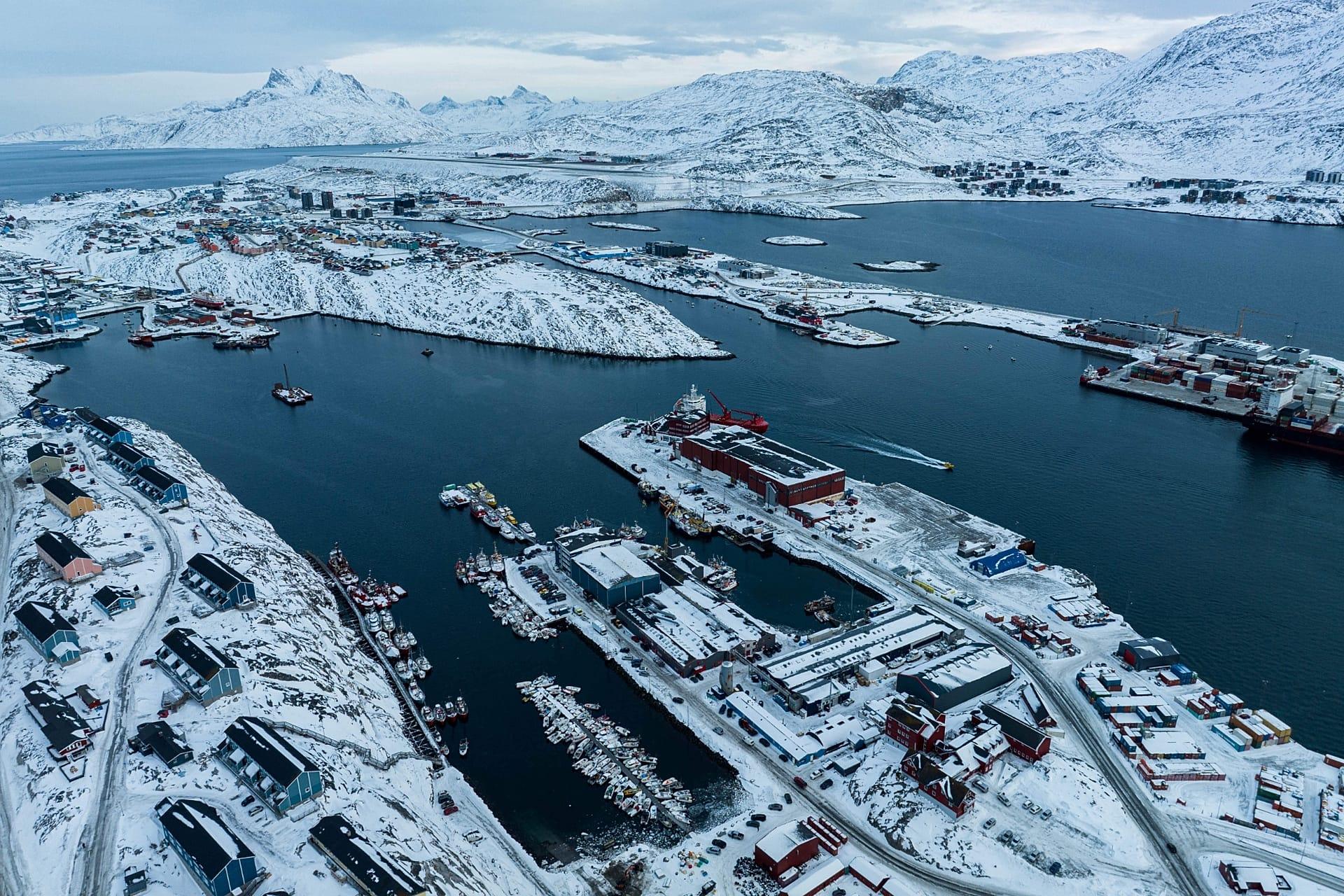
This human dimension is sometimes overshadowed by geopolitical representations of the Arctic. Yet the region is neither empty nor available for unrestricted exploitation. Cities, ports, industrial facilities, military installations and communities whose livelihoods depend directly on polar ecosystems are already established there. The changes now under way therefore affect inhabited territories before they affect the strategies of great powers.
The most visible transformation remains physical. According to the NOAA, surface temperatures in the Arctic between October 2024 and September 2025 were the highest recorded since 1900. Since 1980, annual Arctic air temperatures have risen nearly three times faster than the global average. In March 2025, the winter maximum extent of sea ice reached its lowest level since satellite observations began, while ice more than four years old had declined by more than 95 percent compared with its average level during the 1985–2004 period.
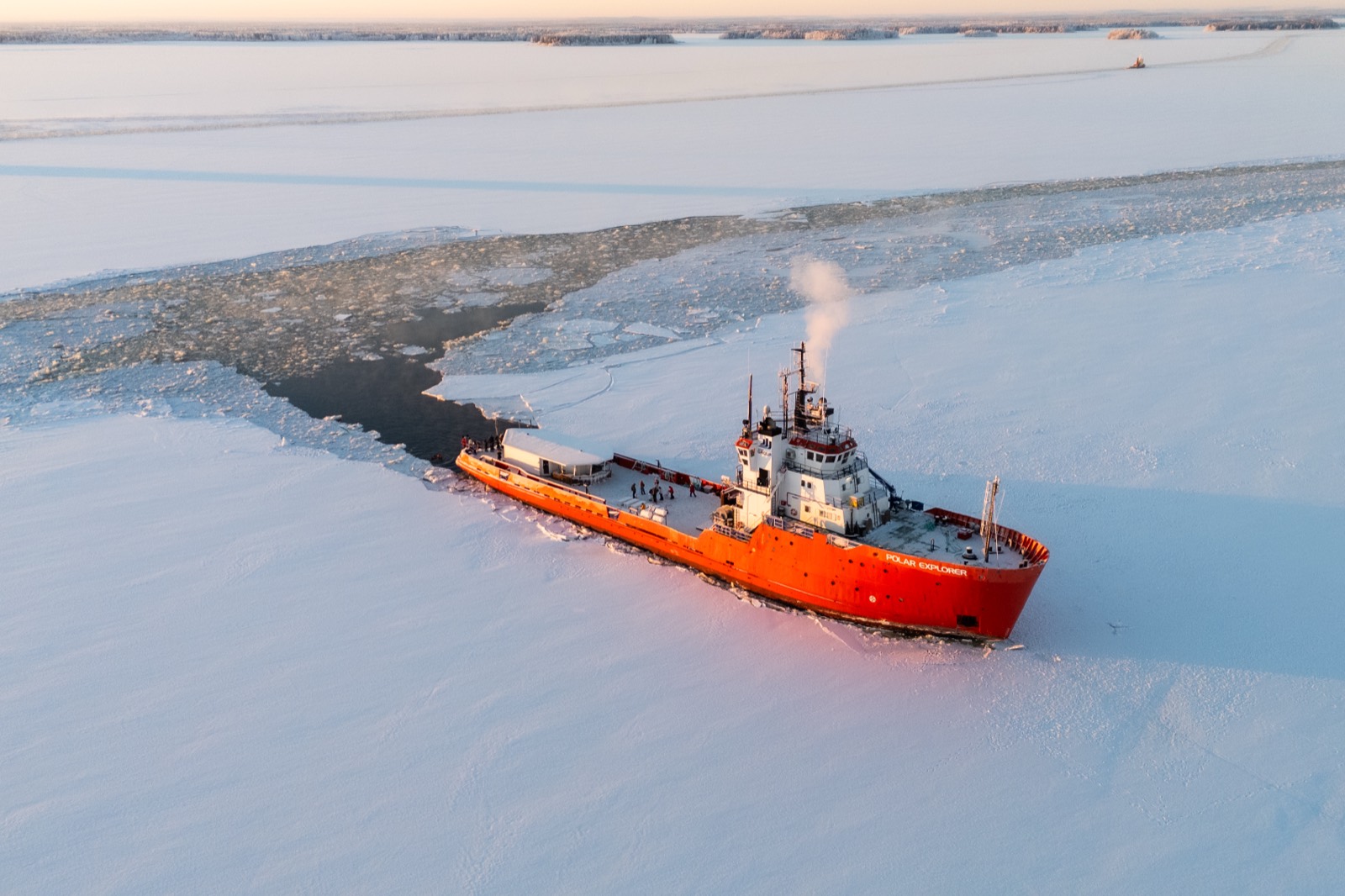
A common shortcut should nevertheless be avoided: a shrinking ice cover does not mean that the Arctic Ocean is becoming an ordinary sea. Drifting ice, winter darkness, extreme temperatures, insufficient port infrastructure, rescue difficulties, enormous distances and the constraints placed on vessels continue to generate very high costs and risks.
The transformation is nevertheless strategic because it gradually alters what is possible. Where ice once formed an almost permanent barrier, it is increasingly becoming seasonal. Geography itself does not change, but its accessibility does.
And when a geography becomes accessible, power politics eventually follows.
II. Russia, the Arctic’s Leading Geographical Power
No actor can approach the High North without starting with Russia. A considerable share of the Arctic Ocean coastline borders Russian territory. From Murmansk to the Bering Strait stretches an immense northern frontage that gives Moscow a geographical depth unmatched anywhere else in the region.
For Russia, the Arctic serves several functions simultaneously. It is first a national territory containing cities, industrial facilities, energy resources and critical infrastructure. It is also a maritime frontage providing access to the Atlantic and Pacific Oceans. Finally, it hosts a central part of Russia’s strategic military apparatus, particularly around the Kola Peninsula and the Northern Fleet.
The military logic therefore extends far beyond the protection of a resource-rich territory. Russia’s northern regions are directly linked to its nuclear deterrence. Ballistic missile submarines constitute a fundamental component of Moscow’s second-strike capability. Protecting those vessels, the bases that host them and the surrounding maritime approaches gives the Barents Sea and neighbouring areas major strategic importance.
For several years, Russia has also modernised or reactivated military infrastructure throughout the High North. NATO has highlighted the creation of a Russian Arctic command, the reopening of facilities dating from the Soviet period, the expansion of airfields and deep-water ports and the deployment or testing of new weapons systems.
This militarisation must nevertheless be placed in context. Part of these capabilities reflects a traditional need to defend an immense Russian territory and secure widely dispersed economic infrastructure. Yet the accumulation of military assets, combined with the confrontation between Moscow and Western powers since the war in Ukraine, has transformed how these investments are perceived.
The Russian Arctic is no longer viewed solely as a regional policy issue. It has become integrated into the broader balance of power between Russia and NATO.
III. NATO Moves North
Finland’s accession to NATO in 2023, followed by Sweden’s in 2024, represents one of the most significant geopolitical transformations in the High North since the collapse of the Soviet Union.
The Arctic consequence is considerable. Seven of the eight members of the Arctic Council are now part of the Atlantic Alliance: the United States, Canada, Denmark, Iceland, Norway, Finland and Sweden. Russia is the only one outside the organisation.
This does not mean that the Arctic automatically becomes NATO territory in a legal or operational sense. But the strategic continuity of allied territory has changed profoundly. From Alaska to Norway, through Canada, Greenland, Iceland, Finland and Sweden, Western capabilities can now be conceived in a much more integrated manner.
Scandinavia occupies a particular position in this architecture. Norway has decades of experience operating in the High North. Finland contributes extensive expertise in subarctic conditions and shares more than 1,300 kilometres of border with Russia. Sweden possesses significant air, naval and industrial capabilities and controls the island of Gotland in the Baltic Sea, another major component of Europe’s northern strategic flank.
NATO has reinforced this orientation. In February 2026, the Alliance launched Arctic Sentry, an initiative intended to coordinate and strengthen its posture in the Arctic and High North. In June, it also established multinational forward land forces in Finland. These measures add to large-scale exercises and intensified surveillance of maritime, air and underwater spaces.
A new military geography is therefore emerging around the Arctic Ocean. Yet unlike the terrestrial front that divided Europe during the Cold War, it depends heavily on control of distance, straits, ocean depths, detection systems and infrastructure.
The High North is as much a competition in sensors and logistics as it is a concentration of military forces.
IV. Greenland, a Vast Territory at the Centre of the System
This new geography also explains why Greenland has acquired extraordinary strategic visibility.
With more than two million square kilometres of territory and a population of only several tens of thousands, the autonomous territory within the Kingdom of Denmark occupies a unique position between North America, the Arctic Ocean and the North Atlantic. Its value therefore does not lie solely in the resources that may exist beneath its surface.
Greenland sits on one of the main northern approaches to North America. The United States has maintained a military presence there since the Cold War, most notably at what is now known as Pituffik Space Base, a facility that plays an important role in missile warning and space surveillance.
Mineral prospects add another layer of strategic interest. Greenland’s subsoil contains various minerals potentially relevant to Western supply chains, at a time when rare earths and other critical metals have become central to global industrial competition.
But reducing Greenland to mineral reserves or military geography would be a mistake. Its geopolitical importance simultaneously reinforces the question of its own sovereignty. The territory has an autonomous government, and the debate over eventual independence from Denmark belongs to Greenlandic politics itself.
This is precisely what makes its position distinctive: the more outside powers regard Greenland as strategic, the more the Greenlandic population’s ability to determine the conditions under which its territory is used becomes an international issue.
Greenland is therefore not merely an object of Arctic competition. It is also seeking to become an actor in its own right.
V. The Promise of New Maritime Routes
One of the most widely discussed prospects concerns the gradual opening of shipping routes linking the Atlantic and Pacific through the north.
Three major routes are generally identified. The Northern Sea Route follows the Russian coastline between the Kara Sea and the Bering Strait. The Northwest Passage crosses the Canadian Arctic Archipelago. A third possibility, still far more prospective, would involve a transpolar route crossing the central Arctic Ocean if ice conditions continue to change.
On a map, their attraction is obvious. For some trade between Northeast Asia and Northern Europe, an Arctic route can be significantly shorter than a journey through the Strait of Malacca, the Indian Ocean and the Suez Canal.
But distance alone does not determine the profitability of a shipping route.
Modern maritime trade depends on reliability. Shipping companies must be able to predict schedules, costs, insurance conditions, port availability, repair capacity and the frequency of rotations. A shorter but uncertain route may be less attractive than a longer route supported by extensive infrastructure and usable throughout the year.
Arctic navigation is therefore unlikely to replace major southern trade routes in the near future. Its development could nevertheless be highly significant at the regional level, particularly for the transportation of hydrocarbons, minerals and other goods produced in northern Russia.
Its geopolitical importance could also exceed its commercial weight. A route does not need to carry a major share of global trade to become strategic. It only needs to provide an additional alternative during periods of crisis.
The Arctic is therefore gradually introducing a new variable into the geography of Eurasian trade.
VI. Beneath the Ice, Resources
Interest in the High North is also driven by the perception that it contains immense resource potential.
One of the most frequently cited assessments comes from the US Geological Survey. Its geological appraisal published in 2008–2009 estimated that approximately 13 percent of the world’s undiscovered conventional oil resources and 30 percent of its undiscovered natural gas resources could lie north of the Arctic Circle, primarily offshore. The USGS also found that a substantial share of the gas potential was concentrated in Russian areas.
These figures must be interpreted cautiously. They refer to estimates of technically recoverable resources, not proven reserves that are immediately exploitable and commercially viable. Extraction costs in Arctic environments can be extremely high, while the energy transition, international sanctions, technological constraints and environmental concerns may render some projects considerably less attractive.
The Arctic is also about much more than hydrocarbons. Nickel, copper, cobalt, graphite, rare earths and other strategic raw materials are increasing the importance of northern territories. The energy transition itself creates a paradox: efforts to reduce reliance on fossil fuels simultaneously increase demand for minerals required for batteries, power grids, wind turbines, electric motors, electronics and military systems.
The High North therefore sits at the intersection of two economic systems: the hydrocarbon economy that has shaped part of its industrial development and the critical-minerals economy that may accompany the global energy transition.
Yet between a geological resource and a strategic resource lies infrastructure. Production must be extracted, processed, transported and secured. In the Arctic, every one of these steps is more difficult than elsewhere.
The real competition may therefore concern less the theoretical ownership of resources than the industrial capacity to make them accessible.
VII. China Seeks Entry into a Geography It Does Not Possess
China has no Arctic territory. Yet that geographical fact has not prevented Beijing from developing a structured polar policy.
In its 2018 white paper, the Chinese government described the country as a “Near-Arctic State”, a formulation that does not correspond to any recognised status under international law but clearly reflects Beijing’s attempt to legitimise a long-term role in Arctic affairs. China has presented interests in scientific research, shipping, resources and governance, and explicitly referred to the development of a “Polar Silk Road”.
This policy reflects several objectives. The first concerns energy and mineral resources. The second involves maritime routes that could, over the long term, diversify Chinese supply lines. The third is scientific: understanding Arctic change is important for studying the global climate system. The fourth is strategic. A power whose trade, energy needs and naval ambitions are global cannot indefinitely ignore an ocean whose accessibility is increasing.
Relations with Russia are central to this strategy. Moscow possesses the geography, infrastructure and Arctic experience that Beijing lacks. China, by contrast, possesses capital, industrial capacity and an immense energy market.
This complementarity nevertheless has limits. Russia views the Arctic as a fundamental component of its sovereignty and has no obvious interest in allowing another dominant power to emerge across its northern territories.
Sino-Russian cooperation can therefore deepen in the High North without eliminating a basic divergence between their positions: for Moscow, the Arctic is first and foremost national territory; for Beijing, it must remain sufficiently open to allow non-Arctic powers access to the opportunities it offers.
VIII. The Invisible Contest: Satellites, Cables, Radars and the Seabed
Arctic competition is unlikely to resemble armies visibly advancing across the ice. Much of its strategic significance lies in infrastructure that is almost invisible.
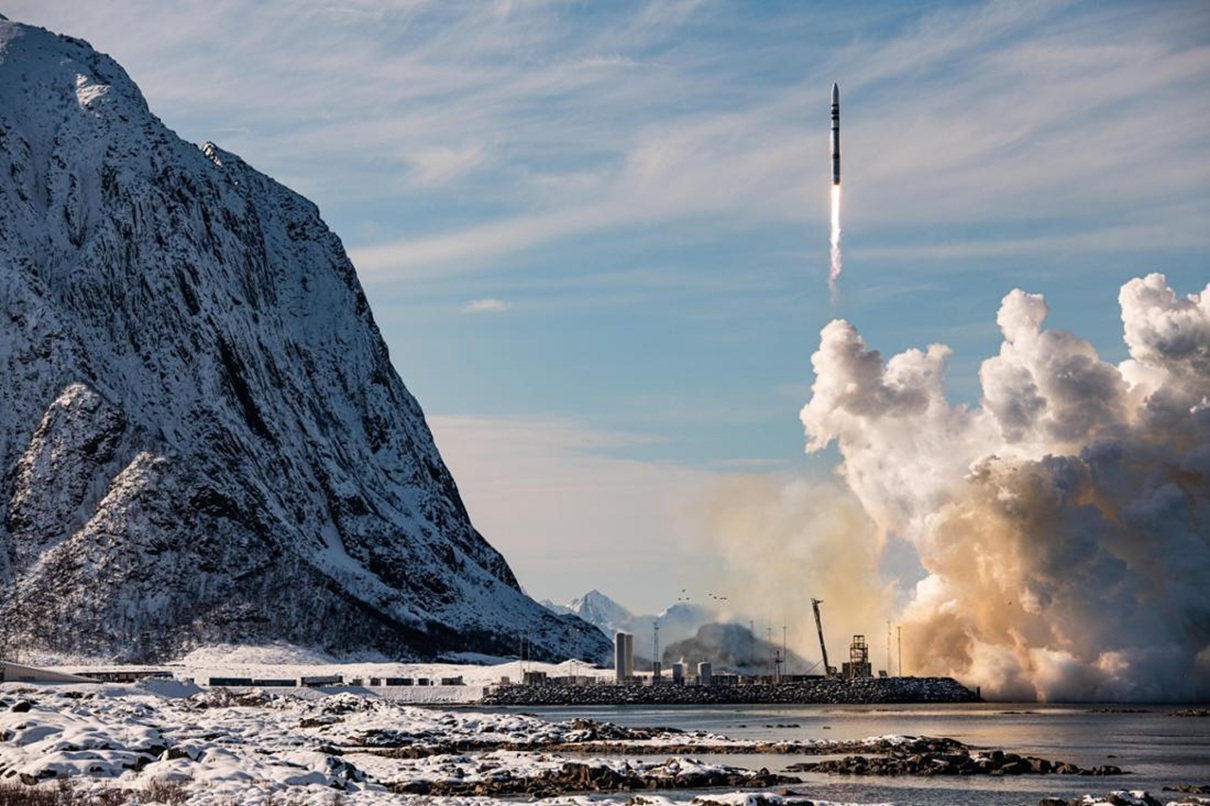
The first domain is detection. The curvature of the Earth and the geographical proximity of the pole have long explained the importance of the High North for air and ballistic trajectories between Russia and North America. Early-warning radars, satellites, air-surveillance systems and underwater detection capabilities therefore play a central role there.
The second domain concerns communications. Submarine cables carry the overwhelming majority of international digital communications. Increased activity at high latitudes is strengthening interest in new digital infrastructure connecting Europe, North America and Asia.
The third domain concerns the seabed itself. Gas pipelines, electricity cables, telecommunications links and energy infrastructure are all indispensable and vulnerable. Incidents affecting underwater infrastructure around Europe in recent years have heightened concern over this vulnerability.
In such spaces, the line between accident, espionage, military reconnaissance and sabotage can be difficult to establish. That ambiguity creates favourable conditions for operations conducted below the threshold of open conflict.
The Arctic could therefore become a laboratory for contemporary strategic confrontation: fewer visible battles, but constant competition around environmental awareness, data, infrastructure and the ability to attribute hostile action rapidly.
IX. A Space of Rivalry Still Structured by Law
Rising tensions do not mean that the Arctic has become a lawless zone.
Maritime spaces remain governed in particular by the United Nations Convention on the Law of the Sea, while a number of specific agreements regulate particular areas of activity. The Arctic Council, established in 1996, brings together the eight Arctic states and formally includes representatives of Indigenous peoples. Under its framework, legally binding agreements have been negotiated on search and rescue, marine oil-pollution response and scientific cooperation.
The war in Ukraine has profoundly disrupted political cooperation with Russia, but it has not erased several decades of institutional development or the practical need for cooperation. Fires, pollution events, search-and-rescue operations, climatic changes, species migration and oceanographic processes do not stop at national borders.
This creates a paradox characteristic of the High North. The same states may regard one another’s military capabilities as a threat while simultaneously depending on shared scientific data to understand the environment in which they operate.
Competition and cooperation are therefore not necessarily mutually exclusive.
They can coexist.
X. Northern Peoples and the Return of Great-Power Politics
The Arctic is often described from Washington, Moscow, Ottawa, Copenhagen, Oslo or Beijing. That perspective risks turning it into an immense empty chessboard on which states can move their pieces at will.
Yet the Arctic has been inhabited for thousands of years.
Inuit, Sámi and many other Indigenous peoples possess cultures, economies and knowledge systems deeply connected to polar environments. Roughly half a million Indigenous people live throughout the Arctic, and their organisations hold a special status as permanent participants within the Arctic Council.
For these communities, climate change is not a strategic projection for the next thirty years. It is already transforming travel, hunting, fishing, infrastructure built on permafrost, coastal stability and ecosystems.
Militarisation and economic development can create jobs, infrastructure and income, but they can also intensify territorial and environmental pressures. The future of the High North therefore cannot be reduced to the question of which state will control a given route or resource. It also concerns the place granted to the populations that actually live there.
This dimension could become increasingly politically significant as the strategic value of their territories rises.
XI. Climate Change Does Not “Free” the Arctic: It Destabilises It
The language used to describe the transformation of the High North is revealing. The “opening” of the Arctic is often discussed as though the gradual disappearance of ice simply represented the removal of a natural obstacle to human activity.
The reality is far less linear.
Melting ice may facilitate certain forms of navigation while increasing the mobility of the remaining ice. Thawing permafrost may make some territories more accessible while weakening roads, buildings and pipelines. Shifting ecosystems may create new fishing opportunities while disrupting the resources on which some communities depend.
The NOAA has documented the scale of this transformation. By the end of summer 2025, sea-ice extent was 28 percent lower than two decades earlier, and the remaining ice was significantly younger and thinner. Greenland also continues to lose ice mass, contributing to global sea-level rise.
The paradox is fundamental: the process that makes certain economic activities more feasible simultaneously makes the environment more unstable.
The Arctic is therefore not simply becoming more accessible.
It is becoming more accessible and more unpredictable.
XII. A New Map of the World
For much of modern history, the major centres of power were structured around temperate latitudes and ice-free seas. The Atlantic connected Europe and the Americas. The Mediterranean organised exchanges between Europe, Africa and the Middle East. The Indian Ocean linked the Gulf, East Africa and Asia. The Pacific gradually became the centre of gravity of the global economy.
The Arctic Ocean played a different role. It separated more than it connected.
That function is beginning to change.
If current climate trends continue, if polar technologies progress and if northern infrastructure expands, geopolitical distances may gradually be reinterpreted. Russia, the United States and Canada would increasingly appear as powers sharing the same oceanic space. Scandinavia would become simultaneously Europe’s northern frontage and a critical component of the transatlantic security system. Greenland would gain further importance. China would seek to maintain a presence in a region to which geography grants it no direct sovereign access.
This does not mean that the twenty-first century will become the “Arctic century”. Physical constraints remain considerable, and many of the most spectacular economic projections may never materialise.
But states do not wait until a territory is fully exploitable before positioning themselves.
They anticipate.
Conclusion — The Pole Is No Longer Peripheral
The transformation of the High North ultimately reveals something deeper than the emergence of a new zone of competition.
It shows that power has always depended on the ability of societies to transform geography.
For centuries, ice imposed its own frontiers. It restricted navigation, protected certain coastlines, complicated the exploitation of resources and made any permanent presence extraordinarily expensive. Climate, more than states, determined the limits of human activity.
That constraint is weakening without disappearing. And in the space it partially opens, the classical logics of the international system immediately re-emerge: sovereignty, resources, trade routes, infrastructure, military deterrence, technology, alliances and great-power competition.
Russia seeks to consolidate an Arctic frontage it considers vital. The United States is rediscovering the strategic importance of Alaska and Greenland. Canada continues to assert its northern sovereignty. The Nordic states are deepening their military integration. NATO is progressively organising its Arctic flank. China is attempting to establish a durable role despite lacking any polar territory of its own.
Yet none of these actors controls the variable that is transforming the region most fundamentally: its environment.
That may be the ultimate paradox of the High North. The great powers are preparing to compete for control over a space whose underlying conditions are changing faster than their strategies.
On twentieth-century maps, the North Pole occupied the upper edge of the world.
On the maps of twenty-first-century power, it may gradually move closer to the centre.
Main Sources
The climatic and sea-ice data used in this article are drawn primarily from the NOAA Arctic Report Card 2025, including its assessments of temperature change, sea-ice decline and the broader transformation of the Arctic Ocean.
The sections concerning the regional political framework, the eight Arctic states, Indigenous populations and mechanisms of cooperation rely primarily on publications from the Arctic Council.
The discussion of NATO’s evolving posture, Arctic Sentry and Western assessments of Russian and Chinese activity is based on official NATO publications updated through 2026.
The estimates concerning undiscovered oil and gas resources are based on the US Geological Survey Circum-Arctic Resource Appraisal. These estimates date from 2008–2009 and should be understood as geological assessments of technically recoverable resources rather than proven commercially exploitable reserves.
The description of China’s Arctic doctrine is based on the 2018 Chinese Arctic white paper, which introduced the concept of China as a “Near-Arctic State” and promoted the development of a “Polar Silk Road”.
Atlas Limits Research Desk
Atlas Limits’ editorial and analytical desk.