With the mandate of the United Nations Mission for the Referendum in Western Sahara approaching expiration, the United States is seeking to fundamentally reshape the political and institutional framework governing the dispute. After introducing an ambitious initial draft, Washington softened several provisions in a revised version circulated on October 26, 2026. Autonomy under Moroccan sovereignty remains central to the initiative, but the proposed restructuring of the United Nations presence has become more gradual. Behind these adjustments lies a fundamental question: is the Security Council prepared to move beyond a process originally designed around a referendum toward a negotiated settlement based on autonomy?
In New York, negotiations extend far beyond a mission renewal
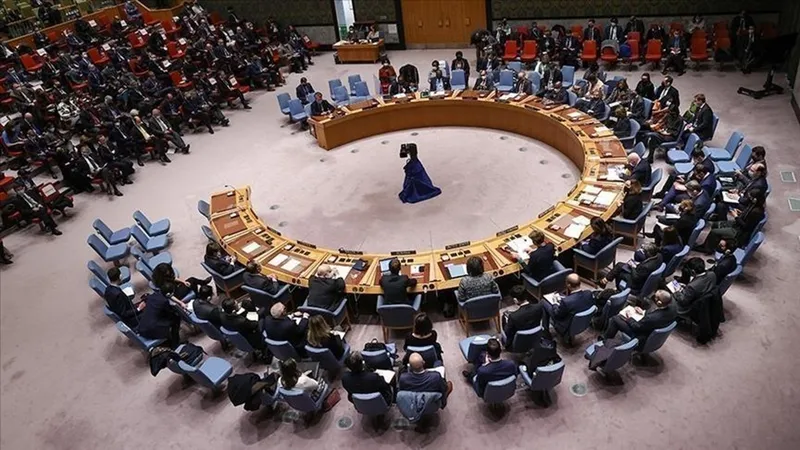
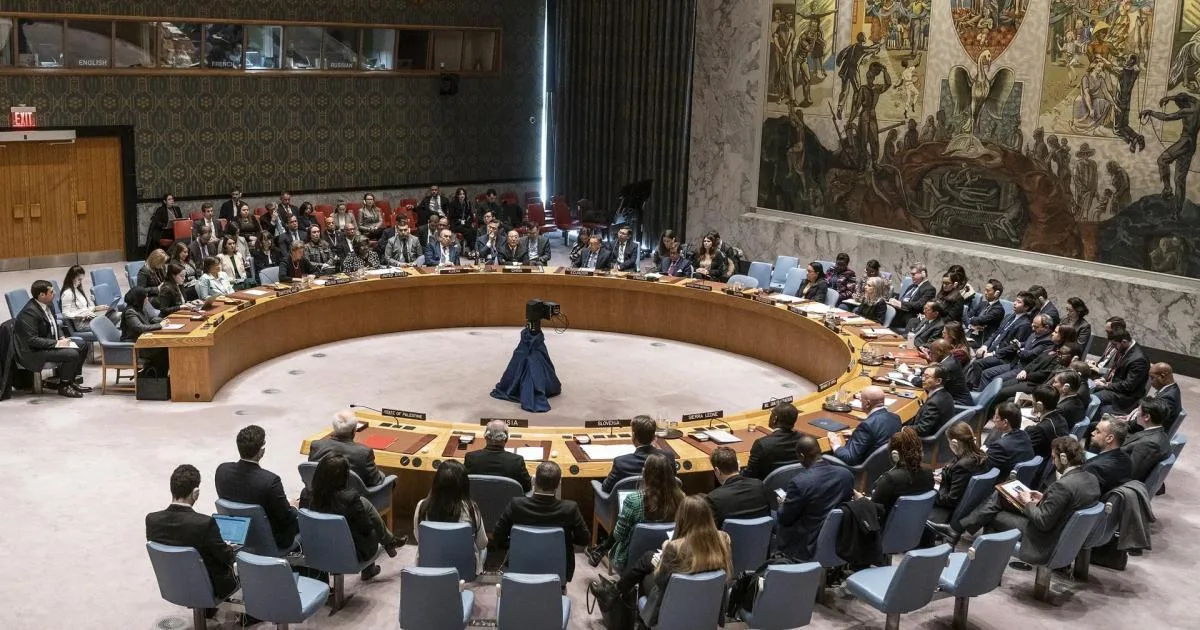
Inside United Nations headquarters in New York, negotiations over Western Sahara are entering a decisive phase. The mandate of the United Nations Mission for the Referendum in Western Sahara, known as MINURSO, expires on October 31, 2026. As in previous years, Security Council members must decide whether to renew it.
This time, however, the discussion extends far beyond the duration of a peacekeeping mandate.
On October 20, the United States prepared an initial draft resolution proposing simultaneous changes to the political framework of the dispute and the organization of the United Nations presence on the ground.
The document, circulated among Council members and reproduced by several media outlets, proposed establishing autonomy under Moroccan sovereignty as the only feasible political outcome, removing the reference to a referendum from MINURSO's name, and scheduling the end of its peacekeeping arrangements in spring 2027.
Six days later, a revised version of the draft began circulating.
According to texts reproduced by the press on October 26, Washington retained the overall political direction of its initiative while relaxing several operational provisions.
The mandatory withdrawal of half the mission's uniformed personnel was reportedly removed. The April 30, 2027 deadline initially proposed for ending the peacekeeping mandate no longer appeared in the revised version. Institutional transformation would instead proceed through a more gradual assessment process.
The proposed renaming of MINURSO as MINUSO, however, reportedly remained, along with the central role of Morocco's autonomy initiative in the political process.
These adjustments are not minor.
They reveal a distinction between two American objectives: redefining the political direction of the settlement and transforming the United Nations institutions responsible for supporting it.
The first appears largely preserved in the publicly reported drafts. The second is now being approached more cautiously.
As of October 27, these provisions remain part of a draft under negotiation. No new resolution has been adopted on this basis, and the final language may still change before the vote.
The stakes are nevertheless considerable.
For the first time in the current negotiating cycle, Washington is proposing to modify not only the conditions of a political settlement but also the underlying purpose of a United Nations mission established thirty-five years ago.
Thirty-five years of an unfinished peace process
MINURSO was established in April 1991 under United Nations Security Council Resolution 690.
Its original mandate had two principal objectives: supporting the ceasefire between Morocco and the Polisario Front and preparing a referendum to determine the political status of Western Sahara.
This framework emerged from a prolonged diplomatic process following Spain's withdrawal in 1975, Morocco's Green March, and the Madrid Accords.
The territory subsequently became the center of an armed confrontation between Morocco and the Polisario Front, an independence movement supported principally by Algeria.
Mauritania, initially involved in the territorial arrangements of 1975, withdrew from the conflict in 1979. Morocco subsequently extended its control over the area previously administered by Nouakchott.
The 1991 ceasefire was intended to open the way toward a political settlement.
However, disagreements over voter identification, the composition of the electorate, and the conditions of the proposed ballot progressively prevented the referendum from taking place.
MINURSO nevertheless remained in operation.
For more than three decades, the United Nations maintained a mission whose founding objective had never been achieved. Its operational activities increasingly focused on monitoring military developments, maintaining communications with the parties, and reporting to the United Nations Secretariat.
The breakdown of the ceasefire announced by the Polisario Front in November 2020 further complicated this arrangement.
The international mission was left monitoring a more unstable security environment without a clear prospect of political resolution.
This is the contradiction the American initiative now seeks to address.
The proposed transformation therefore concerns more than the future of a peacekeeping mission.
It raises questions about the relevance of a diplomatic architecture inherited from a period when a referendum was still considered the principal mechanism for resolving the dispute.
From the search for compromise to the centrality of autonomy
The shift in the political framework did not begin in October 2026.
In April 2007, Morocco submitted an autonomy initiative proposing the establishment of regional institutions with their own powers within the framework of Moroccan sovereignty.
The proposal distinguished between responsibilities reserved for the central state and those that could be exercised by autonomous institutions.
The Polisario Front maintained a separate proposal based on self-determination, including the possibility of independence.
Security Council Resolution 1754, adopted in April 2007, initiated a new phase of negotiations.
Subsequent resolutions increasingly emphasized the search for a realistic, pragmatic, durable, and compromise-based political solution.
This diplomatic language reflected an important evolution.
Without eliminating the legal principles of self-determination, it acknowledged the practical difficulties encountered by the referendum process.
Another significant step came on October 31, 2025, with the adoption of Resolution 2797.
The Security Council placed Morocco's autonomy proposal at the center of the negotiating framework, recognizing that genuine autonomy could constitute the most feasible outcome.
The resolution nevertheless retained the objective of a mutually acceptable political solution providing for the self-determination of the people of Western Sahara.
That combination represented the central balance of the resolution.
The Council gave Morocco's initiative a privileged position without presenting the dispute as already settled.
The initial American draft of October 20, 2026, proposed moving further.
It sought to explicitly characterize autonomy under Moroccan sovereignty as the only feasible solution and to establish an updated Moroccan autonomy proposal as the exclusive basis for negotiations.
Such language would significantly alter the scope of the political process.
Negotiations would no longer primarily concern the choice between different possible political statuses. Instead, they would focus on the institutional arrangements of autonomy within Moroccan sovereignty.
The revised version circulated on October 26 appears to preserve this general direction while restoring greater emphasis on the United Nations Charter, self-determination, and agreement between the parties.
This distinction is fundamental.
It demonstrates that the debate within the Security Council concerns not only the recognition of a preferred solution but also the legal and political conditions required to transform that solution into an internationally accepted settlement.
Washington maintains its direction but changes its approach
A comparison of the two reported American drafts reveals political continuity alongside institutional adjustment.
In the initial document, Washington proposed a rapid transformation of MINURSO.
At least 50% of uniformed personnel were to be withdrawn by January 31, 2027. The peacekeeping mandate would terminate on April 30, followed by the establishment of a special political mission operating from May 1 through October 31.
The Secretary-General was expected to submit detailed proposals concerning the new institutional arrangements by December 15, 2026.
This timetable would have initiated a particularly rapid restructuring of the United Nations presence.
The October 26 version, as reproduced by the press, removes several of these obligations.
The numerical target for personnel reductions disappears. The deadline for ending peacekeeping operations is no longer imposed. Institutional transformation would instead be prepared through a report from the Secretary-General expected by January 30, 2027.
The mission would therefore retain greater operational continuity during the transition.
The proposed change of name from MINURSO to MINUSO would nevertheless remain significant.
Removing the reference to the referendum would acknowledge that the mission's institutional identity no longer necessarily corresponds to the political objective Washington seeks to promote.
However, the symbolic implications of a new name must be distinguished from its legal and operational consequences.
Renaming a mission does not automatically eliminate its monitoring responsibilities, liaison functions, or obligations under its mandate.
Effective transformation would depend on the provisions adopted by the Council, recommendations from the Secretary-General, and subsequent decisions concerning personnel and resources.
The softening of the draft may reflect the need to secure broader agreement among Council members.
It may also indicate recognition of the risks associated with rapidly reducing the international presence in an environment where the 1991 ceasefire is no longer fully respected.
Without detailed official explanations attributing individual amendments to specific governments, these motivations remain diplomatic interpretations.
The broader direction is nevertheless clear.
Washington is seeking to preserve the political shift while making its institutional consequences more acceptable.
Morocco faces a major diplomatic opportunity
For Rabat, the evolution of the American initiative represents a particularly important strategic opportunity.
For nearly two decades, Morocco has sought international recognition of its autonomy initiative as the central framework for a political settlement.
This strategy has gradually benefited from a more favorable diplomatic environment.
In December 2020, the United States recognized Moroccan sovereignty over Western Sahara.
Spain subsequently made a significant shift toward Morocco's position in 2022, describing the autonomy initiative as the most serious, credible, and realistic basis for resolving the dispute.
In 2024, France declared that the present and future of Western Sahara fell within the framework of Moroccan sovereignty.
The United Kingdom has also expressed support for Morocco's autonomy plan as a credible and pragmatic basis for a settlement.
Together, these developments have strengthened Rabat's diplomatic position among several major Western partners.
Yet bilateral recognition and the adoption of a Security Council resolution are fundamentally different.
National recognition changes a state's foreign policy. A Security Council resolution can redefine the multilateral negotiating framework and the responsibilities of the United Nations.
It is precisely this second dimension that Washington is seeking to influence.
If the Council adopts language establishing autonomy under Moroccan sovereignty as the principal framework for negotiations, Rabat would achieve another consolidation of its international position.
Such progress would not, however, automatically constitute a definitive settlement.
Morocco would still need to clarify the institutional structure of the proposed autonomy arrangement, the guarantees offered to the populations concerned, and the mechanisms required to ensure its durability.
The historical significance of any agreement would therefore depend on the ability to transform a diplomatic proposal into a viable political system.
Autonomy: from political recognition to institutional design
Autonomy is often discussed as a diplomatic formula.
In practice, it represents a complex institutional challenge.
Meaningful autonomy requires a precise distribution of responsibilities between the central state and territorial authorities.
These responsibilities may include local administration, economic development, education, culture, territorial planning, taxation, and certain regulatory powers.
Other functions, including defense, foreign relations, and core sovereign responsibilities, could remain under Moroccan national institutions.
The challenge would lie in defining these powers and establishing guarantees for their exercise.
Representative institutions, electoral procedures, democratic oversight, and the distribution of public financial resources would all be essential.
Natural-resource governance would be particularly sensitive.
Mechanisms would also be needed to resolve disputes between autonomous institutions and central authorities.
A durable arrangement might require constitutional guarantees and specific judicial procedures.
The participation of the populations concerned would be equally important.
Any settlement would need to account for residents of the territory, refugee populations, and different political perspectives.
According to available reproductions, the revised American draft reportedly envisages broadening consultations conducted by the Secretary-General's Personal Envoy to include Sahrawi representatives beyond the delegations directly participating in negotiations.
Such a provision could diversify the political voices represented in the process.
It would nevertheless raise questions about representativeness, legitimacy, and the manner in which different positions would influence negotiations.
The challenge would therefore extend beyond securing agreement on the principle of autonomy.
It would involve building institutions credible enough to function over the long term.
The Polisario Front faces narrowing diplomatic options
The Polisario Front reacted strongly to the initial American draft.
In a letter addressed to the Security Council presidency on October 22, its United Nations representative, Sidi Mohamed Omar, rejected the proposed direction and warned that adoption without substantial amendments could lead the movement to withdraw from the peace process.
The warning was conditional. It did not constitute an announcement that the Polisario Front had already withdrawn.
It nevertheless demonstrated the depth of the disagreement.
The movement has historically based its claims on the right to self-determination, which it associates with the possibility of independence.
A resolution establishing autonomy under Moroccan sovereignty as the only feasible political outcome would considerably narrow the diplomatic space in which that objective could be pursued.
The Polisario Front would then face a difficult choice.
Participating in negotiations exclusively focused on autonomy would mean operating within a framework far removed from its historical objective.
Refusing to participate could, conversely, reduce its influence over the terms of a potential settlement.
The revised October 26 draft could moderate part of this confrontation by restoring more explicit references to the United Nations Charter and the negotiated character of a settlement.
It would not necessarily eliminate the fundamental disagreement between Morocco and the Polisario Front.
The political representation of Sahrawis could become one of the central issues in future negotiations.
The question would concern not only who participates in discussions but also how any eventual agreement would be accepted and implemented.
Algeria at the center of the regional consequences
Changes to the United Nations framework would have direct implications for Algeria.
For decades, Algiers has supported the Polisario Front politically and diplomatically, hosted refugee camps near Tindouf, and defended an interpretation of the dispute based on decolonization and self-determination.
Morocco, meanwhile, considers Algeria a central actor in the conflict because of its support for the independence movement and its regional influence.
This opposition has made Western Sahara one of the defining issues in the strategic rivalry between the Maghreb's two major powers.
Diplomatic relations between Rabat and Algiers have been severed since August 2021. Their land border has remained closed since 1994.
These tensions have long obstructed regional integration.
The economic cost of this fragmentation extends beyond the territorial dispute.
The Maghreb possesses complementary markets, substantial energy resources, industrial capabilities, and a privileged geographical position connecting Europe, Africa, and the Atlantic.
Yet intraregional trade remains limited, and major integration projects have struggled to advance.
A durable settlement could create new opportunities in trade, infrastructure, energy, and security.
However, a diplomatic development favorable to Morocco would not necessarily normalize relations with Algeria.
Algiers could interpret a narrower negotiating framework as a challenge to principles it has defended for decades.
Its response could emerge through multilateral institutions, engagement with permanent Security Council members, and relations with African partners.
The stakes therefore extend beyond the adoption of a resolution.
They concern whether a new international framework can reduce regional tensions or merely shift them into other forms of confrontation.
Major powers confront the Security Council balance
The United States plays a central role in preparing resolutions concerning Western Sahara.
Washington traditionally serves as the penholder for Security Council texts on the territory.
This responsibility allows American diplomacy to coordinate draft circulation and lead discussions over proposed language.
It does not allow the United States to impose a resolution.
Adoption requires at least nine affirmative votes and no veto from a permanent member.
France and the United Kingdom appear relatively aligned with the general orientation favoring Morocco's autonomy initiative.
Russia and China occupy particularly important positions in the diplomatic equation.
During the October 2025 vote on Resolution 2797, Moscow and Beijing abstained, allowing adoption without necessarily endorsing every provision.
Their positions could again determine the scope of the final compromise.
Negotiations may concern several sensitive dimensions: whether autonomy is described as exclusive or preferred, references to self-determination, the timetable for transforming the mission, and guarantees concerning the participation of the parties.
The removal of the most restrictive deadlines from the October 26 draft suggests that Washington is seeking to expand the space for compromise.
This does not necessarily indicate abandonment of the original objective.
It may reflect a strategy of first securing a major change in the political framework and then organizing its institutional consequences progressively.
The outcome will depend on the final wording.
In Security Council resolutions, a small number of words can substantially change the diplomatic significance of a text.
The difference between a "preferred," "most feasible," or "only feasible" solution is not merely stylistic.
It determines how broadly or narrowly the Council intends to define the political options available to negotiators.
International law remains indispensable
Western Sahara remains on the United Nations list of Non-Self-Governing Territories.
Its international status cannot be considered definitively resolved solely because certain states recognize Moroccan sovereignty.
In its advisory opinion of October 16, 1975, the International Court of Justice acknowledged certain legal ties of allegiance between the Sultan of Morocco and tribes of the territory.
It did not, however, establish territorial sovereignty ties capable of displacing the application of the principle of self-determination.
Since then, Morocco has consolidated its administration over most of Western Sahara, while the United Nations has maintained the dispute on its political and legal agenda.
Autonomy under Moroccan sovereignty could constitute a form of self-determination within a negotiated settlement.
However, its international legitimacy would depend on the conditions of the agreement, guarantees provided to the populations concerned, and the process through which the settlement was accepted.
It therefore remains essential to distinguish four dimensions: claimed sovereignty, effective territorial control, diplomatic recognition, and an internationally accepted settlement.
The American draft could alter the Security Council's preferred political approach.
It would not automatically settle every legal question associated with the dispute.
The durability of any agreement would depend on its ability to reconcile the principles of the United Nations Charter, territorial realities, and the requirements of functioning political institutions.
The question of refugees in Tindouf
The American initiative also contains an important humanitarian dimension.
According to the reported drafts, Washington would maintain a request concerning the registration of Sahrawi refugees living in the Tindouf camps by the United Nations High Commissioner for Refugees.
This issue extends beyond the production of statistics.
Individual registration could improve knowledge of humanitarian needs, facilitate assistance, and strengthen protection mechanisms.
It could also provide useful information for a potential political settlement.
Such an operation would nevertheless raise several challenges.
It would require effective cooperation with Algerian authorities, guarantees concerning personal-data protection, and procedures adapted to the circumstances of the populations concerned.
Humanitarian registration cannot, by itself, determine the political rights of registered individuals or resolve questions of representation.
It would nevertheless represent an important development in the international management of a prolonged humanitarian situation.
Western Sahara: territorial development and Atlantic ambitions
The consequences of a potential settlement would extend well beyond diplomacy.
Western Sahara occupies a strategic geographical position along Africa's Atlantic coastline, close to maritime routes linking Europe, West Africa, and the Americas.
The territory possesses fisheries resources, considerable renewable-energy potential, and areas suitable for industrial and logistics infrastructure.
Over recent years, Morocco has developed road, port, energy, and urban projects across the territory.
The Dakhla Atlantic Port project is one of the most prominent examples.
Designed as a maritime and logistics platform intended to strengthen trade with West Africa, it forms part of a broader Moroccan strategy of economic expansion toward the Atlantic.
Road infrastructure and energy investments contribute to the same transformation.
For Rabat, Western Sahara represents both a territorial development priority and a gateway to African markets.
This strategy nevertheless has an important legal dimension.
Natural-resource exploitation and the application of international trade agreements remain connected to questions concerning the consent of the population and the territory's status.
European judicial decisions have emphasized the need to distinguish Western Sahara from Morocco when applying certain agreements.
An internationally accepted settlement could reduce some of these uncertainties and improve investment visibility.
It would not necessarily eliminate every question concerning resource governance and political representation.
The economic significance of a future agreement would therefore depend on both its international recognition and the strength of the institutions established to implement it.
A more realistic institutional transition, but continued uncertainty
The softening of the American draft between October 20 and October 26 reveals a central difficulty.
The mandate of an international mission can be modified relatively quickly.
Constructing a durable political settlement between actors whose fundamental positions remain opposed is considerably more complex.
The initial draft envisaged rapid institutional transformation, including substantial personnel reductions and a scheduled end to peacekeeping operations in spring 2027.
The revised version reportedly favors a more gradual approach.
This could allow the Council to preserve United Nations monitoring and liaison capabilities while political negotiations continue.
It could also prevent an operational vacuum in a security environment that remains fragile.
Yet the adjustment does not resolve the process's underlying contradiction.
Institutional transformation could advance even in the absence of a definitive agreement on the territory's political status.
The Secretary-General and his Personal Envoy could therefore face an interim period in which the United Nations' institutional framework is evolving without a corresponding political consensus among the parties.
The success of such a transition would depend on the clarity of the mandate, available resources, and cooperation from the actors concerned.
The year 2027 could therefore become a period of major institutional reorganization without necessarily producing a final settlement.
What the Security Council vote could actually change
With MINURSO's mandate approaching expiration, several outcomes remain possible.
The Council could adopt a resolution preserving the essential direction of the American initiative, particularly the centrality of autonomy under Moroccan sovereignty and the gradual transformation of the mission.
It could also adopt more cautious language, maintaining autonomy as the preferred basis while explicitly preserving the requirements of a mutually acceptable settlement.
A third possibility would involve a limited institutional compromise, postponing the most sensitive decisions to future consultations.
Persistent disagreements could also complicate the adoption of a substantially revised resolution.
The outcome will depend on negotiations among Council members, the positions of the parties, and Washington's ability to maintain a balance acceptable to the major powers.
Whatever the final wording, however, the October 2026 initiative has already revealed a deeper evolution.
The debate no longer concerns only the extension of a peacekeeping mission.
It now concerns the possibility of redefining the political framework that justifies the mission's existence.
The real turning point: from managing the conflict to building a settlement
For thirty-five years, the United Nations has maintained a mechanism designed to support a referendum that was never organized.
During that period, territorial realities, diplomatic positions, and regional power relations have changed considerably.
Morocco has consolidated its administration over most of Western Sahara and developed infrastructure across the territory. The Polisario Front has maintained its demand for independence. Algeria has continued supporting the movement. The United Nations has preserved a mission whose original purpose has become increasingly difficult to achieve.
The American initiative seeks to narrow the gap between that institutional architecture and the political direction now favored by several Western powers.
The initial October 20 draft reflected a desire for rapid transformation.
The revised October 26 version points toward a more gradual approach, potentially better suited to the diplomatic and operational constraints of the Security Council.
The distinction matters.
Washington now appears to be seeking a major political shift without immediately imposing all its institutional consequences.
For Morocco, the objective is to consolidate the central role of its autonomy initiative.
For the Polisario Front, the priority is to preserve negotiating influence and the principles underlying its claims.
For Algeria, the issue concerns both the future of the dispute and the regional strategic balance.
For the United Nations, the challenge is more fundamental: transforming a peace process without undermining the conditions necessary for a durable settlement.
The expected vote before October 31 could open a new diplomatic phase.
But adopting a resolution would not be enough to turn a political direction into an effective agreement.
Institutions, responsibilities, guarantees, participation mechanisms, and implementation arrangements would still need to be negotiated.
The real turning point would therefore not lie solely in the possible disappearance of the word "referendum" from the mission's name. It would lie in the transition from an international process designed to preserve multiple political outcomes toward a framework intended to organize a specific preferred solution.
If confirmed by the Security Council, this development would mark one of the most significant transformations of the Western Sahara dispute since 1991.
It would not mean that the conflict had ended.
It would indicate that the United Nations was beginning to approach its resolution within a different political framework.
After thirty-five years of managing an unfinished process, Western Sahara could enter a new phase: one in which the central question is no longer simply how to define the principle of a settlement, but how to build the institutions capable of making it durable.
Principal Sources
- United Nations Security Council — Resolution 2797 (2025), S/RES/2797, adopted October 31, 2025. Political framework for negotiations and MINURSO's mandate.
- Le Desk — Reporting published October 22–23, 2026, concerning the initial American draft dated October 20, whose provenance the publication states it authenticated.
- Yabiladi — October 26, 2026. Reporting on amendments to the American draft following diplomatic consultations.
- Polisario Front — Letter from Sidi Mohamed Omar to the President of the Security Council, October 22, 2026, concerning the initial American draft.
- International Court of Justice — Western Sahara, Advisory Opinion, October 16, 1975. Historical legal foundations of the dispute.
Atlas Limits Research Desk
Atlas Limits’ editorial and analytical desk.