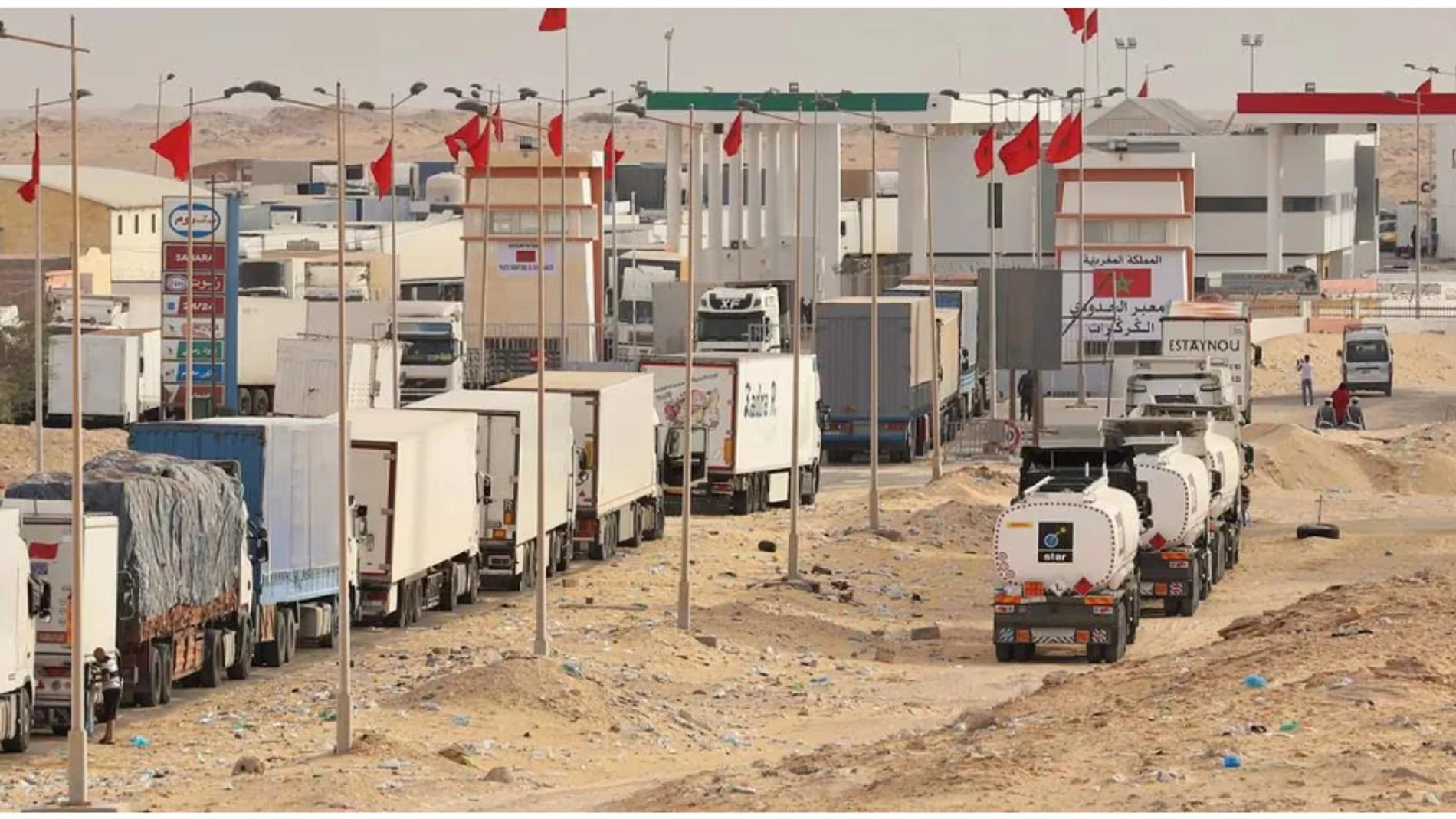
In the spring of 2026, Moroccan trucks travelling through western Mali were attacked and set on fire. Initial reports were contradictory: some sources reported several vehicles carrying food supplies towards Bamako, while representatives of Morocco’s road transport sector initially provided a more limited assessment. A few days later, several Moroccan drivers nevertheless left Mali for Mauritania as security conditions visibly deteriorated.
The episode could be seen as yet another consequence of the chronic insecurity affecting the Sahel. Yet it reveals something deeper. Two dynamics now converge along these roads, extending far beyond the vehicles that were destroyed: on the one hand, Morocco’s ambition to strengthen economic connections between the Atlantic and the landlocked states of the Sahel; on the other, the growing ability of armed groups to turn commercial corridors into instruments of political and economic pressure.
A distinctive relationship is therefore taking shape between Rabat and Bamako. Morocco and Mali share no border. Thousands of kilometres, Mauritania and vast stretches of desert separate them. Yet their growing relationship now lies at the heart of a strategic question for West Africa: how can landlocked Sahelian economies be sustainably connected to global trade networks when the territories that must be crossed are themselves becoming spaces of confrontation?
A RELATIONSHIP OLDER THAN THE SAHELIAN CRISIS
Moroccan-Malian relations did not begin with the current geopolitical realignment.
For centuries, the territories corresponding to modern Morocco and Mali formed part of trans-Saharan systems of exchange connecting the cities of the Maghreb with the great commercial centres of West Africa. Goods circulated, but so did knowledge, religious practices, family networks and spiritual authority. Timbuktu, Marrakesh, Fez and the major caravan stops belonged to different but interconnected networks.
These historical ties obviously do not amount to political continuity in the modern sense. They do, however, help explain why the contemporary relationship extends beyond trade alone.
Morocco has developed a significant economic presence in Mali, particularly in banking and telecommunications. Since the 2010s, Rabat has presented these investments as one of the pillars of its African strategy, alongside political, religious and institutional cooperation.
This presence has acquired additional importance as Mali has moved away from some of its traditional partners.
Since the coups of 2020 and 2021, the rupture with France, the departure of the United Nations mission and tensions with several West African neighbours, Bamako has profoundly redefined its external relations. Together with Burkina Faso and Niger, Mali established the Alliance of Sahel States, which became a confederation in 2024. The three countries subsequently withdrew from the Economic Community of West African States.
Morocco occupies a different position. It is not a member of the AES, is not an immediate neighbour of Mali and is not Bamako’s principal security partner. Paradoxically, this distance may allow it to develop a relationship centred on other levers: trade, infrastructure, finance, training, religious cooperation and maritime access.
It is precisely within this space that the Atlantic Initiative takes shape.
GIVING A COASTLINE TO THOSE WITHOUT ONE
Announced by Mohammed VI in November 2023, Morocco’s initiative for the Sahel states begins with an elementary geographical reality: Mali, Burkina Faso, Niger and Chad are landlocked.
Landlockedness is not merely a cartographic characteristic. It is a permanent economic constraint.
To reach global markets, an economy without direct access to the sea necessarily depends on the infrastructure, borders and stability of other states. A container bound for Bamako does not complete its journey at the port. It must still travel hundreds or thousands of kilometres by road or rail. Every border, checkpoint, infrastructure gap and area of insecurity increases the cost of trade.
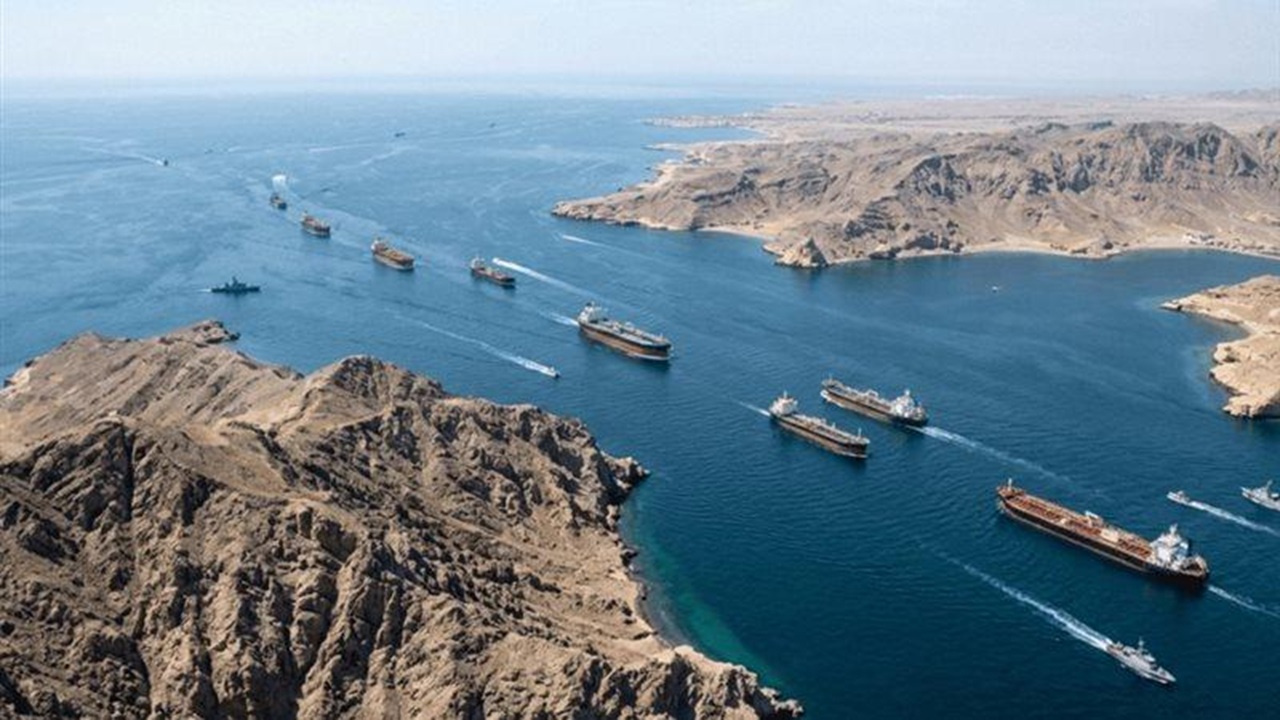
Morocco’s ambition is to provide Sahelian countries with access to the Kingdom’s Atlantic port and logistics infrastructure and, more broadly, to build an economic connection between the Sahel and the Atlantic seaboard of north-western Africa.
For Morocco, the potential benefits are considerable. Such an architecture would extend inland the infrastructure developed along its maritime façade. Ports, motorways, financial networks and African investments would cease to function solely as national assets and increasingly become components of a regional system.
For Mali, the objective is different: to multiply its options.
The Atlantic opening proposed by Rabat would not eliminate the traditional corridors connecting Bamako to Senegal, Côte d’Ivoire or other West African maritime gateways. It could, however, provide an additional route for an economy whose landlocked position makes logistical diversification particularly valuable.
The rapprochement is no longer merely theoretical. On 24 July 2026, during the fourth session of the Morocco–Mali Joint Cooperation Commission in Bamako, the two countries signed 21 cooperation agreements. Mali also reaffirmed its commitment to the Atlantic Initiative and its intention to progressively implement the projects associated with it.
The timing is striking.
At the very moment when Rabat and Bamako are seeking to build new connections, the war in Mali is demonstrating with particular brutality the fragility of existing ones.
WHEN THE ROAD BECOMES A WEAPON
The geography of the Malian conflict has changed.
For years, external representations of the war focused primarily on the conquest or loss of territory, attacks against armed forces, military bases and control of towns. Yet a modern state does not depend solely on the territory it administers. It also depends on the flows that allow that territory to function.
Fuel, food, spare parts, medicines and goods must circulate.
For a landlocked country, that dependency is even greater.
The Group for the Support of Islam and Muslims, or JNIM, affiliated with Al-Qaeda, appears to have fully understood this reality. From 2025 onwards, the group intensified pressure on several of Mali’s supply routes. Attacks against roads, convoys and particularly fuel transport have turned economic circulation itself into a field of confrontation.
The logic is formidable in its simplicity: it is not necessary to capture Bamako in order to exert pressure on Bamako.
To a certain extent, it is enough to make supplying the capital sufficiently costly, dangerous and irregular.
Fuel convoys are particularly sensitive targets. Repeated disruptions produce shortages, queues and broader economic disorganisation. Controlling flows therefore becomes a means of exerting pressure on urban centres without necessarily controlling them territorially.
Territorial warfare becomes a war over flows.
And this transformation profoundly changes the meaning of an economic corridor.
THE MOROCCAN TRUCK AS A GEOPOLITICAL OBJECT
A refrigerated truck leaving Morocco to transport goods to Mali appears to belong to the ordinary world of international trade.
Yet as it travels south, it becomes the physical expression of a far more complex chain.
It requires a passable road. An open border. Functioning customs procedures. Fuel. Insurance. Logistics support. Drivers willing to accept the risk. Security forces capable of protecting major routes. Operators convinced that the cost of the journey remains lower than the economic value of the transaction.
The disappearance of only one of these elements can suddenly increase the economic distance between two countries without altering their geographical distance by a single kilometre.
This is what the attacks against Moroccan transporters help illustrate.
It would be excessive to conclude that JNIM is specifically conducting a campaign against Moroccan interests. Available information does not establish such a strategy. Moroccan trucks are operating within an environment in which the armed group more broadly targets roads, convoys and Malian supply networks.
The distinction is fundamental.
But the geoeconomic consequence remains: the further Moroccan trade extends into the Sahel, the more physically exposed it becomes to the Sahelian crisis.
Economic projection then encounters the limits of territorial control.
MAURITANIA, THE QUIET HINGE
Between Morocco’s ambitions and the Malian market stands another actor that no serious analysis of these corridors can ignore: Mauritania.
On a map, opening the Sahel to the Atlantic can appear to be a relationship between Morocco and the Sahelian states. On the ground, its materialisation necessarily depends on transit countries and their ability to guarantee infrastructural continuity.
Mauritania occupies an exceptional position in this respect.
It connects the Moroccan space with western Mali and already serves as a transit territory for Moroccan transporters heading towards West Africa. When Moroccan drivers sought to leave Mali following the attacks of 2026, it was towards Mauritania that they travelled.
This geography highlights an obvious reality sometimes obscured by diplomatic language: a corridor never belongs to a single state.
Its reliability depends on its weakest link.
The future of the connection between Morocco and the Sahel will therefore depend as much on Nouakchott, cross-border infrastructure and the Malian territories being traversed as on Morocco’s ports themselves.
THE MOROCCAN PARADOX
Morocco possesses significant assets for this strategy.
Its Atlantic coastline provides direct access to major maritime routes. Its port infrastructure has developed considerably. Moroccan companies are already established across several African economies. Its banks, telecommunications operators and industrial and service groups have built networks that have long extended beyond national borders.
But this strategy encounters a fundamental limitation: logistical power cannot be projected in the same way as maritime power.
A port can be developed within a relatively controlled sovereign territory. A transcontinental road crosses multiple jurisdictions, political systems and, potentially, conflict zones.
Morocco can build infrastructure on its own territory, mobilise its companies, finance projects, facilitate access to its ports and negotiate agreements. It cannot, by itself, guarantee the security of goods travelling thousands of kilometres across the Sahara and the Sahel.
This is where the Atlantic Initiative faces its principal test.
Its success will not depend solely on the quality of the infrastructure at its northern end. It will depend on whether logistical continuity can be established from the port to the final market.
And that continuity is as political as it is physical.
BAMAKO IS LOOKING FOR EXITS
For Mali, the issue is even more existential.
A landlocked state does not necessarily benefit from replacing one dependency with another. It benefits from having multiple routes.
For decades, Mali’s commercial geography has naturally directed a large share of its trade towards West African ports. These corridors will remain critically important. But diplomatic crises, regional sanctions, insecurity and logistical disruptions have reminded Bamako of the strategic cost of having a limited number of options.
The opening towards Morocco should therefore be understood less as a geopolitical switch than as a diversification of landlockedness.
The expression may appear paradoxical. Yet it captures the problem: Mali cannot eliminate its geography, but it can seek to reduce the dependency that geography imposes by multiplying its corridors, partners and gateways to global markets.
It is from this perspective that the relationship with Rabat acquires particular value.
The political rapprochement of 2026 confirms this direction. Both governments have expressed their intention to deepen economic and commercial relations and expand cooperation across numerous sectors.
But diplomatic agreements do not move mountains, automatically build roads or secure convoys.
Between the intention and the corridor lies the entire weight of geography.
A WIDER CONTEST OVER AFRICAN ARCHITECTURES
The Morocco–Mali relationship must ultimately be placed within a much broader transformation.
West Africa and the Sahel are undergoing a period of institutional realignment rarely seen since independence. The AES is progressively building its own mechanisms. ECOWAS must adapt to the departure of Mali, Burkina Faso and Niger. External partnerships are changing. Previous security architectures are being challenged. New coalitions are emerging.
In this environment, infrastructure is becoming an instrument of foreign policy.
Ports, roads, pipelines, electricity networks and financial systems are no longer merely economic assets. They shape dependencies, organise trade and create long-term relationships.
Morocco’s Atlantic Initiative belongs to this logic.
It proposes not simply a road but an architecture: connecting Sahelian economies to Moroccan Atlantic infrastructure and, through that connection, strengthening a space of cooperation stretching between North Africa and sub-Saharan Africa.
But every geoeconomic architecture eventually encounters the geopolitics of the territories it seeks to connect.
Mali is now providing a demonstration of precisely that reality.
THE REAL FRONTIER LIES ON THE ROAD
The trucks burned in Mali will not determine the future of relations between Rabat and Bamako. They prove neither the failure of Morocco’s Sahel strategy nor the existence of an offensive specifically directed against Morocco.
They nevertheless constitute a warning.
For a long time, landlockedness was understood primarily as a disadvantage of distance: being far from ports meant bearing higher transportation costs.
The contemporary Sahel adds another dimension.
When circulation itself becomes part of the conflict, landlockedness becomes a security issue.
The question is no longer simply how many kilometres separate Bamako from the ocean. It is how many of those kilometres can be travelled with sufficient predictability for a modern economy to function.
Part of the future of the Morocco–Mali relationship will be decided here.
Rabat can offer ports. Bamako can seek new gateways. Nouakchott can serve as the geographical hinge between the two spaces. Companies can generate the flows and states can sign the necessary agreements.
But a corridor only truly exists when goods can travel through it.
In today’s Sahel, the road itself has become an instrument of power.
MAIN SOURCES
Moroccan Ministry of Foreign Affairs, African Cooperation and Moroccan Expatriates — Morocco–Mali relations and the Royal Initiative to facilitate access to the Atlantic Ocean for Sahel countries.
Government of the Republic of Mali — Fourth Session of the Morocco–Mali Joint Cooperation Commission, Bamako, 24 July 2026; signature of 21 cooperation agreements.
Institute for Security Studies — analyses of JNIM’s blockade tactics and the vulnerability of West African trade corridors.
Deutsche Welle — reporting on disruptions to fuel supplies and pressure on corridors leading to Bamako.
Le360, Hespress and APA — reporting and accounts concerning attacks against Moroccan transporters in Mali in 2026.
Moroccan Ministry of Economy and Finance — historical data and information concerning Morocco’s economic presence in Mali.
Atlas Limits Research Desk
Atlas Limits’ editorial and analytical desk.