Created in 1944 as part of the Bretton Woods system, the World Bank was initially designed to help reconstruct economies devastated by the Second World War. Its first loan, granted to France in 1947, still reflected that original mission. But European reconstruction was soon undertaken on a much larger scale through the Marshall Plan. The institution gradually shifted toward what would become its defining field: financing development.
More than eight decades later, the World Bank is no longer simply an institution lending money to governments. It has become a financial, institutional and intellectual system capable of intervening in infrastructure, energy, education, healthcare, agriculture, public administration, climate policy, social protection and private-sector development.
Its power therefore does not derive solely from the money it lends. It also comes from its ability to influence what constitutes a credible development policy, produce data used across the world, advise governments and mobilize other investors around projects it considers viable.
The World Bank finances development. In doing so, it also helps define it.
A bank that is actually a group
The term “World Bank” encompasses several institutions. Strictly speaking, the World Bank consists of two: the International Bank for Reconstruction and Development, or IBRD, and the International Development Association, or IDA. They belong to the broader World Bank Group, which also includes the International Finance Corporation, or IFC; the Multilateral Investment Guarantee Agency, or MIGA; and the International Centre for Settlement of Investment Disputes, or ICSID.
This architecture allows the Group to intervene across several dimensions of development.
The IBRD primarily lends to middle-income countries and creditworthy lower-income countries. It raises much of its funding on international capital markets, where its strong credit standing allows it to borrow on favorable terms and pass part of that advantage on to its borrowers.
IDA focuses on the world’s poorest countries. It provides highly concessional credits, grants, guarantees and other forms of support suited to governments with far more limited financial capacity. IFC invests directly in the private sector. MIGA provides guarantees against certain political risks that might otherwise deter international investors. ICSID, meanwhile, provides an institutional framework for conciliation and arbitration in investment disputes between states and foreign investors.
The Group therefore constitutes an infrastructure far broader than a conventional bank: it can finance a government, support a private company, reduce the risk attached to an investment and provide a framework for resolving investment disputes.
Considerable financial power
The scale of the Group provides a first indication of its influence. In fiscal year 2025, combined commitments by IBRD, IDA and IFC, together with guarantees issued by MIGA, reached nearly $162 billion, compared with approximately $133 billion the previous year.
IBRD alone committed $40.9 billion across 139 operations during fiscal 2025. IDA committed approximately $39.9 billion across 303 operations. Among the largest IBRD borrowers were Brazil, Türkiye, Argentina, Ukraine, the Philippines, Indonesia, India, Morocco and South Africa.
But the World Bank’s strength also rests on leverage.
IBRD does not depend solely on annual budgetary contributions from member states. Its capital, financial strength and shareholder backing allow it to raise substantial resources on international bond markets. The institution therefore transforms a multilateral capital structure into a much larger financing capacity.
IDA operates differently. Its resources are periodically replenished through contributions from donor countries, repayments of previous credits and transfers from other parts of the World Bank Group. During the 21st replenishment of IDA resources, concluded in December 2024, $23.7 billion in donor contributions helped generate an approximately $100 billion financing package for IDA21.
This capacity to turn relatively limited public resources into much larger volumes of development financing helps explain the resilience of the model.
Building what markets do not always finance
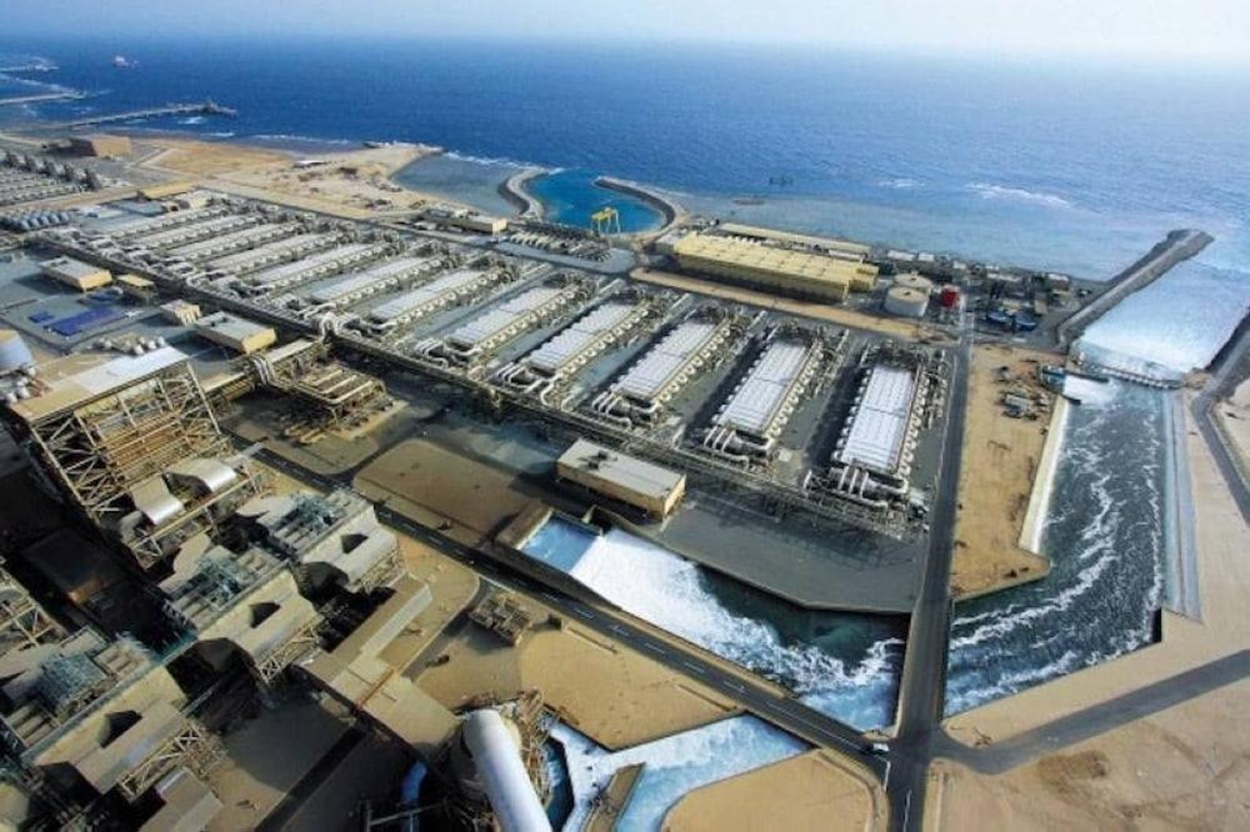
A power plant, water network, railway line, healthcare system or tax-administration reform may generate considerable economic benefits without immediately producing financial returns sufficient to attract private capital on its own.
This is precisely where multilateral development banks play an essential role.
In 2025, IBRD commitments covered areas including transportation, energy and extractives, public administration, social protection, finance, agriculture, health, water and education. IDA financing similarly included substantial commitments to public administration, transportation, energy, healthcare, education and social protection.
The objective is therefore not simply to finance physical assets.
A road can connect an isolated region to markets. An electricity interconnection can improve energy security. An irrigation system can transform agricultural productivity. Administrative reform can strengthen a state’s fiscal capacity. An education program can alter the productivity of an entire generation.
Economic development is often built through an accumulation of investments whose returns are diffuse, collective and extremely long-term.
The World Bank intervenes precisely because the time horizons of governments, financial markets and private investors do not always coincide with those of development.
The real power: transforming institutions
This is where the World Bank ceases to be merely a financier.
Its lending is frequently accompanied by technical assistance, diagnostics, indicators, policy recommendations and reform programs. The institution works with finance ministries, tax administrations, central banks, sectoral authorities, local governments and public agencies.
It therefore contributes to transformations far less visible than a dam or a highway: procurement reform, governance of state-owned enterprises, public financial management, administrative digitalization, financial regulation, agricultural policy, social protection and improvements to the business environment.
This dimension also explains the controversies that have surrounded the institution for decades.
From the 1980s through the 1990s, the World Bank and the IMF became closely associated with structural adjustment programs. In many countries, international financing was linked to reforms involving trade liberalization, privatization, fiscal discipline, deregulation or public-sector restructuring.
Supporters argued that these policies were necessary to correct severe economic imbalances and restore the foundations for sustainable growth. Critics accused the institutions of applying excessively standardized models to profoundly different economies, reducing the role of the state too aggressively and underestimating the social and political consequences of adjustment.
The debate profoundly changed development doctrine.
Today, the World Bank places greater emphasis on institutional quality, human capital, resilience, social protection, climate, inclusion and national circumstances. Yet a fundamental question remains: how far should an international financial institution participate in defining the domestic policies of a sovereign state?
The power of data
One of the least visible forms of World Bank influence, however, operates neither through lending nor conditionality.
It operates through knowledge.
For decades, the institution has produced databases, sector studies, poverty assessments, economic projections, institutional diagnostics and reference reports used by governments, researchers, investors, companies and international organizations.
This activity creates a particular form of power.
Measuring poverty requires defining how poverty is measured. Evaluating an economic environment requires selecting particular indicators. Comparing the performance of states inevitably involves establishing categories, methodologies and common benchmarks.
The World Bank does not decide by itself what development means. But it contributes substantially to the language through which development is discussed.
In economies with limited statistical capacity, that influence can be particularly significant. Diagnostics produced in Washington can become reference points for ministries, international investors and other development institutions.
Knowledge itself becomes infrastructure.
Who controls the World Bank?
Like the IMF, the World Bank is a multilateral institution, but it is not governed according to the principle of “one country, one vote.”
IBRD is owned by its 189 member countries. Their influence depends in part on their capital subscriptions and the institution’s voting arrangements.
This architecture gives large economies greater influence than smaller states. It partly reflects the distribution of economic power that existed when the Bretton Woods system was created, even though successive reforms have altered voting shares and representation.
World Bank governance has therefore repeatedly drawn criticism from emerging and developing economies seeking representation more consistent with their contemporary demographic and economic weight.
Another tradition concentrates these criticisms: since the institution’s creation, the presidency of the World Bank has gone to an American, while the position of IMF managing director has traditionally been held by a European.
No economic law makes this distribution inevitable. It is a political inheritance of the institutional order constructed after 1945.
The arrival of new competitors
For decades, the World Bank occupied an almost unavoidable position in multilateral development finance. That world has changed.
Regional development banks have expanded their role. The African Development Bank, Asian Development Bank, Inter-American Development Bank and European Bank for Reconstruction and Development all possess substantial financing capacity.
China has simultaneously developed its own international financing instruments, particularly through its state-owned banks and projects associated with the Belt and Road Initiative. The creation of the Asian Infrastructure Investment Bank also demonstrated that emerging economies could establish alternative multilateral institutions.
For many developing countries, this diversification represents an opportunity.
A government seeking to finance a port, railway network or power plant can increasingly choose among several sources of capital: the World Bank, a regional development bank, a bilateral lender, a Chinese institution, international bond markets or partnerships with private investors.
This competition has weakened the financial and intellectual dominance once enjoyed by the Bretton Woods institutions.
But it has also created a more fragmented system in which environmental standards, transparency requirements, financing conditions and debt-sustainability criteria can vary significantly from one creditor to another.
Climate is changing the mission
The World Bank now faces a major contradiction.
Traditional development needs have not disappeared. Hundreds of millions of people still require better infrastructure, reliable electricity, clean water, healthcare systems, education and productive employment.
Yet these needs are now accompanied by another enormous category of investment: climate adaptation, energy transition, disaster protection, resilient infrastructure and economic decarbonization.
The institution has therefore progressively broadened its mission. Its current vision of creating “a world free of poverty on a livable planet” reflects an important evolution from a conception of development focused primarily on economic growth and poverty reduction.
That evolution nevertheless raises a fundamental question about how resources should be allocated.
Should a poor country use its limited borrowing capacity to finance reductions in emissions it historically contributed very little to producing? Should climate investments take the form of loans or grants? How can adaptation, economic development and energy transition all be financed without worsening sovereign debt vulnerabilities?
These questions extend far beyond the World Bank. But they place the institution at the center of a new international compromise that has yet to be fully constructed.
Development and debt: an increasingly narrow boundary
The model also rests on a fundamental tension: financing development through debt assumes that the investments being financed will increase future economic capacity sufficiently to keep that debt sustainable.
When growth is strong, projects are productive and institutions function effectively, the mechanism can be powerful.
When investments fail, currencies depreciate, international interest rates rise or public finances deteriorate, the same mechanism becomes considerably more fragile.
For the most vulnerable countries, the distinction between development finance and crisis management can then become blurred. The World Bank and the IMF may intervene simultaneously: one to preserve or rebuild long-term economic capacity, the other to restore macroeconomic and external stability.
This is precisely what distinguishes the two institutions while making them complementary.
The IMF is primarily concerned with monetary and financial stability, balance-of-payments pressures, foreign-exchange reserves, public finances and macroeconomic imbalances.
The World Bank operates more directly on the structures that determine a country’s long-term economic trajectory.
The IMF seeks first to stabilize. The World Bank seeks to transform.
An institution at the frontier of finance and power
The World Bank remains difficult to classify.
It is not a commercial bank: its purpose is not to maximize financial returns for shareholders.
It is not a humanitarian organization: it finances structural economic transformation.
It is not a world government: it cannot directly impose its decisions on sovereign states.
Yet neither is it merely a financial intermediary.
When an institution finances infrastructure, advises the ministry supervising it, helps reform the regulatory framework under which it operates, guarantees private investors participating in it and produces the data used to evaluate its results, its influence necessarily extends beyond the original loan.
That is what makes the World Bank distinctive.
Since Bretton Woods, its power has shifted. Initially created to reconstruct, it became an institution of development. Then an institution of economic reform. Then a global producer of knowledge. It is now attempting to operate simultaneously as a development bank, climate bank, infrastructure financier, human-capital institution and mobilizer of private investment.
In 2026, its principal challenge is therefore probably no longer demonstrating that it can lend.
It is demonstrating that an institution designed for the world of 1944 can still help finance the world of the twenty-first century without reproducing the power structures, doctrines and solutions of the previous one.
Because behind every billion dollars committed lies ultimately the same question: who gets to decide what development means?
Main sources
- World Bank — Annual Report and World Bank financial data, 2025
- World Bank — Financial Summary, 2025
- World Bank Group — Institutional structure and mission
- International Development Association — IDA replenishments
- World Bank — IDA21 replenishment and $100 billion financing package, December 2024
- International Centre for Settlement of Investment Disputes — World Bank Group institutional structure
Atlas Limits Research Desk
Atlas Limits’ editorial and analytical desk.