The future has always been a thriving market. Every era produces its prophets, its promised catastrophes and its technological utopias. Some visions age remarkably well. Most eventually become historical curiosities. Predicting the world of 2050 with any precision would therefore be a fairly futile exercise.
But there is a difference between prediction and extending trajectories.
We do not know who will lead the major powers twenty-five years from now, which crises will erupt, which inventions will transform our societies, or which wars will be prevented or unleashed. We do know, however, that several transformations are already underway on such a scale that they are likely to shape the century far beyond electoral cycles.
Demography is one of them. Urbanization is another. So are the gradual shift of economic gravity toward Asia, Africa's demographic rise, the electrification of economies, automation, ageing, climate constraints and the strategic rivalry between the United States and China.
These are no longer hypotheses.
They are the visible forces of the world ahead.
Nine and a Half Billion People, but Two Demographic Worlds
By 2050, the planet is expected to have around 9.6 billion inhabitants according to the United Nations' medium projection. Behind that figure, however, lies a far more significant transformation: global population growth will be extraordinarily uneven.
Parts of Europe and East Asia will face ageing populations, shrinking workforces and, in some cases, declining populations. Elsewhere, the movement will be precisely the opposite.
Sub-Saharan Africa represents the most dramatic contrast. The United Nations estimates that its population could increase by roughly 79% between 2024 and 2054, reaching around 2.2 billion people.
This divergence will progressively reshape the human geography of the planet.
Europe, Japan, South Korea and China will have to manage older societies, with growing numbers of retirees relative to workers. Healthcare, pensions, immigration and automation will become central components of their economic policies.
Much of Africa will face the opposite challenge: educating, housing, employing and connecting hundreds of millions of additional young people.
This demographic shift does not guarantee Africa's rise. A large population is never a source of power in itself. But if investment in education, infrastructure, energy and industry follows, it could become one of the principal economic engines of the second half of the twenty-first century.
Africa's trajectory will probably depend on this conversion: turning demographic growth into productivity.
The Planet of Cities
The world of 2050 will also be considerably more urban.
United Nations projections indicate that cities will absorb most of the world's population growth over the coming decades. According to the latest urbanization projections, roughly two-thirds of global population growth through 2050 is expected to occur in cities.
And much of that urbanization will take place in Asia and Africa.
This means that one of the great economic battles of the next quarter-century will not revolve solely around semiconductors or artificial intelligence. It will concern something much more tangible: building cities.
Housing, metros, roads, electricity grids, sanitation systems, ports, schools, hospitals, data centers and digital infrastructure will all have to accompany this concentration of humanity.
Lagos, Kinshasa, Cairo, Delhi, Dhaka, Jakarta and dozens of metropolitan areas that receive less global attention today could become economic centers on a scale capable of reshaping international trade and financial flows.
The city of 2050 will therefore be both a productivity engine and an enormous political test. Where infrastructure keeps pace, urbanization can accelerate development. Where it fails, it will amplify congestion, informal housing, pollution, social tensions and climate vulnerability.
Asia Will No Longer Be the Periphery of the Global Economy
The shift of the world's economic center of gravity toward Asia is already well underway.
The region now accounts for around 60% of global economic growth according to the IMF. This dynamic extends well beyond China's rise.
India, Indonesia, Vietnam, the Philippines and other Asian economies continue, to varying degrees, to combine urbanization, industrialization, expanding middle classes and technological development.
By 2050, describing some of these economies as "emerging markets" may sound as outdated as applying the term to China increasingly does today.
But this shift does not necessarily imply the absolute decline of the West.
The United States is likely to retain considerable advantages: deep financial markets, military power, energy resources, universities, innovation capacity, immigration appeal and leadership across numerous technological sectors.
Europe will remain one of the world's largest economic areas and a major center of accumulated wealth.
What will gradually disappear is something else: the near-exclusive nature of their centrality.
The world of 2050 may be less Western without becoming genuinely post-Western.
The U.S.–China Rivalry Will Shape a Generation
Much of the twentieth century was organized around the confrontation between Washington and Moscow. The early twenty-first century is increasingly being structured around a different rivalry: that between the United States and China.
Yet it does not resemble the Cold War.
Both economies are deeply integrated into global trade. They depend on value chains crossing dozens of countries. Their competition simultaneously encompasses semiconductors, artificial intelligence, telecommunications, space, critical minerals, batteries, finance, technological standards, maritime routes and military alliances.
The resulting world is unlikely to divide neatly into two blocs.
India will seek to preserve its strategic autonomy. Gulf monarchies will continue diversifying their partnerships. African countries will negotiate with several powers. Southeast Asia will try, as far as possible, to avoid making a definitive choice between Beijing and Washington.
The twenty-first century may therefore be less bipolar than transactional.
Alliances will remain, but they will increasingly coexist with partnerships that vary according to the issue at stake.
Artificial Intelligence Will Leave the Screen
The artificial intelligence of 2050 will probably bear little resemblance to what we know today.
The mistake, however, would be to reduce this transformation to the question of whether "general" artificial intelligence will emerge.
The deeper change may be far more ordinary.
AI will become infrastructure.
It will gradually be embedded in businesses, governments, logistics systems, scientific research, medicine, education, defense, transportation and industrial production.
Like electricity or the Internet before it, AI could become so ubiquitous that we gradually stop thinking of it as a distinct technology.
The boundary between physical and cognitive automation will also blur. Software capable of planning, negotiating, analyzing and designing will work alongside machines capable of moving, assembling, transporting and building.
This will profoundly alter the economic value of labor.
Jobs are unlikely to disappear according to the simple logic often predicted. They will instead be decomposed. Some tasks will be automated, others augmented, and entirely new ones will emerge.
The central political question will therefore not simply be technological unemployment.
It will be the distribution of productivity gains.
If a small number of companies and capital owners capture most of the value generated by automated systems, the societies of 2050 could become vastly richer while also becoming more unequal.
If those gains are distributed more broadly, automation could instead enable a historic increase in productivity and living standards.
Technology alone will not decide between these trajectories.
Institutions will.
The Age of Electricity
The global energy system will also undergo profound transformation.
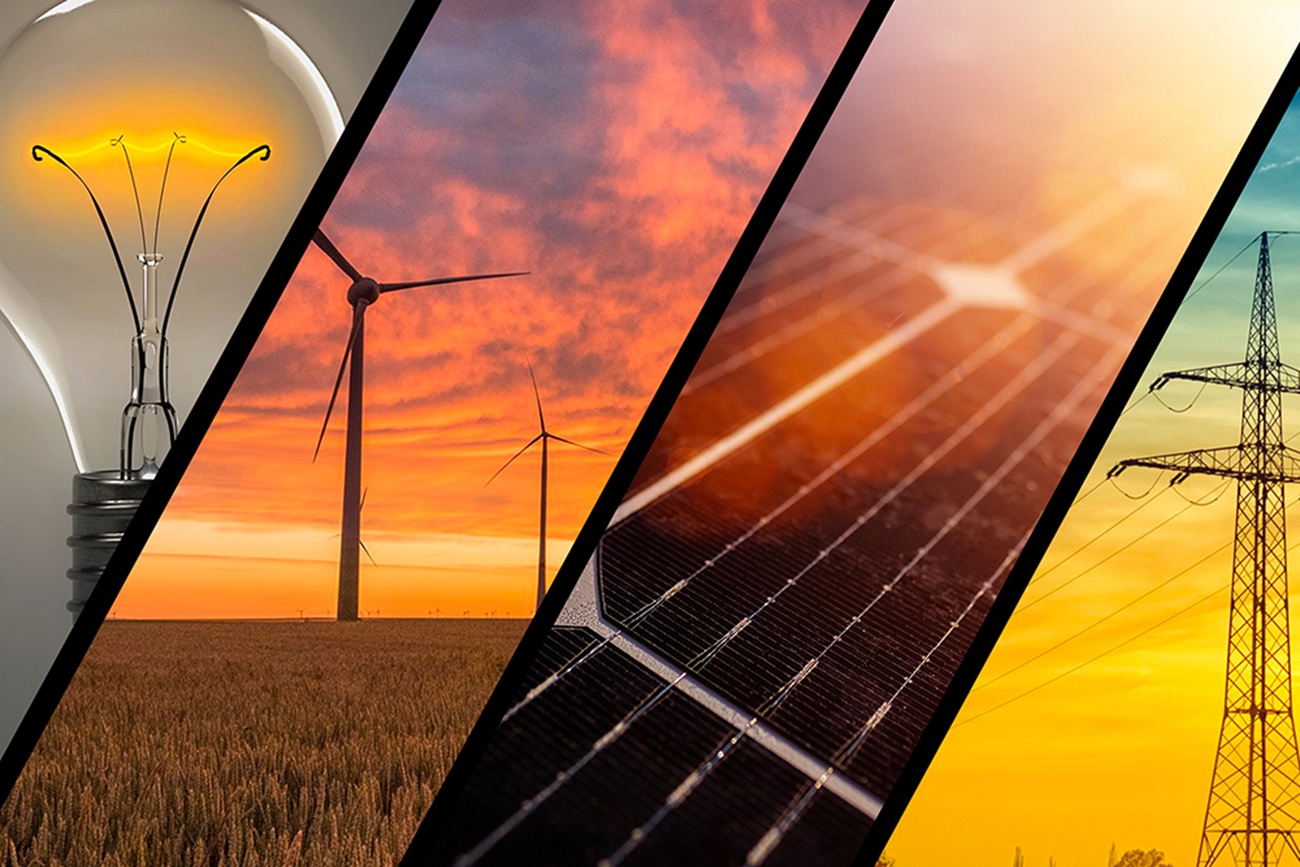
The International Energy Agency already describes the emergence of an "Age of Electricity." In its scenarios, global electricity demand rises far faster than overall energy consumption, driven in particular by air conditioning, electric vehicles, data centers, industry and the electrification of heating.
Under the scenario based on currently stated policies, renewables could provide roughly two-thirds of global electricity generation by 2050.
But the transition will not necessarily mean the rapid disappearance of hydrocarbons.
Oil will continue to be used in aviation, petrochemicals and many sectors that are difficult to electrify. Natural gas will retain an important role in several regions. Nuclear power could experience renewed expansion. Batteries, electricity grids and storage will become strategic infrastructure.
Energy geopolitics will therefore change rather than disappear.
For a century, control over oil was one of the foundations of power.
Tomorrow, control over copper, lithium, nickel, uranium, rare earths, electricity grids, batteries and energy technologies could become equally strategic.
The world will not leave behind the geopolitics of resources.
It will change resources.
Climate Will Become a Permanent Economic Variable
By 2050, climate change will no longer primarily be treated as an environmental issue.
It will be embedded in almost every major economic decision.
The IPCC has concluded that every additional increment of warming intensifies multiple risks simultaneously, with projected damages increasing as temperatures rise.
The consequences will be extremely tangible.
Insurance pricing will change. Some areas will become increasingly difficult to insure. Infrastructure will have to adapt to extreme temperatures, flooding and drought. Agriculture will shift crops and production geographies. Water will become a strategic constraint in several regions. Climate-related migration will increasingly overlap with economic and political migration.
Wealthier states will be able to invest heavily in adaptation.
Poorer countries will have far less room to maneuver.
This is likely to become one of the major dividing lines of the world in 2050: not between societies exposed to climate change and those spared from it, but between those capable of financing adaptation and those that cannot.
Globalization Will Not Disappear
For several years, the idea of "deglobalization" has become increasingly prominent in public debate.
The reality taking shape is more subtle.
International trade is not disappearing. It is being reorganized.
Governments want to secure semiconductors, energy, medicines, critical minerals and strategic technologies. Companies are diversifying supply chains. Economic sanctions are multiplying. Industrial policy has returned to the center of government action.
Yet a modern economy remains extraordinarily difficult to organize entirely within national borders.
A smartphone, an electric vehicle, an aircraft or a data center relies on production chains spread across several continents.
The world of 2050 may therefore be simultaneously more economically integrated and more politically fragmented.
That is one of the fundamental paradoxes of the century ahead.
Power Will Change Its Definition
For a long time, international power rested primarily on population, territory, industry, natural resources and armies.
None of these will disappear.
But other assets are becoming decisive: computing capacity, semiconductors, data, satellites, digital networks, intellectual property, financial infrastructure, energy technologies and control over standards.
A country can now exercise influence disproportionate to its size because of its position within a strategic value chain.
Taiwan's role in semiconductors is the obvious example. Gulf states are attempting to convert their energy resources into financial and technological power. Some African countries could acquire new strategic importance through critical minerals. India could transform its demography into economic and digital power.
Geography will remain fundamental.
But the geography of power will become more complex.
The Century of Middle Powers
This transformation could benefit a category of states long caught between the world's largest powers: middle powers.
India, Turkey, Saudi Arabia, Indonesia, Brazil, Nigeria, the United Arab Emirates and others will increasingly seek to build their own room for maneuver.
They may cooperate with Washington on security, Beijing on infrastructure, Europe on trade and one another on energy or finance.
This autonomy does not mean neutrality.
It means bargaining power.
In a world where several centers of power coexist, a country's strategic value may sometimes depend less on belonging to a bloc than on its ability to become indispensable to several blocs simultaneously.
What We Cannot Predict
All these trends share one weakness: they extend the present.
History rarely moves in straight lines.
In 1900, almost nobody could seriously have anticipated two world wars, the atomic bomb, the disappearance of the European empires, the Soviet Union, its collapse, the Internet or humans walking on the Moon.
In 2000, very few anticipated the future power of social networks, the explosion of smartphones, the global financial crisis, a pandemic simultaneously paralyzing dozens of economies or the speed of recent advances in artificial intelligence.
The next twenty-five years will produce disruptions of their own.
A major scientific discovery could transform energy. A war could redraw borders. Another pandemic could reshape societies. A technological revolution that does not yet exist could render some of today's projections obsolete.
That is precisely why 2050 should not be considered a destination.
Only a horizon.
The World Ahead
The world of 2050 will probably be neither the technological utopia promised by some nor the collapse predicted by others.
It will be more populous, more urban, more electric, more automated and probably warmer.
Asia will carry greater weight in the global economy. Africa will carry greater weight in its demography. European and East Asian societies will be older. Artificial intelligence will have penetrated much of economic activity. The resources required for electrification will have acquired major geopolitical importance. And states will continue to pursue power within an international system that has become denser and more fragmented.
But the most important transformation may be less visible.
For several centuries, a disproportionate share of global wealth, technology and power has been concentrated in a relatively small number of countries.
That concentration is beginning to fracture.
It will not disappear by 2050. Hierarchies will survive. So will inequalities.
But the world will probably have become far more difficult to organize around a single center.
And perhaps that, more than robots, artificial intelligence or megacities, is what will truly define the world ahead: a planet in which more societies possess the means to shape their own future, but no single power retains the ability to organize everyone else's.
Main Sources
- United Nations — World Population Prospects 2024; World Urbanization Prospects 2025
- International Monetary Fund — Regional Economic Outlook: Asia and Pacific
- International Energy Agency — World Energy Outlook 2025; Electricity 2025
- Intergovernmental Panel on Climate Change — Sixth Assessment Report, Synthesis Report
Atlas Limits Research Desk
Atlas Limits’ editorial and analytical desk.