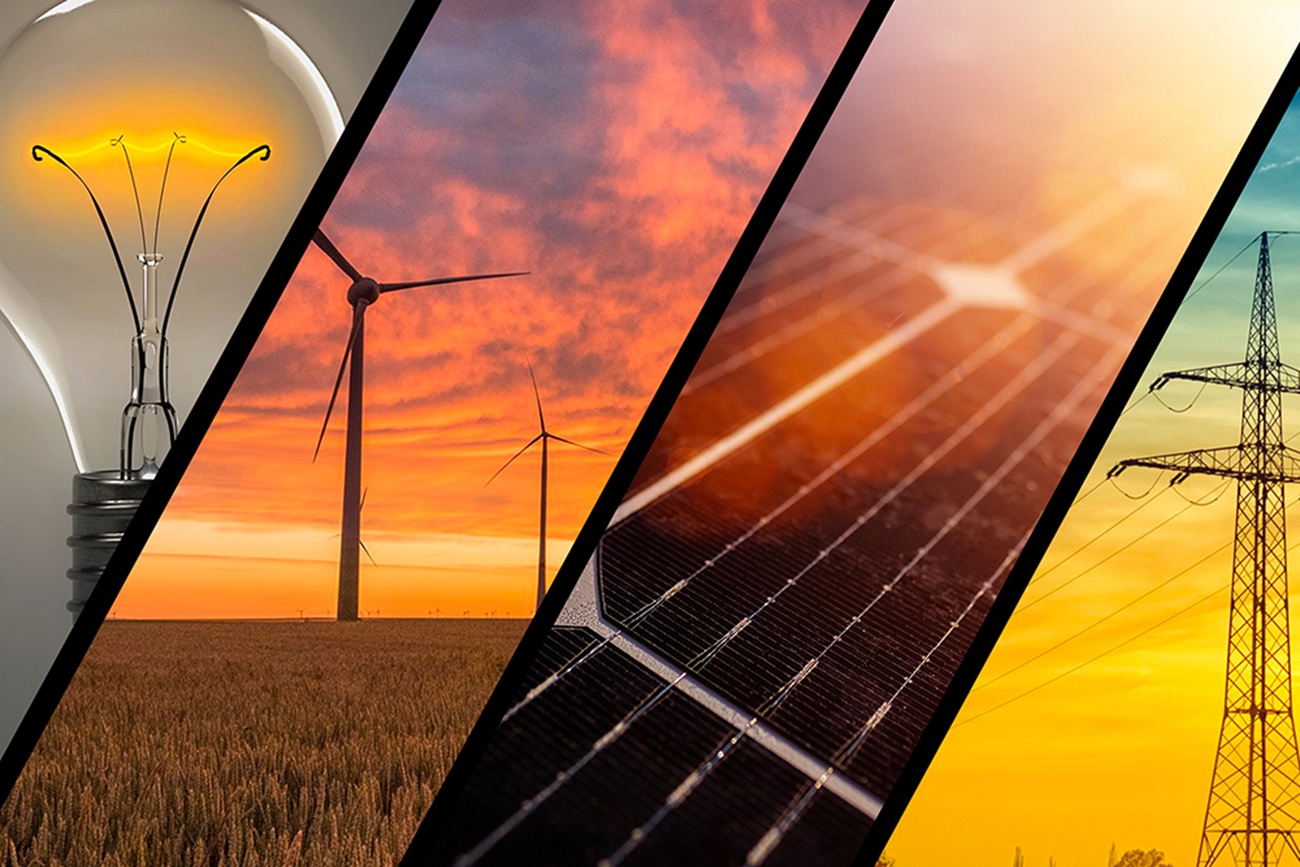
Oil, gas, coal, nuclear power, renewables: behind the narrative of the energy transition lies a more complex reality. The world is rapidly transforming the way it produces energy, but it has not yet replaced the system that keeps it running. And as electricity moves to the center of the global economy, new dependencies are emerging.
It takes only a blackout for energy to stop being an abstraction.
When electricity disappears, telecommunications fail, payments slow, logistics networks seize up, cooling systems shut down, and parts of the modern economy suddenly become vulnerable. When oil becomes scarce, transport, agriculture, aviation, petrochemicals and global trade feel the consequences. When gas supplies tighten, the effects spread from power stations to fertilizer plants, from European homes to Asian factories.
The global economy can be described in dollars, jobs or percentage points of GDP. But fundamentally, it runs on physical flows.
Oil extracted in Texas or the Gulf, gas transported through pipelines or aboard LNG carriers, coal burned in an Indian power station, uranium fueling a French reactor, solar electricity generated across China, copper running through thousands of kilometers of transmission lines: behind almost every economic activity lies an energy infrastructure.
And despite several decades of transition, that infrastructure remains profoundly hybrid.
A Transition Still Being Added to the Existing System
The year 2025 offers a striking illustration.
According to the Energy Institute’s Statistical Review of World Energy 2026, total global energy supply increased by another 1.7%. More importantly, every major energy source reached a new record for the second consecutive year. At the same time, renewables became the largest contributor to growth in global energy supply for the first time outside a recession.
These developments are not contradictory.
They describe precisely the historical phase through which the global energy system is passing: new capacity is expanding extremely rapidly, but it must supply an economy whose energy requirements are also continuing to grow.
At the planetary level, therefore, the transition is not yet simply a process of substitution in which one source disappears as another replaces it. It looks more like the gradual restructuring of an expanding system.
That distinction is fundamental.
In some developed economies, particularly in Europe, renewables are indeed replacing part of fossil-fuel generation. Elsewhere, especially across emerging economies, they must simultaneously accommodate population growth, industrialization, urbanization, air conditioning, transport electrification and now the expansion of digital infrastructure.
The world is not merely trying to produce energy differently.
It is trying to produce more energy while producing it differently.
Oil Remains an Artery of the Global Economy
No energy source better illustrates this inertia than oil.
Its importance extends far beyond electricity generation, where its role has become marginal in many countries. Oil remains deeply embedded in road transport, aviation, shipping, agricultural machinery, petrochemicals and countless industrial supply chains.
Above all, it possesses a characteristic that remains difficult to replicate: high energy density combined with a global infrastructure for production, refining, storage and distribution built over more than a century.
That infrastructure explains part of oil’s resilience.
It also explains why petroleum geography remains a geography of power.
The United States has become the world’s largest oil producer. Saudi Arabia and Russia retain considerable capacity to influence markets. The Middle East remains crucial to global exports, while passages such as the Strait of Hormuz continue to represent strategic vulnerabilities.
Yet oil also reveals a significant geographical shift: the Americas have considerably strengthened their position in global supply. The Energy Institute recorded another 4.8% increase in oil production across the Americas in 2025.
Energy is therefore also a form of geopolitical insurance. Diversifying suppliers, maintaining strategic reserves, controlling port infrastructure or possessing domestic refining capacity are not merely economic considerations.
They are instruments of sovereignty.
Gas, the Fuel of Interdependence
Natural gas occupies a different position.
For decades, its trade was dominated by pipelines and therefore by almost fixed geographical relationships between producers and consumers. The rise of liquefied natural gas has progressively globalized the market.
LNG changed the energy map.
A tanker can leave the United States, Qatar or Australia and be redirected toward Europe or Asia depending on prices and demand. This flexibility has improved the security of some consumers, but it has also created a market in which regions thousands of kilometers apart can find themselves competing for the same cargoes.
The European energy crisis triggered after Russia’s invasion of Ukraine provided a spectacular demonstration. An energy relationship built over decades around Russian pipelines had to be profoundly reorganized within only a few years.
Yet gas remains essential.
It can generate electricity rapidly, supplies numerous industries, provides heat and serves as a critical feedstock for fertilizer production. In power systems incorporating growing amounts of solar and wind generation, gas-fired plants can also provide dispatchable capacity when renewable output declines.
Paradoxically, the transition can therefore preserve the strategic importance of certain fossil-fuel infrastructures for some time.
The Coal the World Has Not Left Behind
Coal probably represents the sharpest contrast between the energy debate in many Western countries and global physical reality.
Across parts of Europe, its decline has been dramatic. Globally, however, coal remains one of the foundations of the electricity system.
In 2024, coal still generated roughly 35% of global electricity according to the International Energy Agency. In China, its share was close to 60%. In India, it accounted for almost three-quarters of electricity generation.
The explanation is not simply ideological or political.
It is also industrial.
China and India possess enormous coal infrastructures that already exist: mines, power stations, railway networks, steel mills and logistics chains organized around the resource. In economies where electricity demand continues to increase rapidly, closing those assets before sufficient alternatives exist involves a very different trade-off from that faced by a mature economy with stagnant demand.
Coal therefore illustrates a fundamental rule of energy systems: they do not change merely because a better technology exists.
They change when infrastructure, financing, grids, industrial capacity and security of supply allow that technology to be deployed at sufficient scale.
Electricity Becomes the New Center of Gravity
This is probably where the most profound transformation is occurring.
The world is electrifying.
Electric vehicles, heat pumps, air conditioning, industry, data centers and artificial intelligence: a growing share of economic activity depends directly on electricity networks.
In 2024, global electricity demand surged by 4.3%, substantially faster than total energy demand. In 2025, growth slowed to around 3%, but remained more than twice the rate of overall global energy demand.
This shift changes the very nature of energy power.
Possessing oil and gas reserves remains strategically important. But having a resilient electricity grid, diversified generation capacity, storage, interconnections and an industry capable of manufacturing the necessary equipment is becoming equally decisive.
A country can possess immense solar capacity and still lack electricity at the wrong moment.
The energy challenge of the twenty-first century is therefore no longer simply about generating electrons. They must be produced when demand exists, transported to where they are needed and continuously balanced across the grid.
This is where high-voltage transmission lines, transformers, storage systems and interconnections become as strategic as the power plants themselves.
Solar Power Changes Scale
The pace of renewable deployment is nevertheless extraordinary.
Solar power has become one of the fastest-moving industrial transformations in the global energy system. According to the Energy Institute, global solar generation increased by approximately 30% in 2025. Battery capacity expanded by 66%.
This growth is gradually transforming the structure of electricity generation.
It is also transforming its geography.
China occupies a dominant position not only in the deployment of renewable capacity but across much of the industrial supply chain required to build it: photovoltaic panels, batteries, components and the processing of several critical minerals.
This concentration creates a paradox.
The transition can reduce dependence on hydrocarbon-exporting countries while simultaneously increasing dependence on countries controlling the technologies, manufacturing capacity and raw materials required for electrification.
Energy geopolitics is therefore not disappearing.
It is changing material.
The Return of Nuclear Power
Within this emerging balance, nuclear power is also experiencing renewed interest.
Its principal advantage is well established: the ability to generate large quantities of low-carbon, dispatchable electricity with a relatively small land footprint.
Its constraints are equally familiar: high upfront costs, long construction periods, regulatory complexity, waste management and political acceptance.
Yet the search for energy security and expectations of rising electricity consumption have returned nuclear power to the strategic calculations of several governments.
Industrial capabilities, however, remain highly concentrated. According to the IEA, all nuclear reactor construction starts recorded in 2024 involved Chinese or Russian technologies.
This reality extends far beyond electricity generation.
Building a nuclear power station can create an industrial relationship lasting decades through fuel supplies, maintenance, components, engineering, training and regulatory cooperation. Exporting a reactor therefore also means exporting a long-term strategic relationship.
After Hydrocarbons, Minerals
Electrification does not eliminate dependence on natural resources.
It shifts it.
An economy increasingly based on electricity networks, electric vehicles, batteries, wind turbines and solar panels requires enormous quantities of copper, lithium, nickel, cobalt, graphite and rare earth elements.
And these supply chains can be even more concentrated than those of hydrocarbons.
The International Energy Agency estimates that in 2024 the three largest producing countries accounted, on average, for 77% of the extraction of the major energy minerals it monitors. Concentration is even greater in some refining and processing activities. China, in particular, retains a dominant position in the processing of numerous critical minerals.
Projections suggest that these dependencies will not disappear quickly. Under a scenario based on policies already announced by governments, lithium demand could increase fivefold by 2040, while copper demand would rise by around 30%.
Copper deserves particular attention.
It is everywhere: electricity networks, motors, transformers, vehicles, buildings and renewable infrastructure. A transition based on mass electrification is necessarily a transition requiring enormous quantities of conductive metals.
The global electricity network is therefore becoming, indirectly, an immense mining infrastructure.
A New Map of Power
For much of the twentieth century, energy power could be mapped relatively simply.
There were those who possessed oil and gas, those who consumed them, and those who controlled the routes through which they traveled.
The twenty-first century is making that map considerably more complex.
The United States combines enormous hydrocarbon production with technological power and a vast electricity market. The Gulf monarchies retain immense fossil-fuel reserves while investing in new energy industries. Russia still possesses exceptional resources but must contend with the reconfiguration of its export markets. Europe has an advanced energy system and considerable regulatory power while remaining dependent on numerous imports.
And then there is China.
It is simultaneously the world’s largest coal consumer, a huge importer of hydrocarbons, the largest market for many clean-energy technologies and the industrial center of several supply chains essential to the transition.
That combination is unusual.
Beijing remains vulnerable to certain energy supply routes while possessing considerable power over technologies that could gradually reduce those vulnerabilities.
The energy transition is therefore becoming an instrument of state power.
The Grid Before the Narrative
The energy debate is often presented as a confrontation between two worlds: fossil fuels on one side and clean energy on the other.
Physical reality is less comfortable.
A solar power plant requires mines, factories, transmission lines and sometimes batteries. An electric vehicle depends on a grid that must itself be supplied. A nuclear reactor requires a fuel cycle and decades of maintenance. An economy heavily dependent on gas requires terminals, pipelines and storage capacity. Even the most decarbonized systems remain gigantic industrial constructions.
The real question, therefore, is not which energy source will “win.”
It is how billions of people can gain access to energy that is sufficiently abundant, affordable, reliable and progressively less carbon-intensive without destabilizing the economies that depend on it.
The equation becomes even more difficult because demand continues to rise.
Artificial intelligence provides an unexpected symbol of this reality. Behind digital models stand data centers, and behind those data centers stand transformers, transmission lines, power stations and physical resources.
Even the most intangible economy ever constructed eventually encounters the physical limits of an electricity grid.
What Keeps the World Running
The energy story, then, is not one of the imminent disappearance of an old system and its replacement by a new one.
It is a story of superposition.
Oil continues to power global mobility. Gas remains central to many industrial and electricity systems. Coal is still indispensable to several major Asian economies. Nuclear power is regaining strategic importance. Solar and wind are expanding at historic speed. Batteries are becoming an energy infrastructure in their own right. And behind all of them, a new struggle is emerging over copper, lithium, graphite, nickel and rare earth elements.
The transition is real. It is profound.
But it cannot be measured solely by the number of solar panels installed or electric vehicles sold. It must be measured by the ability of these new infrastructures to actually replace the old ones while meeting global demand that continues to grow.
For much of modern history, controlling energy meant controlling wells, mines, pipelines and straits.
Tomorrow, it will also mean controlling grids, batteries, mineral-processing facilities, industrial supply chains, reactors, power semiconductors and storage capacity.
The technologies change.
The rule does not.
A civilization can exercise power only if it possesses the energy required to make it function.
Main Sources
Energy Institute — Statistical Review of World Energy 2026, global 2025 energy data.
International Energy Agency (IEA) — Global Energy Review 2025, global energy and electricity data.
International Energy Agency (IEA) — Global Energy Review 2026, global electricity demand developments in 2025.
International Energy Agency (IEA) — Global Critical Minerals Outlook 2025, critical-mineral supply chains and outlook.
Energy Institute — Statistical Review of World Energy, methodology and Total Energy Supply framework.
Atlas Limits Research Desk
Atlas Limits’ editorial and analytical desk.