There are few industries in which selling less can be a sign of strength, raising prices a way of protecting demand, and refusing a customer an instrument of value creation. Luxury belongs to this peculiar category. It shares factories, employees, supply chains, real estate investments, retail networks and profitability requirements with ordinary industry. Yet it simultaneously operates according to a principle almost opposite to the one that shaped industrial capitalism: abundance, usually a company's strength, can become a weakness.
This is the central ambiguity of contemporary luxury. Behind objects that continue to evoke the artisan, the manufacture, the workshop or the house now stand some of the most sophisticated organizations in the global economy. LVMH brings together more than 75 maisons, employs more than 211,000 people and operates more than 6,280 stores. Its revenue reached €80.8 billion in 2025. Richemont, owner of Cartier and Van Cleef & Arpels among others, generated €22.4 billion in sales in the financial year ended March 2026. Hermès exceeded €16 billion in 2025. Kering, despite a much more difficult year, generated €14.7 billion. At the edge of this industry, Ferrari produced €7.1 billion in revenue in 2025 while delivering only 13,640 cars.
Yet these companies do not merely sell expensive goods. They organize a particular economy in which the physical product is only part of what is being purchased. A watch tells the time, a bag carries objects and a car provides transportation. Viewed solely through their functional purpose, much of luxury becomes economically incomprehensible. Its value appears only when other elements are added — elements that accounting captures far less effectively: history, provenance, craftsmanship, social recognition, aesthetics, access, reputation and, above all, real or perceived scarcity.
Luxury has therefore become one of the most sophisticated expressions of the intangible-asset economy.
From the Workshop to the Global Group
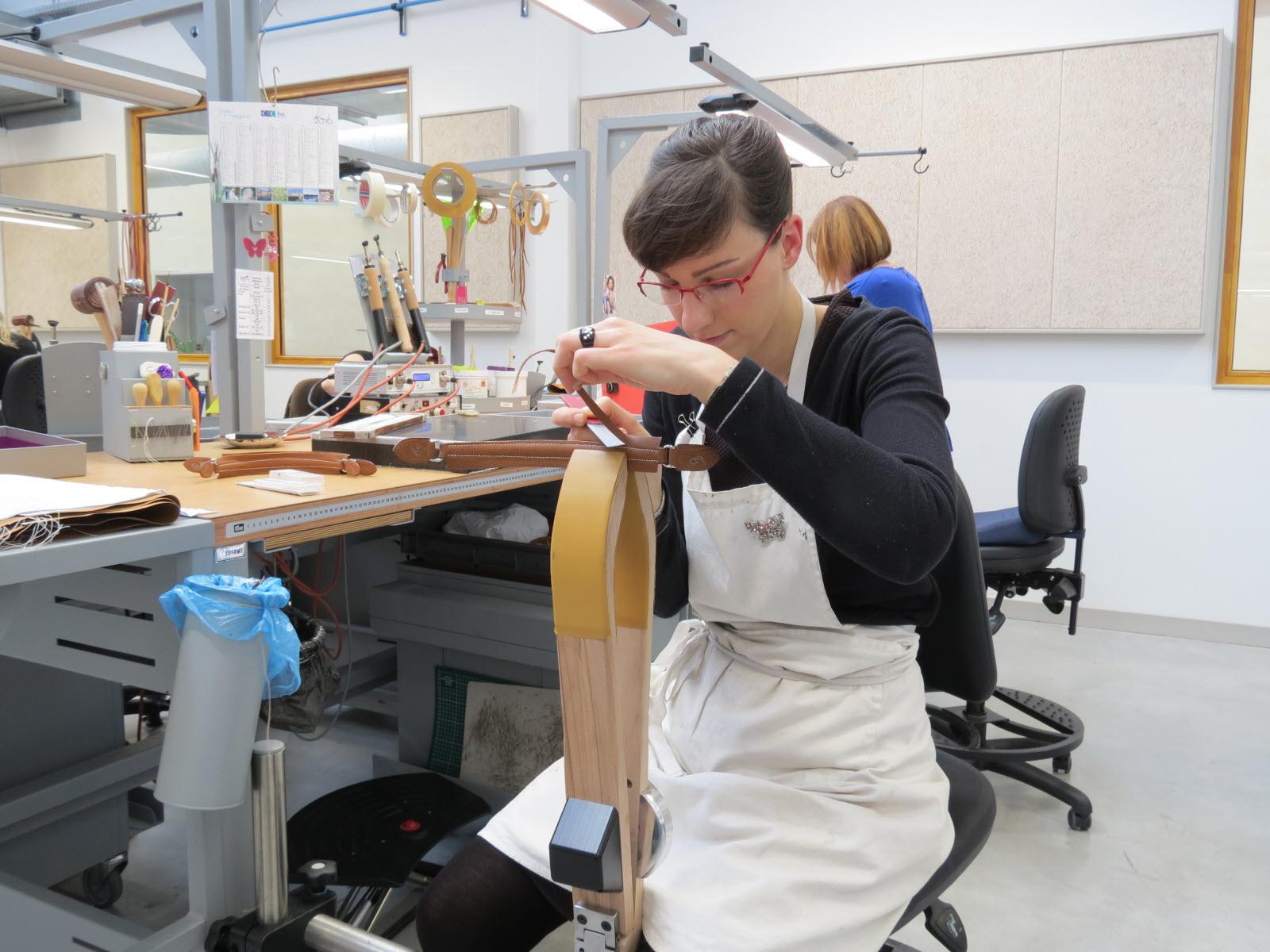
For much of its history, luxury was an economy of proximity linking artisans, royal courts, aristocracies and great fortunes. Objects were rare primarily because production itself was rare. A dress, a piece of furniture, a jewel or a complicated watch required time, expensive materials and skills possessed by relatively few people.
The Industrial Revolution could have destroyed this economy. Instead, it transformed it.
As mass production made ordinary goods cheaper and more accessible, the distinction between what could be reproduced and what claimed to remain exceptional itself became a source of value. Modern luxury was built along this frontier. Some houses preserved highly specialized crafts while adopting around them the instruments of contemporary capitalism: finance, global marketing, prime real estate, international logistics, communications, acquisitions, information systems and increasingly sophisticated inventory management.
The result is an unusual economic object: a global industry whose fundamental promise is that it does not appear industrial.
France occupies an exceptional position in this transformation. Louis Vuitton, Dior, Hermès, Chanel, Cartier, Saint Laurent and numerous other houses have given the country a concentration of symbolic capital that is extraordinarily difficult to reproduce. Italy retains remarkable industrial depth in leather, textiles, footwear, fashion and design, with Gucci, Prada, Bottega Veneta, Brunello Cucinelli, Moncler and Ferrari. Switzerland dominates much of high-end watchmaking. The United States is both a major market and the home of important groups and brands. The United Kingdom, Germany, Japan and, increasingly, several Asian and Gulf economies complete this geography.
But the places where luxury is produced no longer coincide with those where the wealth that buys it is created.
An Industry Gone Global
This separation has been one of the engines of the sector's expansion. A house can manufacture in France, Italy or Switzerland, belong to a group listed in Paris or Zurich, and sell a significant share of its production in New York, Los Angeles, Shanghai, Seoul, Tokyo, Singapore or Dubai.
Tourism has intensified this circulation. For years, a significant share of Chinese luxury consumption took place outside China. Price differences, taxation, travel and the prestige associated with purchasing in Paris, Milan or Tokyo turned tourist flows into part of the maisons' business model. Currency movements could suddenly redirect these purchases from one country to another. Japan recently illustrated this phenomenon: LVMH reported that its Japanese sales declined in 2025 after an exceptional 2024, when tourist spending had been stimulated by the weakness of the yen.
This mobility explains why luxury is unusually exposed to variables that may seem far removed from a handbag or a watch: exchange rates, visas, air traffic, stock markets, property values, tariffs, Chinese economic policy, gold prices and geopolitics.
Globalization therefore did more than provide European houses with new customers. It transformed their risk model.
China and the Great Transformation
No country illustrates this transformation better than China.
The emergence of a vast population of affluent Chinese consumers accompanied one of the greatest periods of expansion in the modern history of luxury. Rising incomes were reinforced by urbanization, international opening, tourism and the rapid creation of private wealth. For Western houses, China gradually ceased to be merely another market. It became one of the industry's centers of gravity.
That dependence revealed its other face when Chinese growth slowed and the property crisis affected household confidence and wealth perceptions. Luxury rediscovered a basic rule that its extraordinary expansion had sometimes obscured: it is not outside the economic cycle.
It simply reacts to it differently.
Group results now demonstrate how dramatically performances can diverge. In 2025, LVMH's revenue declined to €80.8 billion, with organic growth down 1%. Its Fashion & Leather Goods business group, which includes Louis Vuitton and Dior, declined 5% organically. At Kering, revenue fell 13% on a reported basis to €14.7 billion. Gucci, still its largest house, saw reported sales decline 22%, ending the year at approximately €6 billion.
Hermès, meanwhile, continued to grow, with revenue increasing 8.9% at constant exchange rates in 2025 to €16 billion and recurring operating profitability remaining exceptionally high. Richemont followed yet another trajectory: sales increased 11% at constant rates during its 2025-2026 financial year, while its jewellery maisons — Cartier, Van Cleef & Arpels, Buccellati and Vhernier — reached €16.5 billion in sales and a 30.5% operating margin. In the first quarter of the following financial year, sales at those jewellery houses rose another 24% at constant exchange rates.
There is therefore no longer — if there ever was — a single luxury cycle.
The Great Polarization
This divergence reveals a deeper transformation. The market is polarizing.
During the decades of rapid expansion, major groups considerably broadened luxury's economic base. Fragrances, cosmetics, small leather goods, accessories and entry-level products allowed a much wider population to access a fraction of a maison's universe. A consumer did not need to afford haute couture to enter Dior, nor a trunk to own a Louis Vuitton product.
This controlled democratization was extraordinarily profitable. It transformed names historically reserved for elites into globally recognized brands without necessarily making their most prestigious products widely accessible.
But the mechanism has a limit. As prices rise, part of this aspirational customer base is gradually pushed out. These consumers are also far more sensitive to inflation, interest rates, housing costs and economic cycles than those with the largest fortunes.
At the other end of the spectrum is a clientele for whom financial constraints are almost irrelevant.
The distinction is fundamental. UBS estimated that the global number of dollar millionaires increased by roughly one million people in 2025. More than half of the world's personal wealth was then concentrated in the United States and mainland China. UBS also estimated that billionaire wealth reached a record $15.8 trillion in 2025.
Ultra-luxury therefore operates in an economy where the decisive variable is not simply income but wealth.
A household may cut purchases when its purchasing power falls by a few percentage points. The owner of several hundred million dollars in assets does not make the same decision because the price of a watch rises by 10%. Changes in the valuation of a business, an investment portfolio or real estate holdings, however, may alter that individual's perception of wealth and spending.
From this perspective, luxury provides an unusual observatory of the global distribution of capital.
Price Is Not Merely a Price
Across most of the economy, higher prices tend to reduce demand. Luxury complicates this relationship.
Price performs several functions. It pays for the product, certainly, but it also constitutes a barrier to entry. It therefore participates in the exclusivity that the customer is purchasing. An object that becomes too financially accessible may lose part of the social function that gave it value in the first place.
This does not mean that houses can raise prices indefinitely. Pricing power is not magic. When the gap between perceived value and the asking price becomes too wide, customers can postpone a purchase, turn to another house, buy on the secondary market or leave the category altogether.
The central question is therefore not whether a house can raise prices, but how long it can do so without consuming its own capital of desirability.
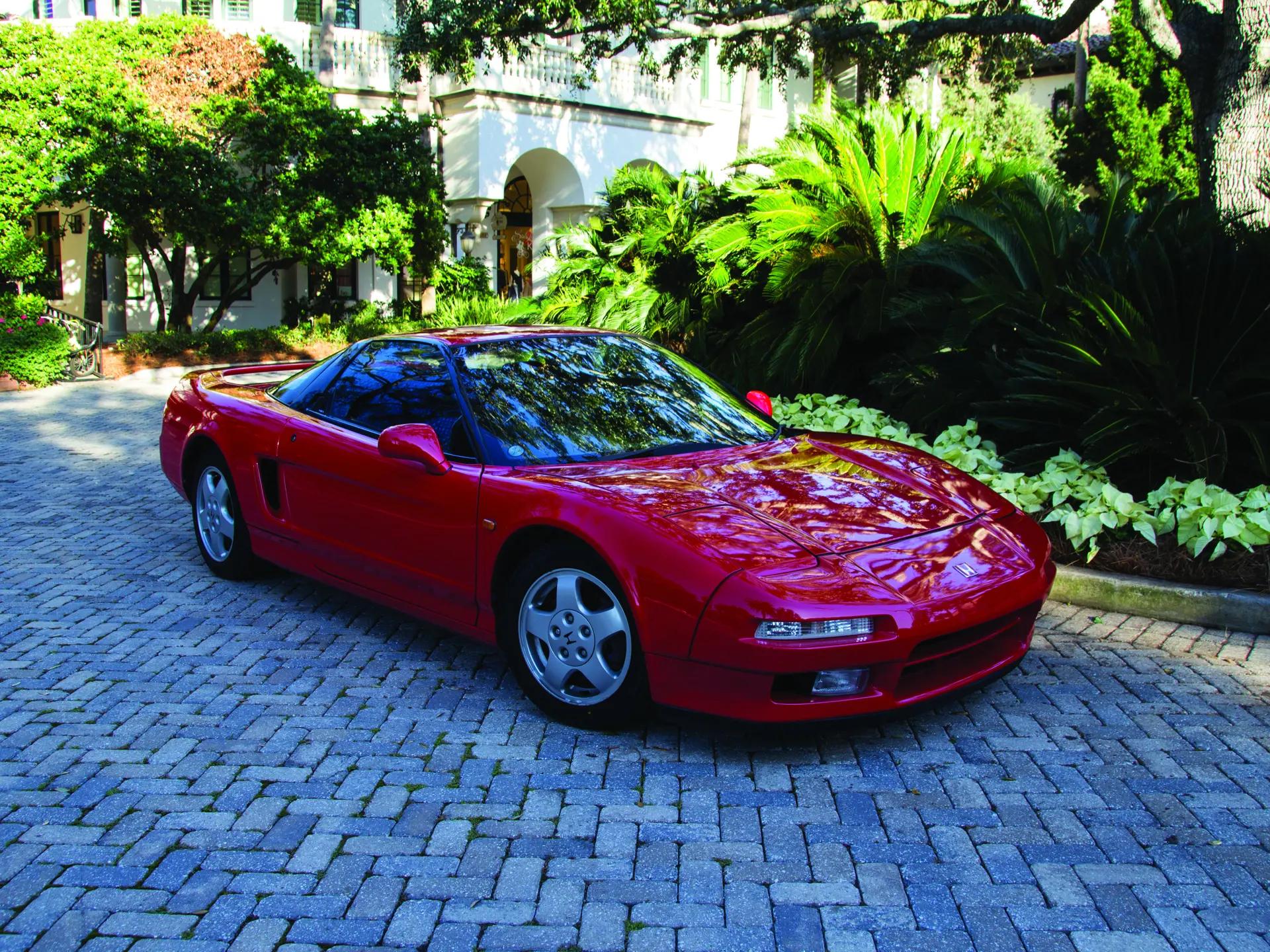
Hermès is particularly interesting because its strength does not rest on price alone. For certain products, supply remains structurally below demand. Ferrari applies a comparable logic in another industry. In 2025, the manufacturer slightly reduced deliveries from 13,752 to 13,640 cars while increasing revenue by 7% to €7.15 billion and adjusted operating profit by nearly 12%. Its adjusted EBIT margin reached 29.5%.
Generating more money without necessarily selling more objects is perhaps one of the purest expressions of the economics of luxury.
Scarcity Must Be Managed
Scarcity, however, is no longer always natural. It is managed.
This is where contemporary luxury moves furthest away from the romantic image of the workshop. Behind the sensation of discovery and exclusivity lie highly rational decisions about volumes, geographic allocations, waiting lists, collections, retail networks and distribution channels.
Control of distribution has become strategic because a house that does not control where, how and at what price its products are sold loses part of its power.
Major groups have therefore progressively expanded directly operated networks. Richemont reported that 77% of sales in the financial year ended March 2026 came directly from end customers. At Gucci, directly operated stores represented 92% of sales in 2025. Kering has simultaneously reduced some wholesale exposure in an effort to reinforce the exclusivity of its distribution.
The boutique is no longer merely a place where products are sold. It is simultaneously a medium, a theatre, a real-estate instrument, a data collection point, a relationship platform and a mechanism for controlling price.
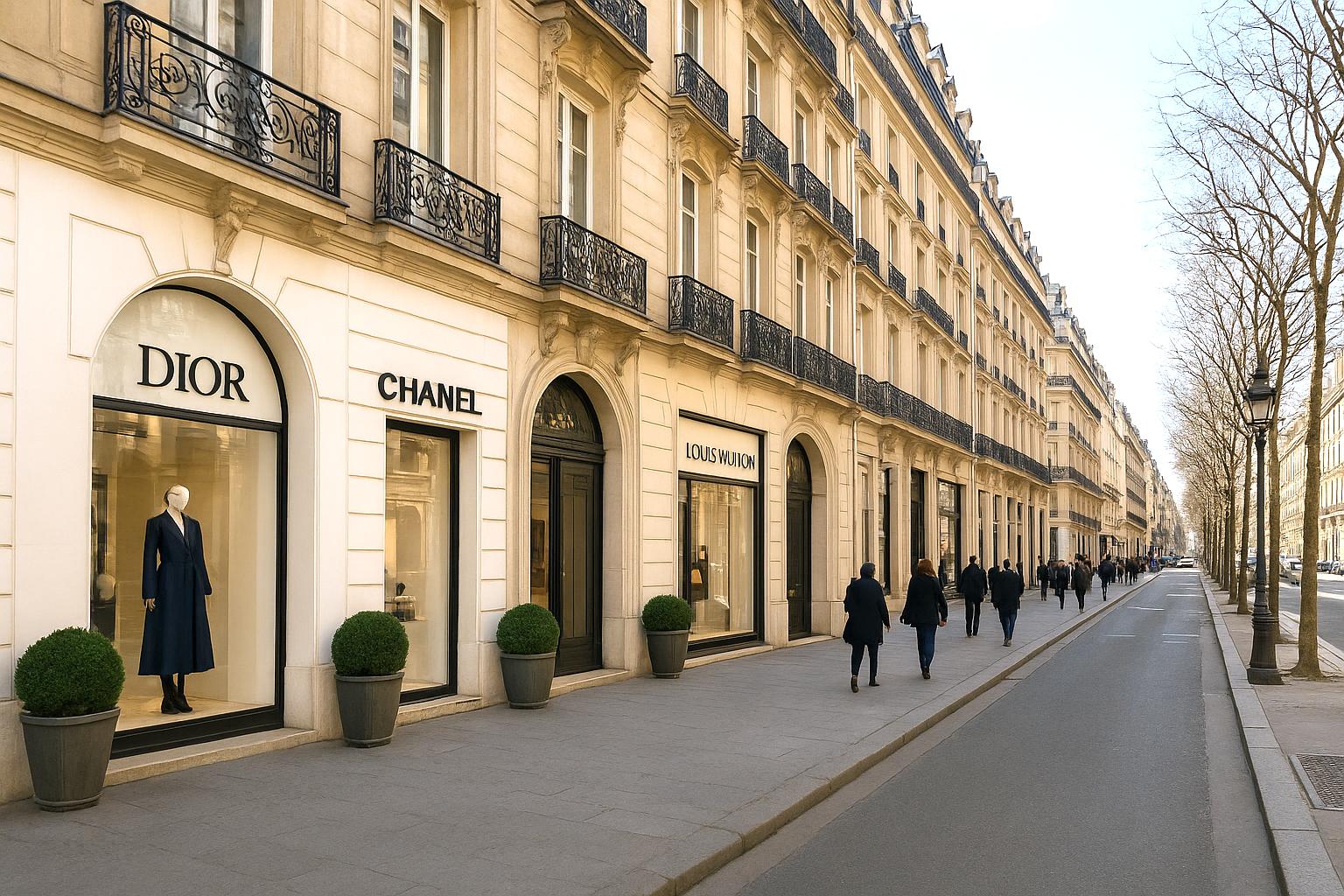
The luxury avenues of Paris, Milan, London, New York, Tokyo, Shanghai and Dubai therefore form a global economic infrastructure whose value extends far beyond the square metres they occupy.
The Capitalism of the Maisons
 Industry consolidation has added another dimension.
LVMH, Kering and Richemont are not merely collections of brands. They are capital architectures capable of acquiring a house, financing its international development, securing its supply chain, recruiting talent, purchasing prestigious locations, building manufacturing capacity and sustaining years of investment.
The house retains its name, history and universe. Behind it, however, the financial power of the group radically changes its horizon.
This is one of the great organizational innovations of modern luxury: pooling power without necessarily pooling identity.
The model is not universal. Chanel remains privately held. Hermès remains controlled by the founder's descendants. Rolex is owned by a foundation. Prada retains a strong family influence. Ferrari is publicly traded but deliberately maintains an economy of restricted volumes. These different structures demonstrate that financial concentration is not a sufficient condition for success.
The real asset remains the maison.
And that asset is extraordinarily fragile.
The Risk of Desirability
A factory can be modernized. A logistics network can be restructured. Debt can be refinanced. Desirability cannot be repaired by decree.
Gucci offers a particularly clear demonstration. With almost €6 billion in revenue in 2025, the house remains enormous. But a 22% decline in reported revenue in a single year produced a much sharper contraction in recurring operating income, which fell to €966 million. Its margin declined from 21% to 16.1%.
This sensitivity helps explain why creative directors occupy such an unusual position in the global economy. Few multibillion-euro businesses can see such a significant part of their trajectory depend on the ability of a handful of individuals to understand the spirit of an era without becoming trapped by it.
Luxury therefore exists in permanent tension between continuity and disruption. Change too little and the house grows old. Change too much and it ceases to be itself.
Historical heritage is both an asset and a constraint.
The Margins of the Intangible
Financial performance provides an indirect measure of the power of that asset.
LVMH generated a gross margin of 66% and a recurring operating margin of 22% in 2025 despite slower conditions across several businesses. Hermès reported recurring operating profitability of 41% in the first half of 2026. Richemont's jewellery maisons generated an operating margin of 30.5% for the financial year ended March.
These figures obviously do not mean that manufacturing is irrelevant. Leather, gold, gemstones, watch components, workshops and craftspeople represent substantial costs. Richemont itself noted that higher gold prices weighed on its gross margin.
But materials do not explain most of the difference between the physical cost of an object and its final price.
That difference remunerates an accumulation of intangible capital sometimes built over generations.
A technology company can invest heavily to construct a network. A luxury house may inherit a network of mental associations that has been accumulating since 1837, 1847 or 1854. It can maintain it, expand it or destroy it. It cannot recreate it instantly.
Time itself becomes a barrier to entry.
When the Object Becomes an Asset
The development of the secondary market adds another layer to this economy.
For a long time, purchasing luxury meant accepting depreciation, as with almost any consumer good. Some categories now partially escape that logic. Watches, handbags, automobiles and jewellery can have sufficiently deep secondary markets for observable prices to emerge after the original purchase.
The boundary between consumption, collecting and investment consequently becomes less distinct.
An Hermès bag, a sought-after Rolex, a rare Patek Philippe or a limited-production Ferrari may be purchased for its use and aesthetics while simultaneously being evaluated as a potential store of value. Not every piece appreciates — far from it — and secondary markets themselves experience cycles. But their existence changes consumer behaviour.
They also produce an unforgiving signal for the houses.
The retail price is determined by the brand. The secondary-market price is determined by the market.
When a new product immediately trades at a premium, scarcity appears credible. When it suffers a substantial discount, the market suggests that the official price and actual desirability may no longer coincide.
The secondary market has therefore become, almost inadvertently, a kind of stock exchange for desirability.
Luxury Is No Longer Only an Object
Another transformation is quieter: global wealth increasingly spends money on things that cannot be placed inside a box.
Hospitality, gastronomy, private travel, wellness, yachts, business aviation, residences, clubs, events and exclusive experiences increasingly inhabit the same economic universe as leather goods and jewellery.
For a very wealthy individual, these categories compete directly. A €100,000 watch may compete not only with another watch but with a week of travel, a work of art or an experience unavailable to the general public.
The groups understand this. LVMH owns Cheval Blanc hotels and Belmond. Luxury houses are multiplying restaurants, cafés, exhibitions, residences and cultural collaborations. Armani, Bulgari and others have extended their names into hospitality. Ferrari no longer sells only cars: it organizes an entire universe of belonging around the brand.
The movement is logical. When goods become abundant, access itself can become scarce.
Technology and the Paradox of Abundance
Artificial intelligence could accelerate this evolution.
For decades, technology allowed luxury companies to industrialize what surrounded the product without necessarily industrializing its image. It now improves demand forecasting, inventory management, personalization, customer relationships, anti-counterfeiting systems and logistics.
Generative AI introduces something different: it dramatically reduces the cost of producing many symbolic forms.
Images, texts, music, visual concepts and eventually parts of design can be produced almost instantly and in unlimited quantities. The resulting cultural abundance might appear threatening to an industry founded on creativity.
It could also produce the opposite effect.
The easier it becomes to generate a perfect image, the more significance may attach to a physical object requiring dozens of hours of human work. The easier reproduction becomes, the more provenance matters. The more infinite the digital world becomes, the more valuable access to something genuinely limited may become.
Luxury could therefore benefit from a remarkable paradox: the technology that makes almost everything reproducible may increase the economic value of what can still demonstrate that it is not.
Provided, of course, that the scarcity remains credible.
An Industry of Trust
Luxury ultimately rests on a form of implicit contract.
The customer agrees to pay far beyond the functional value of an object because they believe in the history that the object carries. They believe that the craftsmanship exists, that the quality is genuine, that distribution will remain controlled, that the house will protect its identity and that the product will not become ordinary a few years later.
A house can therefore increase volumes, multiply boutiques, extend product ranges, introduce more accessible goods and raise prices. Each decision can improve short-term financial performance. Each can also consume a small amount of the symbolic capital accumulated over decades.
This is where the industry's true economic limit lies.
The global luxury industry has accomplished something capitalism rarely achieves: it has transformed scarcity into a mass business without entirely making scarcity ordinary. It has built groups generating tens of billions of euros around houses that continue to speak the language of the workshop, transported products around the world while cultivating their provenance, and sold millions of people the idea of individual distinction.
This contradiction is not an accidental weakness of the model. It is its engine.
But the larger the industry becomes, the more precisely it must manage that contradiction. Too few customers and a house remains marginal. Too many and it ceases to be exclusive. Prices that are too low weaken distinction; prices that are too high can break the relationship between value and desire. Too much history turns the house into a museum; too much novelty makes it lose its memory.
Luxury exists precisely on this frontier.
Its next phase of growth will depend on China, the United States, the Gulf, India and the new fortunes emerging elsewhere. It will depend on financial markets, wealth transfers, tourism and the ability of European houses to preserve skills that globalization makes simultaneously more valuable and more difficult to protect. It will also depend on their ability to convince a generation that can instantly see almost everything, compare almost everything and resell almost everything that certain objects are still worth waiting for.
The question, then, is not whether the world will continue to produce wealthy people. Everything suggests that it will.
Nor is it whether those people will continue to seek distinction. Human history provides little reason to doubt that.
The more difficult question is this: how can an industry that has become global continue to sell the idea that what it produces remains exceptional?
For two centuries, the great houses have answered by transforming time, history, craftsmanship and scarcity into economic capital.
Their future will depend on their ability not to exhaust that capital by exploiting it.
Main Sources
Bain & Company and Fondazione Altagamma — Luxury Goods Worldwide Market Study, reference research on the structure and evolution of the global luxury market.
LVMH — FY2025 results and H1 2026 results; revenue, margins, business-group performance and geographic trends.
Hermès International — 2025 key figures and H1 2026 results; revenue, growth and recurring operating profitability.
Compagnie Financière Richemont — Annual Report and Accounts 2026, FY2025-2026 results and Q1 2026-2027 results; sales, direct distribution, jewellery and watchmaking performance.
Kering — FY2025 results; group revenue, Gucci performance, margins and distribution strategy.
Ferrari — FY2025 results; shipments, revenue, operating income and margins.
UBS — Global Wealth Report 2026 and Billionaire Ambitions Report 2025; evolution of the global millionaire population, distribution of personal wealth and billionaire wealth.
Company figures cited in this article are drawn from official financial publications available as of September 7, 2026. Interpretations concerning scarcity, desirability, market polarization and the economic function of luxury are those of Atlas Limits.
Atlas Limits Research Desk
Atlas Limits’ editorial and analytical desk.