Morocco is three weeks away from a legislative election. Political parties are finalising their lists, candidates are entering constituencies, manifestos are beginning to emerge, alliances are being tested and the country has once again adopted the familiar vocabulary of representative democracy: majority, opposition, alternation, participation and political accountability.
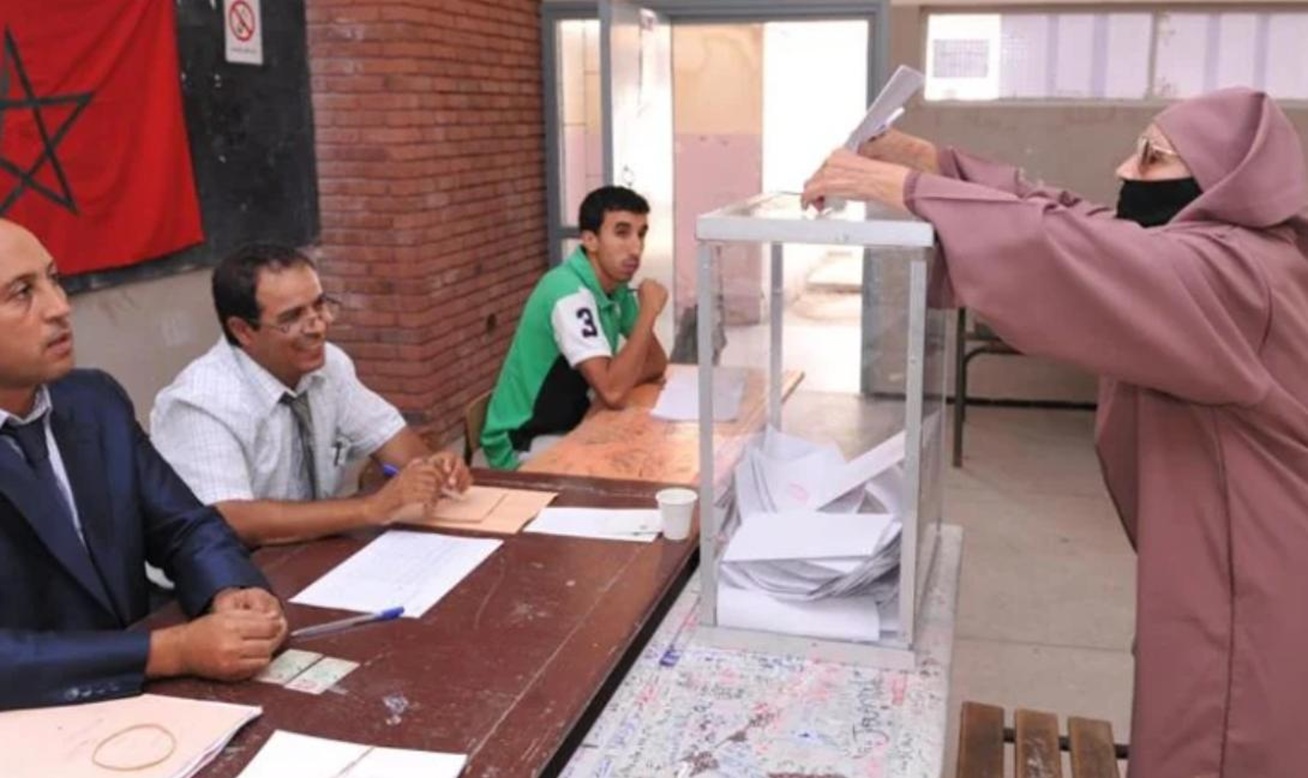
On September 23, 2026, Moroccan voters will elect the 395 members of the House of Representatives. Twenty-seven political parties are participating in the contest. Candidate submissions opened on August 31, while the official campaign will run from September 10 to 22.
The electoral machinery is already in motion: organised, legally regulated and firmly embedded in Morocco’s institutional landscape.
Yet behind that machinery lies a more difficult question.
What does a Moroccan voter actually choose when casting a ballot?
More than the technical integrity of the vote itself, this question captures the distinctive nature of Moroccan elections. The issue is not that elections are fictitious. They produce winners and losers, alter parliamentary balances, sometimes punish governing parties with extraordinary severity and determine the composition of the governing majority.
The collapse of the Justice and Development Party in 2021 provided a spectacular demonstration. After winning 125 seats in 2016, the PJD retained only 13 five years later, while the National Rally of Independents won 102, the Authenticity and Modernity Party 87 and the Istiqlal Party 81. Turnout reached roughly half of registered voters.
Elections therefore have consequences.
The question lies elsewhere. It concerns the extent of the power actually submitted to the ballot, the ability of political parties to embody clearly differentiated choices and, ultimately, the relationship between electoral legitimacy and the effective exercise of power.
A democracy in which not all power is electoral
Understanding Moroccan elections requires abandoning an overly mechanical comparison with European parliamentary democracies. Morocco has its own institutions, its own political history and a constitutional architecture in which several forms of legitimacy coexist.
The government governs. Parliament legislates, scrutinises government action and votes on finance laws. Elections therefore determine a real share of political power.
But they do not determine the entire architecture of power.
At its apex stands the monarchy, whose legitimacy does not derive from parliamentary elections. The 2011 Constitution strengthened the position of the Head of Government and established a number of parliamentary mechanisms, while preserving central powers for the King within the institutional architecture.
The sovereign appoints the Head of Government from the political party that finishes first in elections to the House of Representatives. He chairs the Council of Ministers, serves as Supreme Commander of the Royal Armed Forces and exercises authority over a series of strategic appointments and constitutional functions.
This coexistence is fundamental.
In a Moroccan parliamentary election, voters are therefore not choosing between competing projects seeking to redefine the entire strategic direction of the state. They are primarily choosing those who will exercise an important but circumscribed part of public power within an institutional framework whose essential parameters are not themselves subject to electoral alternation.
This is neither a hidden anomaly nor an institutional secret.
It is Morocco’s constitutional system.
But it produces a major political consequence: a change of government does not necessarily amount to a strategic alternation.
Different governments can succeed one another without overturning the Kingdom’s broad diplomatic orientation, its principal international partnerships, major infrastructure programmes, structural industrial policies or certain long-term economic and social strategies.
Such continuity can be an advantage. It can provide stability, preserve strategic planning beyond electoral cycles and allow the state to pursue projects whose timelines exceed a single legislature.
Yet it also reduces the space within which elections can produce rupture.
And when the space for rupture narrows, electoral competition changes in nature.
Many parties, but how many alternatives?
Morocco certainly does not lack political parties. There are enough of them to make every campaign appear to offer an unusually abundant political marketplace.
Their histories are profoundly different.
Istiqlal carries the legacy of the national movement. The Socialist Union of Popular Forces emerged from Morocco’s historic socialist opposition. The Party of Progress and Socialism traces its roots to Moroccan communism. The PJD long represented an institutional Islamist alternative. The National Rally of Independents gradually established itself as a liberal, managerial and business-oriented force. The Authenticity and Modernity Party became one of the country’s principal political actors within only a few years. Around them stand the Popular Movement, the Constitutional Union and a constellation of smaller formations.
On paper, pluralism is considerable.
In practice, the boundaries are less distinct.
Morocco’s economic and social transformation, the exercise of government, successive coalitions and the professionalisation of politics have gradually softened some of the country’s historic divisions.
Parties originating from very different ideological traditions can govern together. Coalitions are often constructed less around a homogeneous ideological contract than around the parliamentary arithmetic required to build a majority.
The coalition formed after the 2021 elections illustrates this clearly: the RNI, PAM and Istiqlal — three parties with distinct histories and political cultures — formed the governing majority together.
This does not mean their programmes are identical.
Differences exist over taxation, social protection, the role of the state, education, employment and sectoral policies. Yet for the ordinary voter, translating these differences into immediately recognisable political alternatives can remain difficult.
What precise economic model separates the principal parties?
Which party advocates a fundamentally different transformation of the administration?
Which political force proposes a substantially different architecture for social protection?
Where exactly does the Moroccan economic right begin and its left end?
Which social groups does each party primarily claim to represent?
When these questions become difficult to answer, the logos remain, but the dividing lines fade.
When the party becomes an electoral machine
The weakening of national ideological divisions reinforces another dimension of Moroccan politics: territory.
In many constituencies, an election is not determined solely by the national popularity of a political party. It also depends on the candidate’s reputation, local roots, networks, family connections, economic activity, social influence, electoral history and ability to mobilise voters.
The phenomenon of the aâyan — local notables — is obviously not unique to Morocco. European and American democracies also have their dynasties, strongholds and local electoral machines.
But the phenomenon acquires particular importance when the ideological identity of political parties is relatively weak.
A candidate can then become electorally more important than the label under which he or she is running.
Political parties understand this. Securing nominations becomes a strategic battle. A party seeking to expand does not necessarily have to convince an entire population of the superiority of its doctrine over time; it can also recruit personalities who already possess an established electoral base.
The logic of politics then changes.
Instead of the party building the candidate, the candidate can bring voters to the party.
The movement of local notables between political organisations further blurs partisan boundaries. When politicians change party labels without undergoing any corresponding ideological transformation, citizens can reasonably ask what party affiliation actually represents.
The election remains competitive.
But competition can increasingly become a contest between political networks rather than between competing visions of society.
The strange arithmetic of representation
This electoral sociology is compounded by the mechanics of the voting system.
Morocco’s system favours plural representation and limits the ability of a single political party to transform an electoral lead into parliamentary dominance. The electoral rules governing the House of Representatives have been designed in ways that disperse parliamentary representation and make outright majorities difficult to achieve.
Defenders of such a system can advance a legitimate argument: it prevents smaller political forces from being crushed, preserves pluralism and forces parties to negotiate and seek compromise.
Its critics can advance another.
The more difficult it becomes to translate electoral victory into a parliamentary majority, the more indirect the relationship becomes between popular preference, political victory and the ability to govern.
This is one of the system’s fundamental paradoxes.
It protects plurality while encouraging fragmentation.
Yet representative democracy needs both: the ability to represent the diversity of society and the ability of citizens to identify clearly who governs, according to which programme and with what responsibility.
Fragment representation too much, and responsibility itself can eventually become fragmented.
A government responsible for everything — and in control of everything?
This question becomes particularly visible once the election is over.
For five years, the government naturally becomes the principal recipient of public dissatisfaction.
Inflation, unemployment, healthcare, education, taxation, purchasing power, drought, housing and investment: in public debate, the governing majority carries political responsibility for the country’s condition.
That is normal.
To govern is to be judged.
But Morocco’s institutional architecture sometimes makes the precise attribution of responsibility more complicated.
Some policies fall directly under the government. Others are implemented within broader strategic frameworks. Still others involve public establishments, agencies, territorial authorities or institutions operating on timescales extending far beyond a single parliamentary term.
The result is a peculiar imbalance.
The government can be powerful enough to be held responsible, without always being autonomous enough to be regarded as the sole author of every policy for which it is politically blamed.
This ambiguity complicates electoral sanction.
What exactly is a dissatisfied citizen punishing?
A minister? A party? A coalition? A particular public policy? The administration that implemented it? A structural orientation that might have continued under another majority?
The more complex the chains of responsibility become, the less capable a single ballot is of disentangling them.
2021: proof that voters can punish
It would nevertheless be wrong to conclude that Moroccan voters are powerless.
The 2021 election demonstrates precisely the opposite.
The PJD, which had led the government for a decade, suffered an extraordinary defeat, falling from 125 to 13 members of parliament.
Whatever interpretation one gives to the electoral rules and political context, a collapse of such magnitude constitutes a political sanction that cannot simply be ignored.
Yet that sanction simultaneously revealed another characteristic of the Moroccan system.
Replacing the PJD with an RNI-led coalition did not trigger a revolution in Morocco’s strategic trajectory. The country continued its major infrastructure programmes, industrialisation, expansion of social protection, diplomatic orientations and preparations for major international events.
The majority changed.
The state continued.
This continuity can be interpreted in two opposing ways.
It can be regarded as an institutional strength: the state does not start again from zero every five years and retains a strategic capacity extending beyond electoral cycles.
But it can also reinforce the impression that electoral change modifies the managers more readily than the overall direction.
The two interpretations are not mutually exclusive.
The great absentee: the convinced voter
Then comes the question of participation.
In 2021, roughly one registered voter in two participated in the legislative elections. This represented an improvement over the previous election, but it also meant that a substantial share of the electorate did not vote.
Abstention is too often interpreted simplistically.
It does not constitute a homogeneous political bloc. Some citizens abstain through disinterest. Others face practical constraints. Some identify with none of the available parties. Others believe elections affect their lives too little to justify participation.
Above all, one seductive but impossible conclusion should be avoided: treating every non-voter as a silent opponent of the political system.
Not voting is not the same thing as voting against.
But when substantial abstention becomes structural, it nevertheless conveys political information.
It suggests that part of society does not regard the available political offer as sufficiently important, differentiated or accessible to warrant mobilisation.
The challenge facing Moroccan parties may therefore not simply be to persuade voters to support them.
It is to persuade millions of citizens that choosing between them is worth voting at all.
2026: the stage is being built
This is no longer a hypothetical election.
Morocco is now in the opening phase of the 2026 legislative contest. Candidate submissions began on August 31. The official campaign will run from September 10 to September 22, before voters go to the polls on Wednesday, September 23. They will elect all 395 members of the House of Representatives, with 27 political parties participating in the contest.
The distinction matters because this article is being written before the verdict of the ballot box.
Nothing about the outcome should therefore be presumed.
We do not yet know which party will finish first, how fragmented the next Parliament will be, what turnout will look like or whether the election will produce a significant redistribution of political power.
The 2026 election should instead be understood as a test of the questions raised throughout this essay.
Can the parties present genuinely distinguishable political projects?
Can voters identify what would materially change under one governing coalition rather than another?
Will national programmes outweigh the importance of candidates, local networks and territorial influence?
And, perhaps most importantly, will the campaign persuade citizens that the choice before them is consequential enough to demand their participation?
The institutional machinery surrounding that choice is extensive.
For audiovisual media, the regulated electoral period began on August 15 and runs until September 22. The official campaign itself begins on September 10 and lasts thirteen days. Morocco’s audiovisual regulator has established rules governing political pluralism, airtime and election coverage, including provisions addressing disinformation and AI-generated electoral content.
The procedural architecture is therefore not incidental.
It is elaborate, regulated and increasingly sophisticated.
That makes the political question more interesting, not less.
If Morocco can organise a multiparty election involving 27 political parties, regulate access to audiovisual media, supervise campaign rules and repeatedly produce changes in parliamentary representation, then the central question can no longer be reduced to whether an electoral procedure exists.
It plainly does.
The more difficult question is what kind of political choice that procedure ultimately offers.
This is why September 23 should not be presented as the conclusion of the argument made here.
It is an opportunity to test it.
If the campaign produces sharp disagreements over taxation, employment, education, healthcare, social protection, economic development and the distribution of state resources, then the argument that Moroccan party politics has become ideologically blurred will deserve qualification.
If voters can clearly identify competing programmes and assign responsibility for the record of the outgoing majority, the election will demonstrate that alternation can operate meaningfully within Morocco’s constitutional architecture.
If, on the other hand, the campaign is dominated by personalities, local electoral calculations, candidate recruitment, coalition arithmetic and broadly overlapping national promises, then the deeper problem will remain.
The question facing Morocco in 2026 is therefore not simply:
Who will win?
It is:
What exactly will victory allow the winner to change?
The theatre of the ballot box
This, ultimately, is where the theatre begins.
Not because everything is predetermined.
It demonstrably is not. Morocco’s electoral history contains enough upheavals to prove otherwise.
Nor because political parties are useless. They recruit political elites, organise representation, structure Parliament, form majorities and provide governments.
Nor because voters are powerless. They can reward, punish and sometimes almost erase from Parliament a party that dominated the previous legislature.
The theatre lies in a subtler contradiction.
All the attributes of democratic competition are present, while the amount of power actually placed in competition remains more limited than the electoral drama suggests.
Parties fight one another while their ideological boundaries become porous.
Voters choose candidates whose local roots can matter as much as, and sometimes more than, the national manifesto.
Governments change while major orientations endure.
And a substantial part of the population can watch the performance without necessarily considering participation worthwhile.
Morocco therefore faces more than a question of electoral procedure.
Its deeper question is how to transform an institutionalised electoral democracy into a democracy of clearly identifiable political choices.
The answer does not depend solely on the monarchy, the Constitution or the electoral system.
It also depends on the parties.
To recover genuine political centrality, they must become more than machines for selecting candidates, conquering constituencies and negotiating coalitions. They must produce recognisable ideas, represent identifiable social interests, make explicit choices, construct coherent doctrines and accept that governing means being held accountable for a specific political project.
Without that, elections will continue to take place. Seats will change hands. Coalitions will be reshuffled. Ministers will leave and others will arrive.
The curtain will fall.
Then, five years later, it will rise again.
The question, therefore, is not whether Moroccans can vote.
They can.
The question is whether, when they do, they can genuinely choose between political directions different enough for the result to transform something more than the distribution of roles.
Main sources
— Kingdom of Morocco, official 2026 legislative election portal: election date, 395 seats, voting system, participating parties and electoral calendar.
— Ministry of the Interior / MAP, August 31, 2026: opening of candidate submissions and participation of candidates from 27 political parties.
— High Authority for Audiovisual Communication (HACA), Decision No. 50-26: regulation of political pluralism in audiovisual media during the 39-day electoral period from August 15 to September 22, 2026.
— HACA, 2026 Guide to Political Pluralism: rules governing airtime, electoral coverage, disinformation and AI-generated electoral content.
— Constitution of the Kingdom of Morocco, 2011: constitutional distribution of powers between the monarchy, government and Parliament.
— Official results of the 2021 Moroccan legislative elections: parliamentary distribution, political alternation and voter participation.
Atlas Limits Research Desk
Atlas Limits’ editorial and analytical desk.