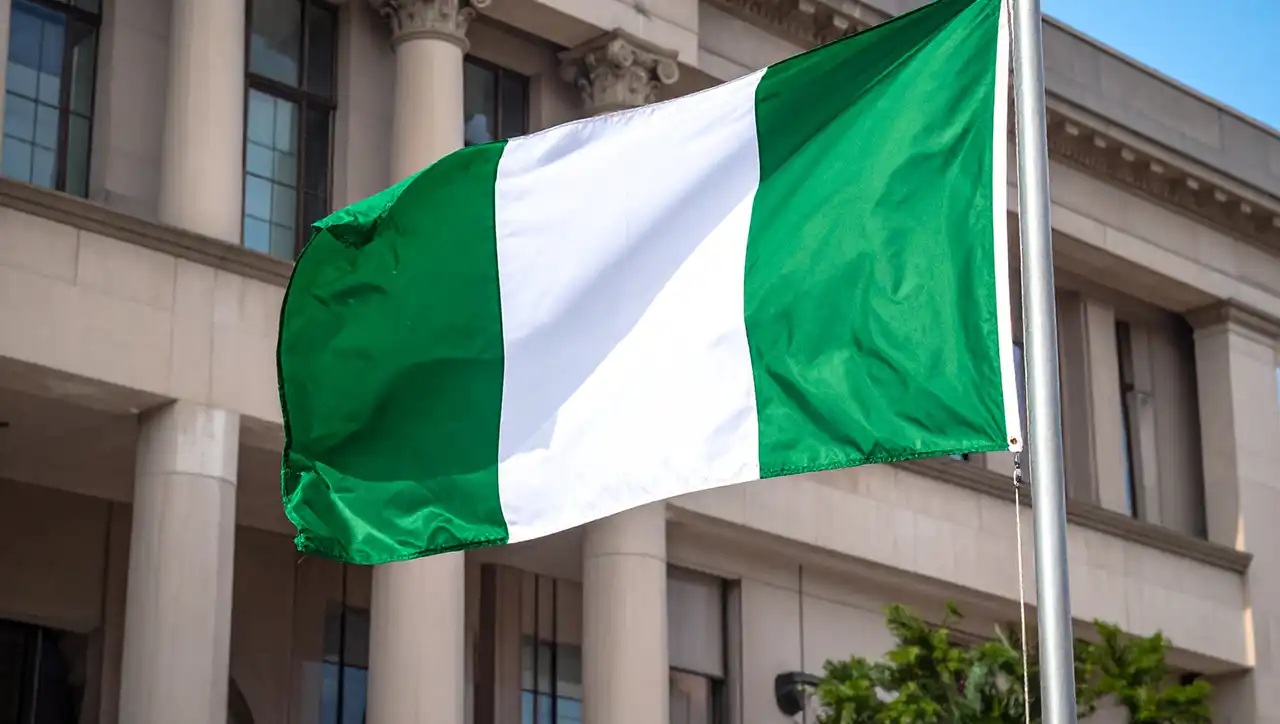
With more than 230 million people, vast hydrocarbon reserves, one of the continent’s largest metropolitan areas and a cultural influence that extends far beyond its borders, Nigeria possesses almost all the attributes of a major African power. Yet since independence in 1960, the country has struggled to turn this accumulation of resources, people and markets into sustained economic power.
This contradiction is perhaps the best way to understand contemporary Nigeria. It is neither a conventional emerging power nor an ordinary fragile state. It is too large to be marginal, too resource-rich to be defined by its difficulties, yet still too constrained by internal imbalances to fully convert its potential into influence.
The reforms undertaken since 2023 have begun to alter this equation. The removal of fuel subsidies, liberalisation of the foreign-exchange market, the end of monetary financing of the fiscal deficit and the expansion of new industrial capacity have addressed some long-standing distortions. In June 2026, the International Monetary Fund assessed that these reforms had strengthened macroeconomic stability and projected real GDP growth of 4.1% for the year.
But this stabilisation is taking place in a society where poverty remains widespread and rapid population growth forces the economy into a permanent race against time.
Nigeria’s central challenge is therefore no longer to demonstrate that it has extraordinary potential. It is to determine whether it can finally organise it.
A Country Built on a Continental Scale
Nigeria emerged from a complex political construction. British colonial rule brought together territories, societies and economic systems that differed profoundly from one another. When the country became independent in 1960, it inherited an immense state crossed by regional, ethnic, religious and economic fault lines.
The predominantly Muslim north carries a political history shaped in part by the emirates of the Sokoto Caliphate. The Yoruba southwest developed around major urban and commercial centres. The southeast, where Igbo communities are particularly prominent, developed a strong entrepreneurial culture. The Niger Delta, meanwhile, came to concentrate much of the country’s oil production.
These differences never disappeared. Instead, they were incorporated into a federal system that today comprises 36 states and the Federal Capital Territory of Abuja. Nigerian federalism is therefore more than an administrative architecture. It is one of the mechanisms that holds together a country whose diversity could otherwise become centrifugal.
The Biafran War between 1967 and 1970 demonstrated how far those tensions could go. Several decades of military rule subsequently delayed institutional consolidation. Since 1999, however, Nigeria has maintained an important degree of democratic continuity by the standards of its own modern history, despite institutional weaknesses, electoral controversies and persistent governance problems.
Nigeria therefore remains an exceptional political experiment: the attempt to operate a democratic federal state on a near-continental scale in an environment characterised by profound territorial disparities.
Demography as Promise and Constraint
No factor will shape Nigeria’s future more profoundly than its population.
The country already accounts for a substantial share of sub-Saharan Africa’s population and is expected to add tens of millions more inhabitants over the coming decades. At this scale, demography ceases to be merely a social variable. It becomes an economic, geopolitical and strategic one.
In theory, this population represents an extraordinary advantage. It creates an immense domestic market, an abundant labour force, a considerable entrepreneurial base and a degree of human depth that very few African countries can match. In a global economy where demographic growth is increasingly concentrated in Africa, Nigeria could become one of the major consumer markets of the twenty-first century.
But a demographic dividend is never automatic.
Every new generation must be educated, trained, housed, transported and integrated into the labour market. When productive job creation grows more slowly than the working-age population, demographic strength can instead generate unemployment, informality, migration and social tension.
The IMF was still warning in 2025 that per-capita growth remained insufficient despite improving economic activity. The structural diagnosis remains relevant: for demography to become a genuine source of power, Nigeria must sustain growth substantially above population growth for many years while achieving major productivity gains.
This may be the country’s defining challenge. Nigeria does not lack people. It must transform its population into human capital.
Lagos, a Laboratory for Nigeria’s Future
That transformation is already visible in Lagos.
The former federal capital has become the country’s economic centre of gravity. Finance, telecommunications, commerce, technology, cultural industries, real estate, logistics and services are concentrated in a vast metropolitan area whose expansion often appears to exceed the capacity of public planning.
Lagos embodies the Nigerian paradox.
The city generates an extraordinary density of economic activity while struggling with congestion, infrastructure deficits, housing shortages and extensive informality. Modern business districts, internationally funded technology companies and an informal economy supporting millions of people coexist within the same urban system.
Yet beneath this apparent disorder lies a remarkable capacity for adaptation. Where public institutions or infrastructure are insufficient, private solutions emerge. This is particularly evident in digital payments, fintech and financial services.
Nigerian companies such as Flutterwave, Paystack, Moniepoint and Interswitch have helped build a technology ecosystem that places Lagos among Africa’s principal digital-economy hubs.
The same phenomenon is visible in culture. Nollywood has become one of the world’s major film-production centres by output, while Afrobeats has given Nigerian artists a global audience. This influence is not anecdotal. It represents a form of soft power that few African states possess on a comparable scale.
Nigeria increasingly exports ideas and culture as well as commodities.
Oil: Foundational Wealth, Persistent Dependence
For decades, however, Nigeria’s economic power was built around a much more traditional resource: oil.
Commercial discoveries in the late 1950s gradually transformed the economy. Petroleum became a central source of foreign exchange and government revenue, while Nigeria joined OPEC in 1971.
The windfall financed the federal state and strengthened the country’s international weight. It also created profound dependence.
Public finances became vulnerable to oil cycles. Foreign-exchange earnings remained heavily exposed to hydrocarbons. Periods of currency appreciation undermined parts of the non-oil economy. In the Niger Delta, production was accompanied by pollution, political tensions, sabotage and crude theft.
More fundamentally, Nigeria long embodied one of the most striking paradoxes of the global petroleum economy: a major crude exporter that imported much of the refined fuel consumed by its own population.
That model is beginning to change.
Dangote and the Bet on Domestic Transformation
The Dangote refinery near Lagos symbolises that shift.
With a nominal capacity of 650,000 barrels per day, it ranks among the world’s largest single-train refineries. By 2026, according to its management, it was already supplying most of Nigeria’s domestic fuel requirements while expanding exports, with plans under consideration for a substantial increase in capacity.
Its significance extends far beyond a single industrial investment.
For decades, Nigeria sold relatively low-value crude and bought higher-value refined products abroad. Domestic refining creates the possibility of retaining a much larger share of that value chain, reducing fuel imports and developing a regional petrochemical complex.
The refinery also illustrates a distinctive feature of the Nigerian model: where the state has struggled to provide infrastructure, some private actors have acquired an almost infrastructural dimension of their own.
The Dangote Group operates across cement, fertilisers, agribusiness and now oil refining. Other Nigerian conglomerates and financial groups have also expanded throughout Africa.
The rise of domestic private capital is one of the country’s major strengths. But it also raises a fundamental question: how far can private investment compensate for inadequate public infrastructure?
Electricity, the Invisible Ceiling on Growth
The answer becomes particularly clear in the electricity sector.
Nigeria has an enormous population and substantial energy resources, yet its power system remains unable to provide reliable electricity across the economy. Businesses, shops and households have historically compensated through extensive use of private generators.
The economic cost is considerable.
A factory that must produce its own electricity carries additional costs. A small business exposed to recurring outages loses productivity. An industrial investor must effectively incorporate energy infrastructure into the investment itself.
The IMF continues to identify electricity, alongside infrastructure, agriculture, human capital and security, as one of the structural areas requiring reform if Nigeria is to achieve sustainably higher growth.
The Nigerian problem here can be expressed simply: an economy of more than 200 million people cannot become a major industrial power while reliable electricity remains structurally scarce.
The Tinubu Reforms: Correcting Imbalances, Absorbing the Shock
Bola Ahmed Tinubu’s arrival as president in 2023 opened a particularly aggressive phase of economic reform.
His government moved to eliminate costly fuel subsidies, reform the foreign-exchange market and end central-bank monetary financing of the fiscal deficit. These policies targeted distortions that had been recognised for years but had proved politically difficult to address.
The initial consequences were painful.
The depreciation of the naira made imports more expensive. Subsidy removal increased transport and energy costs. Inflation placed severe pressure on household purchasing power.
Several macroeconomic indicators, however, gradually began to improve. The IMF assesses that reforms implemented since 2023 have reduced some fiscal vulnerabilities, improved the functioning of the foreign-exchange market and rebuilt external buffers. Real GDP growth reached around 4% in 2025 and was projected at 4.1% for 2026.
Macroeconomic improvement does not mean that the social cost of adjustment has disappeared. The IMF reported in 2026 that 63% of the population was below the national poverty line and that approximately 27 million people had faced food insecurity in late 2025.
The central difficulty of Nigeria’s strategy lies precisely here: restoring macroeconomic balance without losing the social consent required to sustain reform.
An Indispensable Regional Power
Nigeria’s weight cannot be measured by economics alone.
For decades, Abuja has played a major role in West Africa. Nigeria has been a pillar of the Economic Community of West African States and has historically provided a substantial share of the political, financial and military capacity behind the organisation’s regional ambitions.
Its armed forces have participated in peacekeeping operations and regional interventions. Its diplomacy carries particular weight in African affairs. Its population, economy and domestic market give it an influence that no other West African country can easily replicate.
But the regional environment has become considerably more difficult.
Military coups in Mali, Burkina Faso and Niger, the expansion of jihadist organisations across the Sahel and the realignment of regional partnerships have weakened the West African order within which Nigeria traditionally exercised leadership.
Security threats also exist within Nigeria’s own borders.
The Boko Haram insurgency and Islamic State West Africa Province continue to affect the northeast. The northwest faces armed banditry and kidnapping. Communal and land-related tensions persist across parts of the Middle Belt. The Niger Delta remains exposed to oil theft and organised criminal activity.
Nigeria must therefore contribute to regional stability while devoting substantial resources to its own security.
That constraint inevitably limits its capacity for external projection.
A Cultural Power Before an Institutional One
There is nevertheless one field in which Nigeria has already transcended its borders: culture.
The influence of Nollywood, Nigerian music, its diaspora, writers, fashion and entrepreneurs has created an image of the country that no longer depends solely on petroleum or foreign policy.
Afrobeats has become a global phenomenon. Nigerian artists perform to large audiences in Europe and North America. Film and television productions circulate across Africa and throughout diaspora communities. Nigerian entrepreneurs occupy a growing position in technology, finance and the creative industries.
This cultural power has an interesting characteristic: much of it developed independently of the state.
That may offer one of the keys to understanding contemporary Nigeria. Much of the country’s dynamism comes less from the effectiveness of its institutions than from society’s ability to operate despite their shortcomings.
Nigeria produces entrepreneurs because the opportunities are immense, but also because constraints force people to invent. It produces financial solutions because millions remain underserved by conventional systems. It produces globally successful popular culture because its enormous domestic market is large enough to sustain industries of its own.
This resilience is a considerable strength. But it cannot indefinitely substitute for effective institutions.
Turning Scale into Power
Nigeria does not need to become important. It already is.
Through its population, market, energy resources, diaspora, cultural influence and position in West Africa, it is one of the continent’s structurally important states.
The question is different: can it transform importance into durable power?
Doing so requires several transformations at once. Nigeria must stabilise its currency without suffocating economic activity, contain inflation while encouraging investment, process more of its raw materials domestically, generate sufficient electricity, build infrastructure for a rapidly expanding population, improve education, restore security in its most fragile regions and, above all, create enough productive employment to turn demography into an asset rather than a burden.
None of these challenges is secondary.
But few countries possess such depth of market with which to confront them.
Nigeria already has something that cannot easily be imported or constructed: scale. It has an immense domestic market, a young population, a dynamic entrepreneurial class, abundant natural resources and a cultural influence that is already global.
What it still lacks is sufficient institutional capacity to connect these assets into a coherent system.
That is why the coming years matter. If economic reforms produce lasting stability, infrastructure improves and more resources are transformed domestically, Nigeria could gradually move from being an unavoidable African economy to becoming a genuine emerging power.
If not, it will remain what it has been for decades: a country whose potential is large enough to fascinate, but whose constraints are deep enough to repeatedly postpone its fulfilment.
Nigeria’s future therefore depends less on discovering new resources than on its ability to organise those it already possesses.
Main Sources
International Monetary Fund — Nigeria: 2026 Article IV Consultation, June 2026.
International Monetary Fund — Nigeria: 2025 Article IV Consultation, July 2025.
Reuters — reporting on Nigeria’s petroleum sector and the Dangote refinery, August 2026.
Atlas Limits Research Desk
Atlas Limits’ editorial and analytical desk.